
Sermon
The Qualities of the Complete Believer: Faith Rooted in the Heart, Its Fruit in Life
Faith has its roots in the heart and its fruit in life. Humble devotion (khushu‘) in prayer, treating the tongue and the eye as a trust, staying away from backbiting, good character, mastering anger, patience and gratitude, keeping one’s word, and seven promises for our life here in Europe.
Translated from the Turkish original. Read the Turkish original →

Faith has its roots in the heart and its fruit in life.
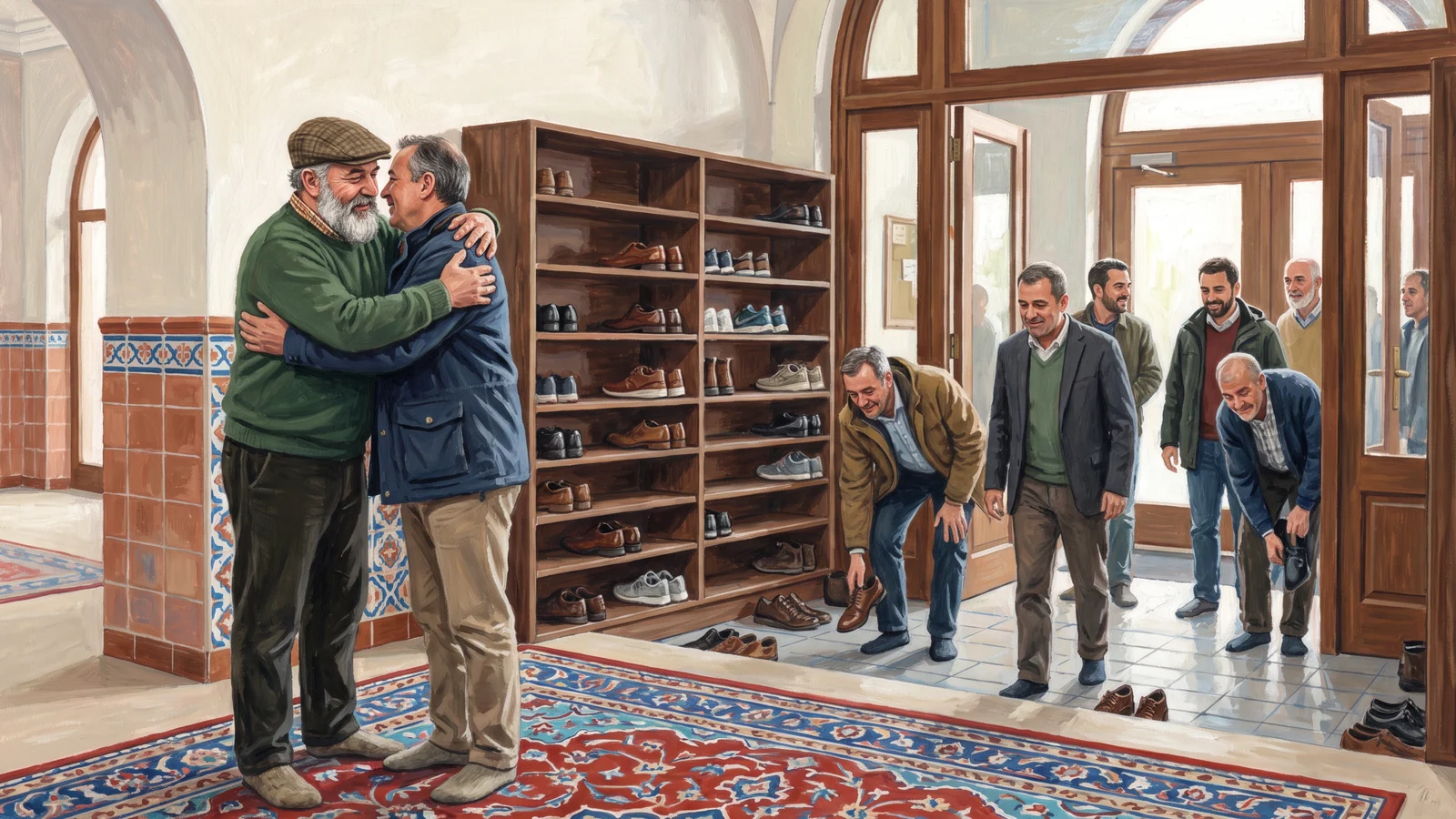
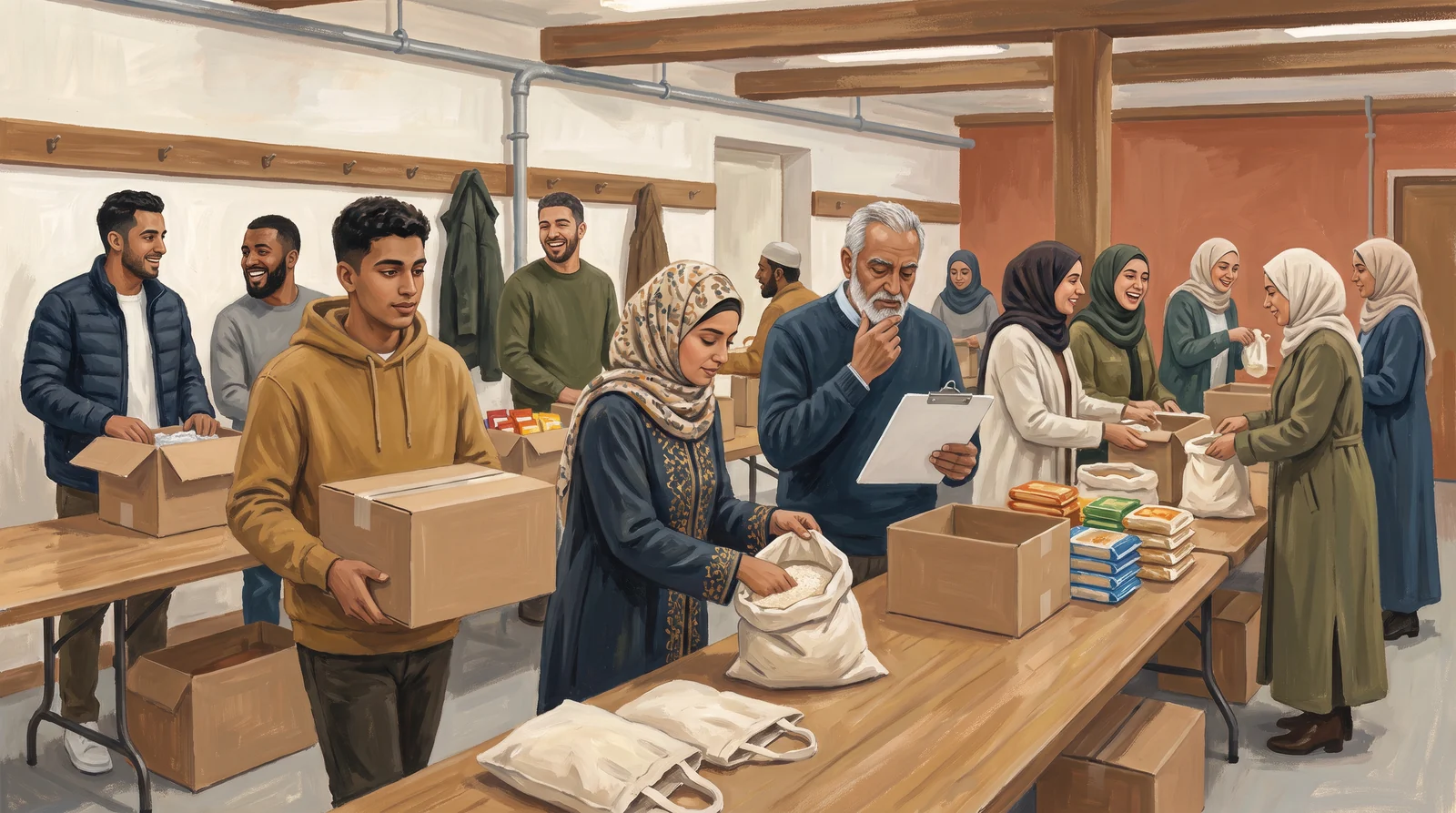
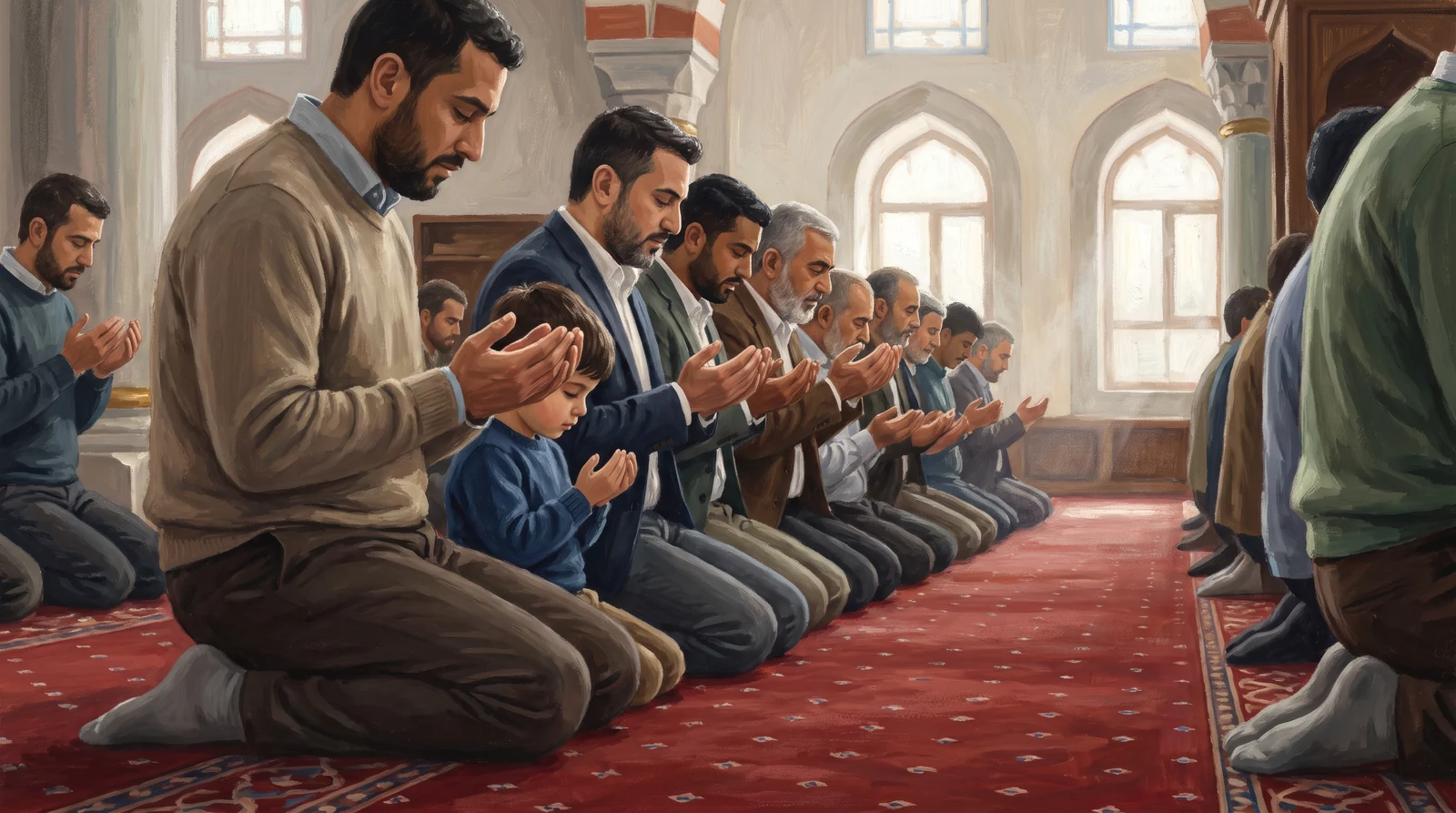
The images are illustrative scenes from the life of a congregation living in Europe today.Four main ideas
- Faith has its roots in the heart and its fruit in life.The complete believer is the same person in the mosque and in the marketplace.
- Prayer does not end in prostration.A prayer performed with khushu‘ is carried over into speech, conduct and uprightness.
- The tongue, the eye and the heart are a trust.Speak good or keep silent; stay far from backbiting and ill suspicion.
- Faith’s perfection is measured by good character.A believer who inspires trust, overcomes his anger, is patient and stands by his word.
Opening: Faith is a tree
الْحَمْدُ لِلَّهِ رَبِّ الْعَالَمِينَ، وَالصَّلَاةُ وَالسَّلَامُ عَلَى رَسُولِنَا مُحَمَّدٍ وَعَلَى آلِهِ وَصَحْبِهِ أَجْمَعِينَ
رَبِّ اشْرَحْ لِي صَدْرِي وَيَسِّرْ لِي أَمْرِي وَاحْلُلْ عُقْدَةً مِّن لِّسَانِي يَفْقَهُوا قَوْلِي
Praise belongs to Allah, the Lord of the worlds. May blessings and peace be upon our Prophet Muhammad, upon his family and upon all his Companions. My Lord! Give my heart ease, make my task easy for me, and loosen the knot from my tongue so that they understand my words well.
Praise: al-Fatiha, 1:2. Blessings on the Prophet: freely worded supplication. Supplication: Ta-Ha, 20:25–28
Dear congregation! My cherished brothers and sisters, who guard their faith here in Europe like a trust, and who strive to set a good example for their children and their neighbours!
Our neighbour, our colleague or our child’s teacher does not ask us, “How many articles of faith are there?” But every day they watch: Do we keep our word? Do we do our work properly? How do we speak when we are angry? Our European neighbour reads our lives before ever opening and reading the Qur’an. Our Lord likens faith and the good word to a tree with a firm root:
أَلَمْ تَرَ كَيْفَ ضَرَبَ اللَّهُ مَثَلًا كَلِمَةً طَيِّبَةً كَشَجَرَةٍ طَيِّبَةٍ أَصْلُهَا ثَابِتٌ وَفَرْعُهَا فِي السَّمَاءِ تُؤْتِي أُكُلَهَا كُلَّ حِينٍ بِإِذْنِ رَبِّهَا
Have you not seen what kind of parable Allah has given? He likens a good word to a good tree, its root firm and its branches in the sky. That tree yields its fruit at all times, by the leave of its Lord.
Ibrahim, 14:24–25; excerpt from the verses
The root of a tree lies unseen beneath the soil, but its fruit is there for everyone to see. The root of faith, too, is in the heart; only Allah knows it. Its fruit, however, becomes visible in our prayer, our words, our business dealings, our families and our neighbourliness. Today we shall speak about the qualities of the complete believer described by the Qur’an and our Prophet, that is, the believer whose faith has matured and come into fruit. Faith has its roots in the heart and its fruit in life.
Visible in life
FruitIn our prayer, our words, our business dealings, our families and our neighbourliness.
Strengthened by action
TrunkAction nourishes faith, strengthens it and brings it to maturity.
In the heart
RootThe heart’s affirmation; only Allah knows it.

I. The foundation of faith and its perfection
The root lies in the heart, and the fruit shows in action and character: Faith saves through its foundation and raises through its perfection.
آمَنَ الرَّسُولُ بِمَا أُنزِلَ إِلَيْهِ مِن رَّبِّهِ وَالْمُؤْمِنُونَ كُلٌّ آمَنَ بِاللَّهِ وَمَلَائِكَتِهِ وَكُتُبِهِ وَرُسُلِهِ لَا نُفَرِّقُ بَيْنَ أَحَدٍ مِّن رُّسُلِهِ وَقَالُوا سَمِعْنَا وَأَطَعْنَا غُفْرَانَكَ رَبَّنَا وَإِلَيْكَ الْمَصِيرُ
The Messenger of Allah and the believers have believed in what was sent down to him from his Lord. Each one of them believes in Allah, His angels, His books and His messengers. They said, “We make no distinction between any of His messengers,” and “We have heard and we obey. We seek Your forgiveness, our Lord, and to You is the return.”
al-Baqara, 2:285
My dear brothers and sisters! Faith is to affirm with the heart the definitively known teachings that our Prophet brought from Allah, and to accept without hesitation whatever he has told us. A person who declares this acceptance with the tongue is called a believer. One who rejects it is called a disbeliever, and one who says “I believe” with the tongue but does not believe in the heart is called a hypocrite.
Sunni scholars distinguish between the foundation of faith and its perfection: righteous action is not part of the foundation of faith; therefore a believer who sins does not leave faith. But action nourishes faith, strengthens it and brings it to maturity. A tree that has a root but bears no fruit has not withered; it is waiting for its gardener’s labour. Faith saves through its foundation and raises through its perfection.
Foundation: Root
- Affirmation with the heart, declaration with the tongue
- A believer who sins does not leave faith
- Faith saves through its foundation
Perfection: Fruit
- Action nourishes faith, strengthens it and brings it to maturity
- Faith raises through its perfection
- Visible in life
A tree that bears no fruit has not withered; it is waiting for its gardener’s labour.
الْإِيمَانُ بِضْعٌ وَسَبْعُونَ أَوْ بِضْعٌ وَسِتُّونَ شُعْبَةً، فَأَفْضَلُهَا قَوْلُ لَا إِلَهَ إِلَّا اللَّهُ، وَأَدْنَاهَا إِمَاطَةُ الْأَذَى عَنِ الطَّرِيقِ، وَالْحَيَاءُ شُعْبَةٌ مِنَ الْإِيمَانِ
Faith has seventy-odd branches, or sixty-odd branches. The highest of them is the saying “La ilaha illa Allah”, and the lowest is removing something harmful from the road. Modesty is also a branch of faith.
Muslim, Iman, 58 (35)
The highest branch of faith is tawhid (declaring Allah’s oneness); the lowest is removing an obstacle from the road. So faith is a broad way of life, reaching from the word of tawhid in the heart to a stone on the pavement. In another hadith our Prophet ties the perfection of faith to brotherhood: “None of you (fully) believes until he wants for his brother what he wants for himself.” (al-Bukhari, Iman, 7; Muslim, Iman, 71) The scholars understood the words “does not (fully) believe” here as negating not the foundation of faith but its perfection. (al-Nawawi, Sharh Muslim, II, 16)
- HighestLa ilaha illa AllahTawhid in the heart and on the tongue
- In betweenSeventy-odd branchesModesty is also a branch of faith
- LowestRemoving something harmful from the roadMoving a stone off the pavement is also a branch of faith
The Qur’an too says of those whose hearts tremble when Allah is mentioned, who perform the prayer and who spend from their provision, “It is they who are the true believers.” (al-Anfal, 8:2–4) Now let us take up the qualities of this true believer one by one.
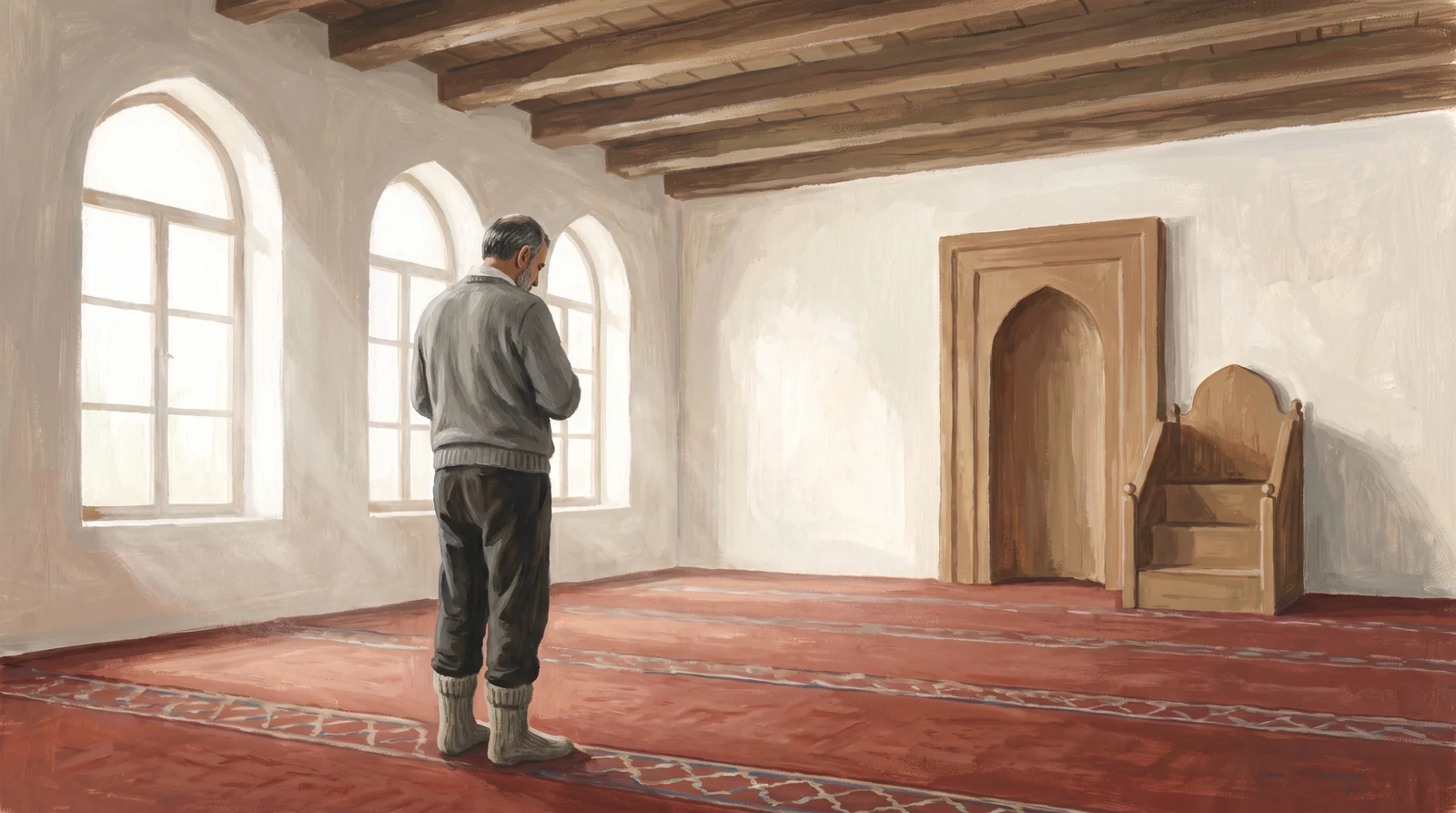
II. The complete believer has khushu‘ in prayer
Surah al-Mu’minun begins with prayer and ends with prayer; all the other qualities find their place around prayer.
قَدْ أَفْلَحَ الْمُؤْمِنُونَ الَّذِينَ هُمْ فِي صَلَاتِهِمْ خَاشِعُونَ
The believers have certainly attained salvation: those who live in a state of deep reverence in their prayers.
al-Mu’minun, 23:1–2
Surah al-Mu’minun begins its description of the believers who attain salvation with prayer, and ends with prayer again. In between it lists turning away from idle talk, zakat, chastity, and honouring trusts and covenants. (al-Mu’minun, 23:1–11) The qualities of the complete believer are, as it were, framed by prayer:
1They pray with humble devotionverse 2
- 2verse 3They turn away from idle talk
- 3verse 4They pay zakat
- 4verses 5–7They guard their chastity
- 5verse 8They honour trusts and covenants
6They guard their prayersverse 9
Glad tidings: they will inherit the Paradise of Firdaws (verses 10–11)
Khushu‘ is the bowing of the heart in reverence, knowing that it stands before Allah, and the stilling of the body in that same reverence. In prayer, a servant draws closest to his Lord in prostration; but it is not enough merely to perform it; the real matter is to attain khushu‘ within the prayer. A prayer performed while our mind is on shopping, our eyes on the clock and our heart on the world may discharge the obligation, yet it struggles to bring the heart to life.
The way to khushu‘ is clear: to pray on time and without haste, to learn the meaning of what we recite, to stay a moment longer in prostration, to silence the phone before prayer, and to begin with the opening takbir saying to ourselves, “Perhaps this is my last prayer.” Khushu‘ is not gained in an instant; it grows a little more with every prayer.
إِنَّ اللَّهَ لَا يَنْظُرُ إِلَى صُوَرِكُمْ وَأَمْوَالِكُمْ، وَلَكِنْ يَنْظُرُ إِلَى قُلُوبِكُمْ وَأَعْمَالِكُمْ
Allah does not look at your outward appearance or your wealth; rather, He looks at your hearts and your deeds.
Muslim, Birr, 34 (2564)
Here in Europe, prayer is sometimes squeezed into a short break at work, a break between lessons or a car park on a journey. Speaking politely with a manager so as to observe the prayer time at work, spreading the prayer mat in a clean corner where there is no prayer room, and treasuring every prayer we can perform in congregation: this is the effort of the complete believer. If prayer stands at the centre of our lives, all the other qualities find their place around it.
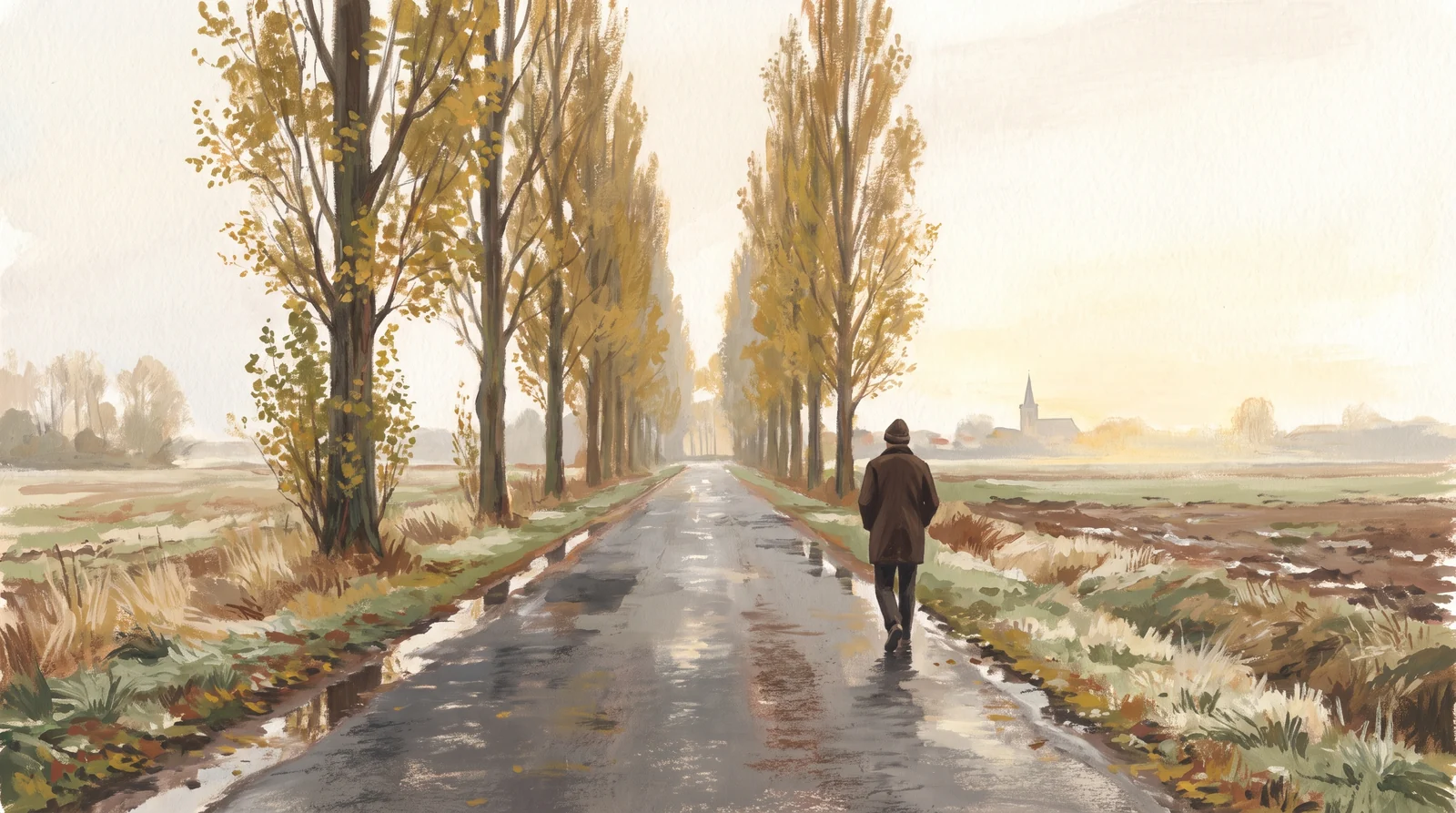
When prayer enters life: Uprightness
اتْلُ مَا أُوحِيَ إِلَيْكَ مِنَ الْكِتَابِ وَأَقِمِ الصَّلَاةَ إِنَّ الصَّلَاةَ تَنْهَىٰ عَنِ الْفَحْشَاءِ وَالْمُنكَرِ
Recite what has been revealed to you from the Book, and perform the prayer with care. Without doubt, the prayer keeps one from shameless acts and from wrongdoing.
al-‘Ankabut, 29:45; excerpt from the verse
A prayer performed with khushu‘ does not end in prostration; it is carried into a person’s life. Just as we place our heads in prostration, so our hands will prostrate as well and will not reach for what is forbidden; our feet will prostrate as well and will not walk towards evil. It is not enough for our tongue to remember Allah; that tongue will not lie, will not backbite, will not set people against one another. If we pray yet wrong other people, it means we have not yet gained what prayer should have brought us.
فَاسْتَقِمْ كَمَا أُمِرْتَ وَمَن تَابَ مَعَكَ وَلَا تَطْغَوْا إِنَّهُ بِمَا تَعْمَلُونَ بَصِيرٌ
Be upright, as you have been commanded, together with those who have turned back to the right path at your side! And do not stray beyond bounds. Allah sees very well what you do.
Hud, 11:112
The Companion Sufyan ibn ‘Abdullah (may Allah be pleased with him) said, “O Messenger of Allah! Tell me something about Islam such that I need not ask anyone else after you.” Our Prophet replied, “Say, ‘I believe in Allah’, and then be upright.” (Muslim, Iman, 62) Istiqama is the harmony of belief, word and conduct. There is no duplicity in the life of the complete believer: he is not one person in the mosque and another at work, one person in front of others and another when alone.
- BeliefAffirmation in the heart
- WordTrue and good
- ConductThe same everywhere
The same person in the mosque and in the marketplace.
To be able to say “Allah sees” where no one else sees is the essence of istiqama. Allah sees us at home, at work, in the shops and markets, and in front of a screen, just as He sees us in the mosque.

III. The complete believer guards tongue and eyes
The ear, the eye and the heart are a trust; speak good or keep silent.
وَلَا تَقْفُ مَا لَيْسَ لَكَ بِهِ عِلْمٌ إِنَّ السَّمْعَ وَالْبَصَرَ وَالْفُؤَادَ كُلُّ أُولَٰئِكَ كَانَ عَنْهُ مَسْئُولًا
Do not go after what you have no knowledge of! For the ear, the eye and the heart: each of these is answerable for it.
al-Isra’, 17:36
My dear brothers and sisters! Every part of the body that Allah has given us is a trust, and every trust will be accounted for. The complete believer knows that the tongue, a small piece of flesh, can drag a person to disaster in this world and in the hereafter. Our Prophet, taking hold of his own tongue, said to Mu‘adh ibn Jabal (may Allah be pleased with him), “Restrain this!” and then asked, “Is it anything but the harvest of their tongues that throws people on their faces into the Fire?” (al-Tirmidhi, Iman, 8)
- EarVerify what you hear; do not listen to rumour.
- EyeAvoid forbidden sights; if need be, flip the screen over.
- HeartAvoid ill suspicion; leave no room for spite or envy.
- TongueSpeak good or keep silent; no room for backbiting or lies.
مَنْ كَانَ يُؤْمِنُ بِاللَّهِ وَالْيَوْمِ الْآخِرِ فَلْيَقُلْ خَيْرًا أَوْ لِيَصْمُتْ
Whoever believes in Allah and the Last Day should either speak what is good or keep silent.
al-Bukhari, Riqaq, 23 (6475); Muslim, Iman, 74 (47); excerpt from the narration
The complete believer also guards his eyes. Our Lord commands believing men and believing women to keep their eyes away from what is forbidden. (al-Nur, 24:30–31) Today the eye is tested not only in the street but also on the screen in the palm of our hand. We can turn our eyes away from what appears with one click; every image we keep looking at knowingly and every news item we share without knowing it is true is written to the account of our eyes and our hearts. Being able to turn the screen face-down is also a matter of faith.
Here in Europe this also has a dimension of language: the more languages we know, the greater our responsibility. Whether we speak Turkish, French, Dutch or German, what our Lord asks of us is the same: speech that is true, good and fitting.
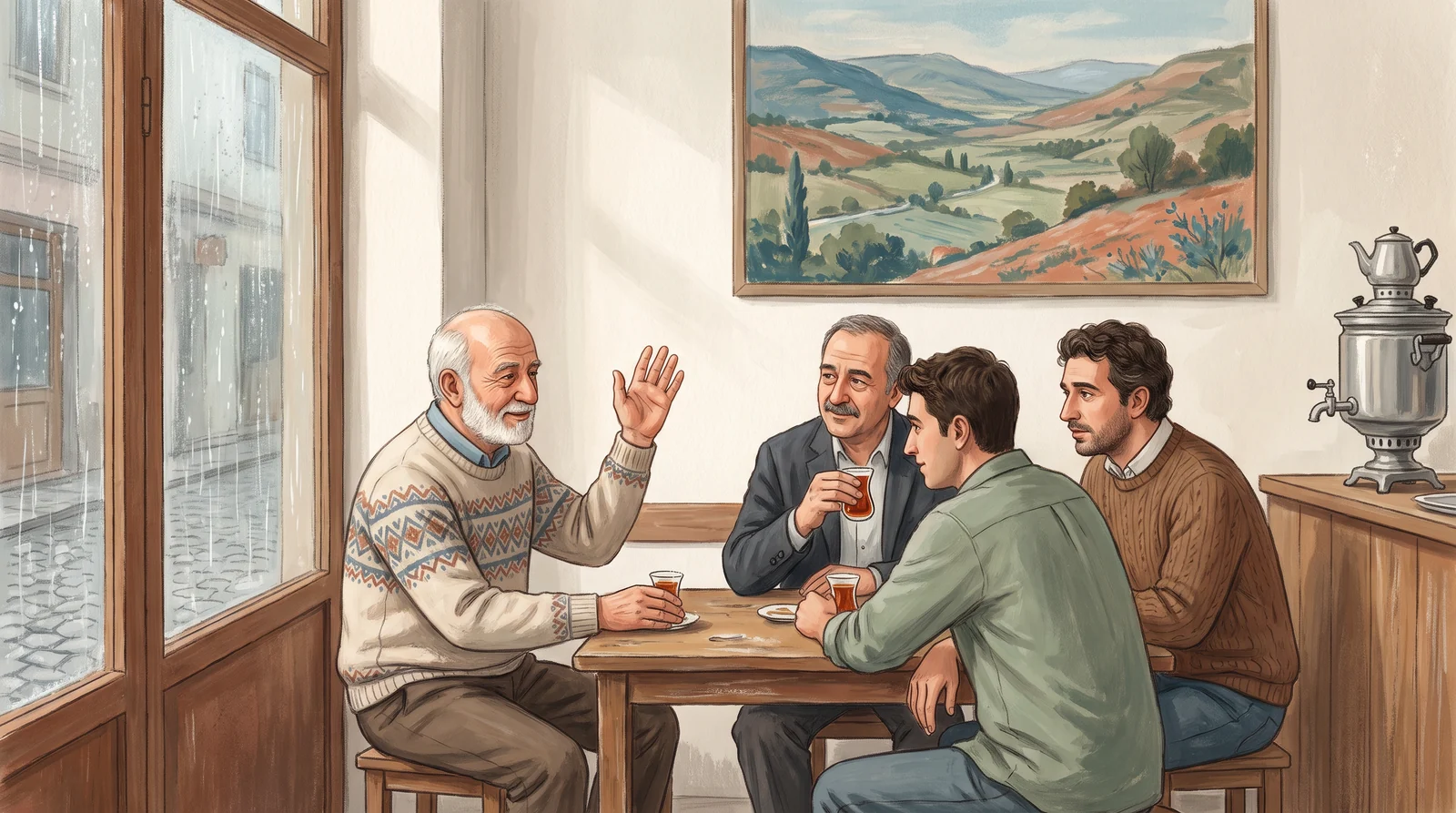
IV. The complete believer avoids backbiting and gossip
Ill suspicion, searching out faults and backbiting: three links of one chain.
يَا أَيُّهَا الَّذِينَ آمَنُوا اجْتَنِبُوا كَثِيرًا مِّنَ الظَّنِّ إِنَّ بَعْضَ الظَّنِّ إِثْمٌ وَلَا تَجَسَّسُوا وَلَا يَغْتَب بَّعْضُكُم بَعْضًا أَيُحِبُّ أَحَدُكُمْ أَن يَأْكُلَ لَحْمَ أَخِيهِ مَيْتًا فَكَرِهْتُمُوهُ وَاتَّقُوا اللَّهَ إِنَّ اللَّهَ تَوَّابٌ رَّحِيمٌ
You who believe! Avoid most suspicion, for some suspicion is sin. Do not pry into one another’s private affairs and do not backbite one another. Would any one of you like to eat the flesh of his dead brother? Of course you would loathe it! And guard yourselves against disobeying Allah. Allah accepts repentance in abundance; His mercy is limitless.
al-Hujurat, 49:12
The verse lines up three evils like a chain: a chain that begins with suspicion, grows by searching out faults, and ends with speaking behind a brother’s back. Our Lord likens backbiting to eating the flesh of one’s dead brother, because the person who is backbitten is not there and cannot defend himself.
- 1Ill suspicionAvoid most suspicion.
- 2Searching out faultsDo not pry into one another’s private affairs.
- 3BackbitingDo not backbite one another.
Our Lord likens backbiting to eating the flesh of one’s dead brother.
أَتَدْرُونَ مَا الْغِيبَةُ؟ قَالُوا: اللَّهُ وَرَسُولُهُ أَعْلَمُ. قَالَ: ذِكْرُكَ أَخَاكَ بِمَا يَكْرَهُ
“Do you know what backbiting is?” The Companions said, “Allah and His Messenger know best.” Our Prophet said, “It is mentioning your brother in a way he would dislike.” When he was asked, “What if what I say is true of my brother?” he replied, “If it is true of him, you have backbitten him; if it is not, you have slandered him.”
Muslim, Birr, 70 (2589); excerpt from the narration
Our Prophet describes the truly bankrupt person thus: on the Day of Resurrection he comes with prayer, fasting and zakat; but he has insulted someone, slandered someone and consumed someone’s property. His good deeds are given to those he wronged, and when his good deeds run out, their sins are loaded onto him. (Muslim, Birr, 59) Backbiting transfers the capital for the hereafter that we have built up with so much effort into someone else’s account.

V. In the mirror of the hadiths: Good character
The maturity of faith is measured by the beauty of character; the first test lies at our own front door.
Dear brothers and sisters! Our Prophet has left us a scale by which to measure the maturity of faith.
أَكْمَلُ الْمُؤْمِنِينَ إِيمَانًا أَحْسَنُهُمْ خُلُقًا، وَخِيَارُكُمْ خِيَارُكُمْ لِنِسَائِهِمْ خُلُقًا
The most mature of the believers in faith is the one whose character is finest. And the best of you are those who are finest in character towards their wives.
al-Tirmidhi, Rada‘, 11 (1162)
In this hadith faith and character meet in a single sentence: the perfection of faith is measured by the beauty of character. The second sentence of the hadith shows where this scale is first set up: the home. The character of a person who is cheerful, polite and helpful outside, but harsh with his wife and children at home, has not yet reached perfection. The first test of character comes the moment we step in through our own front door.
Our Prophet also summed up the purpose for which he was sent: “I was sent only to complete good character.” (Ibn Hanbal, II, 381) And our Lord addresses him, saying:
وَإِنَّكَ لَعَلَىٰ خُلُقٍ عَظِيمٍ
You are surely of a sublime character.
al-Qalam, 68:4
When our mother Aisha was asked about our Prophet’s character, she answered, “His character was the Qur’an.” (Muslim, Musafirin, 139) A life that embodies every goodness the Qur’an commands and keeps away from every ugliness it forbids… The complete believer takes that life as his example. Our Lord shows us this example in these words: “For those among you who place their hope in Allah’s favour and in the Last Day, and who remember Allah often, there is, without doubt, a beautiful example in the Messenger of Allah.” (al-Ahzab, 33:21)
Good character means giving the greeting of peace with a smiling face, swallowing a hurtful word, showing respect to the elderly, tenderness to the young, and thanking those who serve us. These seem small; yet our Prophet informed us that nothing weighs heavier on the believer’s Scale on the Day of Resurrection than good character. (al-Tirmidhi, Birr, 62)
- A smiling greeting of peace
- Swallowing hurtful words
- Honouring elders
- Tenderness to the young
- Thanking those who serve us
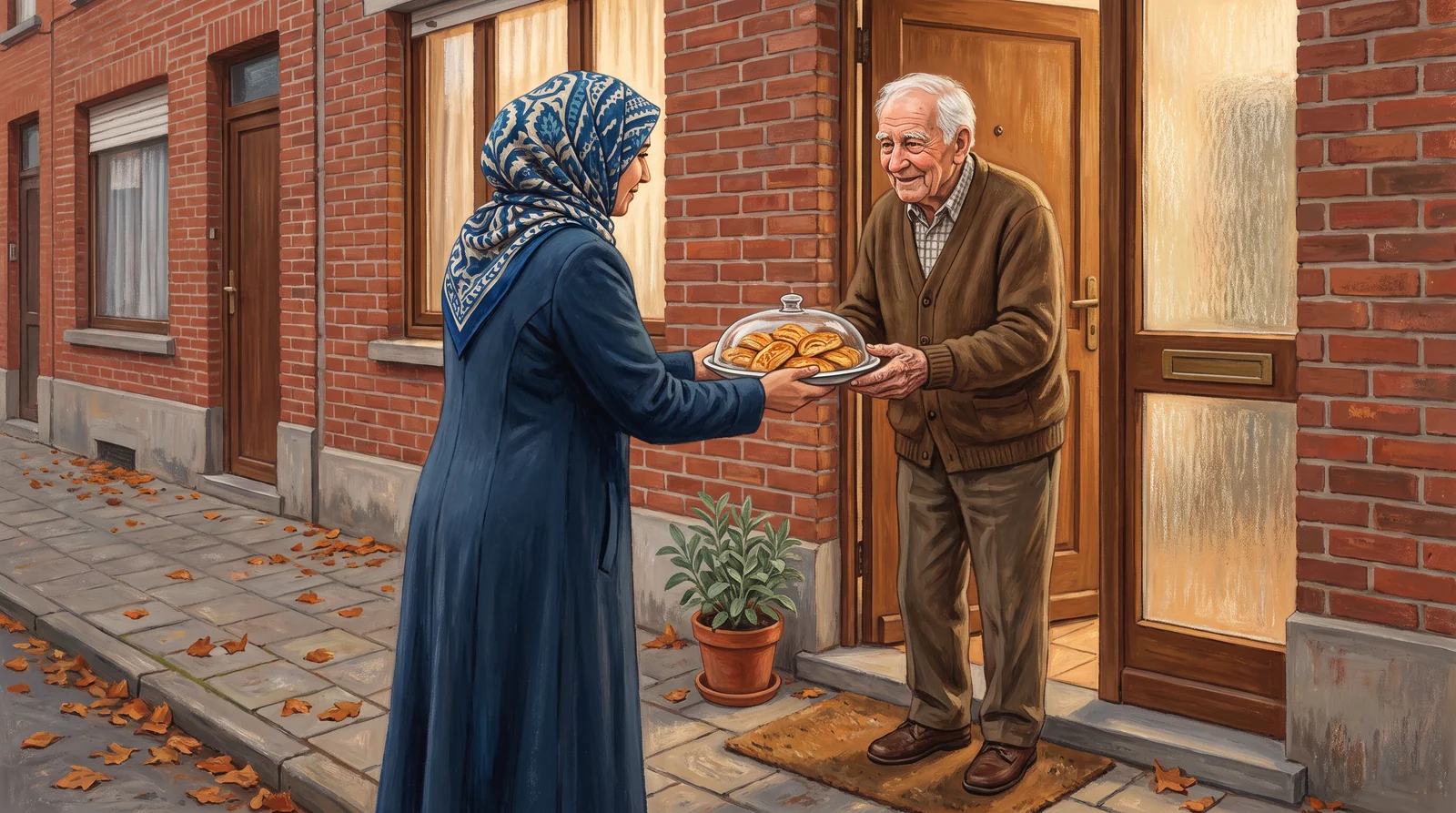
Safe from his hand and his tongue
الْمُسْلِمُ مَنْ سَلِمَ النَّاسُ مِنْ لِسَانِهِ وَيَدِهِ، وَالْمُؤْمِنُ مَنْ أَمِنَهُ النَّاسُ عَلَى دِمَائِهِمْ وَأَمْوَالِهِمْ
A Muslim is one from whose tongue and hand people are safe. A believer is one whom people trust with regard to their lives and their property.
al-Nasa’i, Iman, 8 (4998); with similar wording al-Tirmidhi, Iman, 12 (2627)
My dear brothers and sisters! The word “believer” (mu’min) comes from the root of “trust”. One of Allah’s most beautiful names is al-Mu’min, which means the One who gives His servants assurance. So a believer is a person who trusts and who inspires trust. The complete believer is not feared for his hand or his tongue. He is free of deceit, his trade is honest, and he does not betray a trust. As he inspires trust in the prayer rows of the mosque, so he inspires trust outside the mosque.
Our Prophet also taught this trust through neighbourliness. Three times he said, “By Allah, he does not believe!” When asked, “Who, O Messenger of Allah?” he said, “One whose neighbour is not safe from his harm.” (al-Bukhari, Adab, 29)
Here in Europe every Muslim, whether he wishes it or not, is a representative of Islam. One person’s lie may be charged to the whole community, a shopkeeper’s cheating to all Muslims. In the same way, a worker’s honesty, a student’s good manners and a neighbour’s smiling face say more than thousands of words of explanation. A neighbour who feels safe with us is a window opened onto Islam.
VI. The believer who masters anger and forgives
Overcoming anger, forgiving, and not hesitating to be the first to give the greeting of peace.
الَّذِينَ يُنفِقُونَ فِي السَّرَّاءِ وَالضَّرَّاءِ وَالْكَاظِمِينَ الْغَيْظَ وَالْعَافِينَ عَنِ النَّاسِ وَاللَّهُ يُحِبُّ الْمُحْسِنِينَ
They (the God-fearing) spend in Allah’s way in prosperity and in hardship, they overcome their anger, and they pardon people. Allah loves those who do good with excellence.
Al ‘Imran, 3:134
Anger is a natural emotion that Allah has placed in human beings; the fault lies not in its existence but in its seizing the reins. Anger lasts a moment, but its consequence sometimes turns into a regret that can never be made good. We know how many homes have been destroyed, and how many friendships ended, by a moment of anger. Our Prophet said, “The strong person is not the one who defeats his opponent in wrestling; the truly strong is the one who controls himself at the moment of anger.” (al-Bukhari, Adab, 76; Muslim, Birr, 107) When anger rises, he advised seeking refuge in Allah, keeping silent, and sitting down if we are standing (al-Bukhari, Adab, 76; Ibn Hanbal, I, 239; Abu Dawud, Adab, 3); a narration with a weak chain of transmission has also been reported that advises extinguishing anger with ablution.
The believer who overcomes his anger takes one step further and forgives. Our Lord teaches that answering evil with an equal response is justice, while pardoning and putting things right is a virtue whose reward He Himself will give. (al-Shura, 42:40)
- 1Overcoming angerkazm al-ghayzHolding back tongue and hand in a moment of anger
- 2Forgiving‘afwLetting go of resentment and putting things right
- 3Doing goodihsanBeing among those who do good with excellence
Allah loves those who do good with excellence.
مَا نَقَصَتْ صَدَقَةٌ مِنْ مَالٍ، وَمَا زَادَ اللَّهُ عَبْدًا بِعَفْوٍ إِلَّا عِزًّا، وَمَا تَوَاضَعَ أَحَدٌ لِلَّهِ إِلَّا رَفَعَهُ اللَّهُ
Charity never diminishes wealth. Allah adds nothing to a servant who forgives except honour. And whoever humbles himself for Allah’s sake, Allah raises him.
Muslim, Birr, 69 (2588)
Abu Bakr (may Allah be pleased with him) had sworn that he would no longer support his relative Mistah, who had joined in the slander against his daughter Aisha. Thereupon this verse was revealed: “Let them pardon and overlook. Do you not wish that Allah should forgive you?” (al-Nur, 24:22) Abu Bakr, at once said, “Yes, by Allah, I do wish that Allah would forgive me,” and resumed his support for Mistah. (al-Bukhari, Tafsir, al-Nur, 6) Our Prophet too, at the conquest of Mecca, forgave those who had tormented him for years, and so gave the highest example of this character.
The complete believer does not stay estranged from his brother for more than three days, because our Prophet taught that this is not permissible, and that the better of two people who have fallen out is the one who is first to give the greeting of peace. (al-Bukhari, Adab, 62; Muslim, Birr, 25) Whoever wishes to be forgiven forgives; the complete believer does not hesitate to be the first to give the greeting of peace.

VII. Patience and gratitude: The believer’s two wings
Patience in hardship, gratitude in plenty: A bird that flies on two wings does not lose its way.
وَالصَّلَاةُ نُورٌ، وَالصَّدَقَةُ بُرْهَانٌ، وَالصَّبْرُ ضِيَاءٌ
Prayer is a light, charity is proof (of faith), and patience is a radiant light.
Muslim, Tahara, 1 (223); excerpt from the narration
The word diya’, used in the hadith for patience, describes a light that both illuminates and warms, like the light of the sun. Patience is like a lamp burning in a dark night: it does not remove hardship at once, but it lets us see our way. When a calamity strikes, the complete believer does not rebel, and does not complain to everyone he meets. He knows that every hardship he lives through is a test in this world, and he holds fast to the glad tidings our Lord gives, “Truly, Allah is with those who show patience” (al-Baqara, 2:153).
Patience is not merely enduring misfortune. Resisting what is forbidden, persevering in worship and standing firm in truthfulness are also patience. Surah al-‘Asr tells us that those saved from loss are those who believe and do righteous deeds, and who urge one another to the truth and to patience. (al-‘Asr, 103:1–3) One of the finest kindnesses we can show a fellow Muslim is to remind him of patience on his difficult day.
عَجَبًا لِأَمْرِ الْمُؤْمِنِ، إِنَّ أَمْرَهُ كُلَّهُ خَيْرٌ، وَلَيْسَ ذَاكَ لِأَحَدٍ إِلَّا لِلْمُؤْمِنِ، إِنْ أَصَابَتْهُ سَرَّاءُ شَكَرَ فَكَانَ خَيْرًا لَهُ، وَإِنْ أَصَابَتْهُ ضَرَّاءُ صَبَرَ فَكَانَ خَيْرًا لَهُ
How wonderful is the state of the believer! All his affairs are good for him, and this is true of no one except the believer. If something pleasing happens to him, he gives thanks, and that is good for him. If something distressing befalls him, he is patient, and that is good for him too.
Muslim, Zuhd, 64 (2999)

Life here in Europe often tests both our patience and our gratitude: an illness, the loss of a job, a worry over a child, the distance from parents back home… Yet this same life gives us blessings too: lawful livelihood, our children’s education, the congregation of our mosque. The complete believer arms himself with patience in hardship and gratitude in plenty; like a bird flying on its two wings, he does not lose his way.
In hardship
PatienceNot rebelling in calamity, resisting what is forbidden, persevering in worship and truthfulness.
In plenty
GratitudeGiving thanks for lawful livelihood, our children’s education and the congregation of our mosque.
A bird that flies on two wings does not lose its way.
VIII. Infaq and keeping one’s word: The believer faithful to trusts
Sharing one’s provision; standing by one’s word and signature.
إِنَّ الَّذِينَ يَتْلُونَ كِتَابَ اللَّهِ وَأَقَامُوا الصَّلَاةَ وَأَنفَقُوا مِمَّا رَزَقْنَاهُمْ سِرًّا وَعَلَانِيَةً يَرْجُونَ تِجَارَةً لَّن تَبُورَ
Those who recite Allah’s Book, who perform the prayer with care, and who spend on others, in secret and in the open, from the provision We have given them, may hope for a trade that will never end in loss.
Fatir, 35:29
Infaq is to share some of the blessings Allah has given with those in need, for the sake of His good pleasure. The Qur’an mentions infaq right beside faith, because a person who can share his wealth shows that his heart is not tied to this world. Secret infaq protects against showing off, while open infaq sets an example for others. The aid parcels of our mosque associations, student scholarships, funeral funds, and the hands stretched out to earthquake victims are the branches of this trade here in Europe.
Secret infaq
- Protects against showing off
- Shows that the heart is not tied to this world
Open infaq
- Sets an example for others
- Aid parcels, student scholarships, funeral funds
A trade that will never end in loss.
لَا إِيمَانَ لِمَنْ لَا أَمَانَةَ لَهُ، وَلَا دِينَ لِمَنْ لَا عَهْدَ لَهُ
There is no (complete) faith for one who does not honour a trust, and no (complete) religion for one who does not keep a covenant.
Ibn Hanbal, III, 134
Anas ibn Malik (may Allah be pleased with him) reports that our Prophet said these words in almost every address he gave us. Keeping one’s word means remaining faithfully bound to a promise given and an agreement made. Our Lord says, “You who believe! Fulfil your contracts” (al-Ma’ida, 5:1) and “Keep faith with your covenant, for a covenant entails responsibility” (al-Isra’, 17:34). Our Prophet counted lying when one speaks, breaking one’s word when one promises, and betraying a trust among the signs of a hypocrite. (al-Bukhari, Iman, 24; Muslim, Iman, 107)
Here in Europe, keeping one’s word covers a very wide field: honouring the employment contract and working hours, paying the rent and settling debts as agreed, arriving on time for appointments, paying taxes and insurance honestly, and abiding by the lawful order of the country in which we live. Every door we pass through with a residence permit, a work permit or citizenship is a contract. The complete believer stands behind his signature and his word.

Keeping one’s word here in Europe
- Keeping to the work contract and hours
- Rent and debts paid as agreed
- Punctual for appointments
- Paying taxes and insurance honestly
- Abiding by the lawful order of the country we live in
Every door we pass through with a residence permit, a work permit or citizenship is a contract.

IX. From pulpit to heart: The Qur’an’s mirror and seven promises
The believers described by the Qur’an, and the seven promises we shall hang where they can be seen in our home.
Dear congregation! The qualities of the complete believer are not limited to these; the Qur’an holds up a broader mirror to us.
BELIEVERS IN THE MIRROR OF THE QUR’AN Quality · Verse
- They believe in the unseen, perform the prayer, and spend in good causes from what We have given them.al-Baqara, 2:3
- They keep away from empty, useless words and deeds.al-Mu’minun, 23:3
- They are faithful to their trusts and their covenants.al-Mu’minun, 23:8
- They walk on the earth with dignity, and when the ignorant taunt them they say “peace” and pass on.al-Furqan, 25:63
- They spend their nights prostrating before their Lord and standing before Him.al-Furqan, 25:64
- When they spend, they are neither wasteful nor miserly; they keep a balance between the two.al-Furqan, 25:67
- They do not bear witness to falsehood; when they come across empty behaviour they walk away with dignity.al-Furqan, 25:72
- They pray, “Our Lord! Grant us spouses and children who will bring us joy.”al-Furqan, 25:74
- I will pray with khushu‘. I will pray on time and without haste, and I will let my prayer keep me from evil.
- I will be the same person everywhere. In the mosque, at home, at work and in front of a screen, I will not forget that Allah sees me.
- I will guard my tongue. I will not lie, backbite or speak hurtful words; I will either speak good or keep silent.
- I will guard my eyes and my screen. I will not look at what is forbidden, and I will not share news whose truth I do not know.
- I will live with good character in my home. I will show the best behaviour to my spouse, my children and my parents.
- I will overcome my anger, be patient and give thanks. I will know how to forgive and will not stay estranged for more than three days; I will arm myself with patience in hardship and gratitude in plenty.
- I will keep my word and share my provision. I will be faithful to trusts, debts, appointments and contracts, and I will practise infaq from my provision, in secret and in the open.
لَا يُؤْمِنُ أَحَدُكُمْ حَتَّى يُحِبَّ لِأَخِيهِ مَا يُحِبُّ لِنَفْسِهِ
None of you believes (fully) until he wants for his brother what he wants for himself.
al-Bukhari, Iman, 7 (13); Muslim, Iman, 71 (45)
Faith has its roots in the heart and its fruit in life; the complete believer is the same person in the mosque and in the marketplace. As we leave this Friday prayer, let us ask ourselves one question: which branch of my tree is waiting most urgently to bear fruit? My prayer, my tongue, my home, my word? This week, let us resolve to water that branch and turn to our Lord.
- My prayerWith khushu‘, on time
- My tongueSpeaking good or keeping silent
- My homeGood character
- My wordKeeping faith with covenants and trusts
Closing the sermon in Europe and the congregation’s supplication
We pray to keep faith alive in our lives and to turn to our Lord.
Cherished brothers and sisters! Let us open our hearts to our Lord.
أَعُوذُ بِاللَّهِ مِنَ الشَّيْطَانِ الرَّجِيمِ
الْحَمْدُ لِلَّهِ رَبِّ الْعَالَمِينَ، وَالصَّلَاةُ وَالسَّلَامُ عَلَى رَسُولِنَا مُحَمَّدٍ وَعَلَى آلِهِ وَصَحْبِهِ أَجْمَعِينَ
I seek refuge in Allah from the evil of the accursed Satan. Praise belongs to Allah, the Lord of the worlds. May blessings and peace be upon our Prophet Muhammad, upon his family and upon all his Companions.
Praise: al-Fatiha, 1:2. Seeking refuge and blessings on the Prophet: freely worded supplication
رَبَّنَا لَا تُزِغْ قُلُوبَنَا بَعْدَ إِذْ هَدَيْتَنَا وَهَبْ لَنَا مِن لَّدُنكَ رَحْمَةً إِنَّكَ أَنتَ الْوَهَّابُ
Our Lord! Do not let our hearts swerve after You have guided us, and grant us a mercy from You. There is no doubt that You alone are the One whose bounty is abundant.
Al ‘Imran, 3:8
O Allah! Make faith beloved to us and let it settle in our hearts (al-Hujurat, 49:7); let the faith You have placed in our hearts shine through in our character. Grant our tongues truthfulness, our hearts sincerity, our eyes modesty, our hands what is lawful, and our feet uprightness. Make it easy for us to pray with khushu‘, to stand by our word and to remain faithful to every trust.
Our Lord! Keep us far from every word, deed and behaviour unbecoming of a complete believer. Fill our homes with good character, our tables with blessing and our neighbourhoods with trust. Make us fine representatives of Islam here in Europe, and make our children among the generations who live their faith in their daily lives.
O Allah! Make us among those who are patient in hardship, grateful in plenty, and who overcome their anger and forgive. Grant that we breathe our last in faith and appear before You with honour. Make us not only people who say “I am a Muslim”, but complete believers who live Islam in their lives.
Rabbana atina fi’d-dunya hasanatan wa fi’l-akhirati hasanatan wa qina ‘adhab an-nar: Our Lord! Grant us good in this world and good in the hereafter, and protect us from the punishment of the Fire (al-Baqara, 2:201). Amin. Wa’l-hamdu lillahi Rabbi’l-‘alamin. Al-Fatiha.
Verses, hadiths and other sources
The Qur’anic translations render the meaning rather than the wording, and have been compared with Kur’an Yolu; verses and hadiths that have been shortened are indicated in the text. The Arabic wording of the verses is taken from the Tanzil text, the wording of the hadiths has been compared with sunnah.com and Hadislerle İslam, and the gradings of the narrations have been checked on dorar.net.
- Verses: al-Fatiha 1:2; Ta-Ha 20:25–28; Ibrahim 14:24–25; al-Baqara 2:285; al-Anfal 8:2–4; al-Mu’minun 23:1–11; al-‘Ankabut 29:45; Hud 11:112; al-Isra’ 17:36; al-Nur 24:30–31; al-Hujurat 49:12; al-Qalam 68:4; al-Ahzab 33:21; Al ‘Imran 3:134; al-Shura 42:40; al-Nur 24:22; al-Baqara 2:153; al-‘Asr 103:1–3; Fatir 35:29; al-Ma’ida 5:1; al-Isra’ 17:34; al-Baqara 2:3; al-Furqan 25:63; al-Furqan 25:64; al-Furqan 25:67; al-Furqan 25:72; al-Furqan 25:74; Al ‘Imran 3:8; al-Hujurat 49:7; al-Baqara 2:201.
- Hadiths: Muslim, Iman 58 (35); al-Bukhari, Iman 7 (13) and Muslim, Iman 71 (45); Muslim, Birr 34 (2564); Muslim, Iman 62; al-Tirmidhi, Iman 8; al-Bukhari, Riqaq 23 (6475) and Muslim, Iman 74 (47); Muslim, Birr 70 (2589); Muslim, Birr 59; al-Tirmidhi, Rada‘ 11 (1162); Ibn Hanbal II, 381; Muslim, Musafirin 139; al-Tirmidhi, Birr 62; al-Nasa’i, Iman 8 (4998) and al-Tirmidhi, Iman 12 (2627); al-Bukhari, Adab 29; al-Bukhari, Adab 76 and Muslim, Birr 107; Ibn Hanbal I, 239 and Abu Dawud, Adab 3; Muslim, Birr 69 (2588); al-Bukhari, Tafsir, al-Nur 6; al-Bukhari, Adab 62 and Muslim, Birr 25; Muslim, Tahara 1 (223); Muslim, Zuhd 64 (2999); Ibn Hanbal III, 134; al-Bukhari, Iman 24 and Muslim, Iman 107.
- Report from a Companion: The conversation between the shepherd and ‘Abdullah ibn ‘Umar is not a hadith but a report transmitted from a Companion: al-Haythami, Majma‘ al-Zawa’id IX, 350; al-Bayhaqi, Shu‘ab al-Iman IV, 329.
- Encyclopaedia and commentary: TDV İslâm Ansiklopedisi, the entries “İman”, “Huşû” and “İstikâmet”; al-Nawawi, Sharh Muslim II, 16.
- Images: The scene pictures are illustrative images produced with artificial intelligence; no prophet or Companion is depicted. The scenes “A remark in a group chat” and “The baker’s test of honesty” are likewise illustrative.