
Sermon
A Life of Goodness and Ihsan — Living as if we see Allah and carrying goodness to everyone
The concepts of goodness (khayr, birr, ihsan and ma‘ruf), those it is for and its hardest form; goodness to neighbours, relatives and on screen; being a key to good and the pledge for goodness; in the appendix, a list of 40 good deeds in Europe.
Translated from the Turkish original. Read the Turkish original →

The believer who lives as if they see Allah carries goodness to those they know and to those they do not; they answer evil with good and the trace they leave lives on after their death.
The images are illustrative scenes from the life of a community living in Europe today.Four main ideas
- Goodness is not only financial help.Khayr, birr, ihsan and ma‘ruf: beautifying one’s words, work and neighbourliness; working with itqan.
- Goodness is carried to those we know and those we do not.Seven circles from parents to the traveller; greeting, a plate of food and help for the non-Muslim neighbour.
- Evil is answered with good.Greeting, a plate of food and patience turn enmity into friendship; whoever takes the first step towards an estranged relative wins.
- The trace left behind lives on after death.Ongoing charity, beneficial knowledge and a righteous child; every day a good deed, every evening a reckoning.
Opening: The earth is the inheritance of the righteous
We unfold the command we hear every Friday: justice, ihsan and giving to relatives.
الْحَمْدُ لِلَّهِ رَبِّ الْعَالَمِينَ، وَالصَّلَاةُ وَالسَّلَامُ عَلَى رَسُولِنَا مُحَمَّدٍ وَعَلَى آلِهِ وَصَحْبِهِ أَجْمَعِينَ
قَالَ رَبِّ اشْرَحْ لِي صَدْرِي وَيَسِّرْ لِي أَمْرِي وَاحْلُلْ عُقْدَةً مِّن لِّسَانِي يَفْقَهُوا قَوْلِي
Praise belongs to Allah, Lord of the worlds. May blessings and peace be upon our Prophet Muhammad, his family and all his Companions. Musa said, “My Lord! Expand my heart. Make my task easy for me. Untie the knot from my tongue, so that they understand my words well.”
Praise: al-Fatiha, 1:2. Blessings: free wording of supplication. Supplication: Ta-Ha, 20:25–28
Dear congregation! My dear brothers and sisters, who know the value of a warm greeting, a smile and a bowl of soup on the cold days of our life in Europe!
Every Friday we listen to the same verse at the end of the khutba; today we begin by unfolding the meaning of that verse:
إِنَّ اللَّهَ يَأْمُرُ بِالْعَدْلِ وَالْإِحْسَانِ وَإِيتَاءِ ذِي الْقُرْبَىٰ وَيَنْهَىٰ عَنِ الْفَحْشَاءِ وَالْمُنكَرِ وَالْبَغْيِ يَعِظُكُمْ لَعَلَّكُمْ تَذَكَّرُونَ
Truly Allah commands justice, ihsan and generosity towards relatives; He forbids indecency, evil and tyranny. Allah admonishes you in this way, so that you may take heed.
an-Nahl, 16:90
The religion of Islam aims to secure the happiness of the person in this world and the Hereafter; among the paths to that goal, “being good” and “making goodness prevail on earth” come first. Our Lord says: “We wrote in the Psalms, after the Remembrance, that ‘My righteous servants shall inherit the earth.’” (al-Anbiya’, 21:105) So evil was never destined to last; Pharaoh and Nimrod have left the stage, while the struggle of the doers of good continues. (Kur’an Yolu, vol. 3, pp. 703–705)
In verses and hadiths, goodness is called “khayr”, “birr”, “ihsan” and “ma‘ruf”. Looking after the poor without hurting them and guarding their dignity is ihsan; serving one’s parents with a smiling face is ihsan; doing one’s work in the finest way, mindful of the rights of others, is ihsan.
Today we shall speak of the concepts, of those to whom goodness is owed, and of goodness in its hardest form, and at the end we shall make a pledge. Our main sentence: The believer who lives as if they see Allah carries goodness to those they know and to those they do not; they answer evil with good and the trace they leave lives on after their death.
I. What is goodness? Khayr, birr and ma‘ruf
The Qur’an’s words for goodness: khayr, birr, ihsan and ma‘ruf.
لَّيْسَ الْبِرَّ أَن تُوَلُّوا وُجُوهَكُمْ قِبَلَ الْمَشْرِقِ وَالْمَغْرِبِ وَلَٰكِنَّ الْبِرَّ مَنْ آمَنَ بِاللَّهِ وَالْيَوْمِ الْآخِرِ وَالْمَلَائِكَةِ وَالْكِتَابِ وَالنَّبِيِّينَ
Turning your faces towards the east or the west is not righteousness. The truly righteous are those who believe in Allah, the Last Day, the angels, the Book and the prophets; who give from the wealth they love to relatives, orphans, the needy, stranded travellers, those who ask, and those who have lost their freedom; who establish prayer and give zakat. Such people keep their word when they make an agreement; they are patient in hardship, illness and times of war. These are the truthful, and these are the God-fearing.
al-Baqara, 2:177; excerpt from the verse
“Birr” is among the most comprehensive concepts of the Qur’an: it embraces every kind of goodness, from faith to worship. From the same root, “berr” is a name of Allah (at-Tur, 52:28) and an attribute of the obedient person. (Kur’an Yolu, vol. 1, pp. 263–264)
- KhayrGood, beautiful and beneficial things; the opposite of evil.
- BirrThe most comprehensive concept, embracing every good from faith to worship.
- IhsanDoing what you do in the most beautiful way; living as if you see.
- Ma‘rufFine words and conduct that everyone recognises as good; a common language.
- HasanaThe fine deed; goodness that wipes away evil and is rewarded many times over.
In another verse our Lord says: “They ask you what they should spend. Say: Whatever wealth you spend should be for parents, relatives, orphans, the needy and travellers. Whatever good you do, Allah knows it well.” (al-Baqara, 2:215) The word “khayr” used here generally means “good, goodness” in the dictionary, as the opposite of evil; it occurs 176 times in the Qur’an, and every good that will benefit a person in the Hereafter is called by this name. (Kur’an Yolu, vol. 1, pp. 335–338)
الْبِرُّ حُسْنُ الْخُلُقِ وَالإِثْمُ مَا حَاكَ
According to what Nawwas b. Sam‘an (may Allah be pleased with him) narrated, our Prophet said: “Goodness (birr) is beautiful character. Sin is what troubles your conscience and what you would not like people to know.”
Muslim, Birr, 14–15; al-Tirmidhi, Zuhd, 52
According to what Jabir b. ‘Abdillah (may Allah be pleased with him) reported, our Prophet said: “Every good and fine deed is charity.” (al-Bukhari, Adab, 33; Muslim, Zakat, 52)
How beautifully the following hadith shows the many paths of goodness: “Each joint of a person owes charity every day: reconciling two people is charity, helping someone mount their ride is charity, a kind word is charity, every step taken towards prayer is charity, and removing something harmful from the road is charity.” (Muslim, Zakat, 56; al-Bukhari, Jihad, 128)
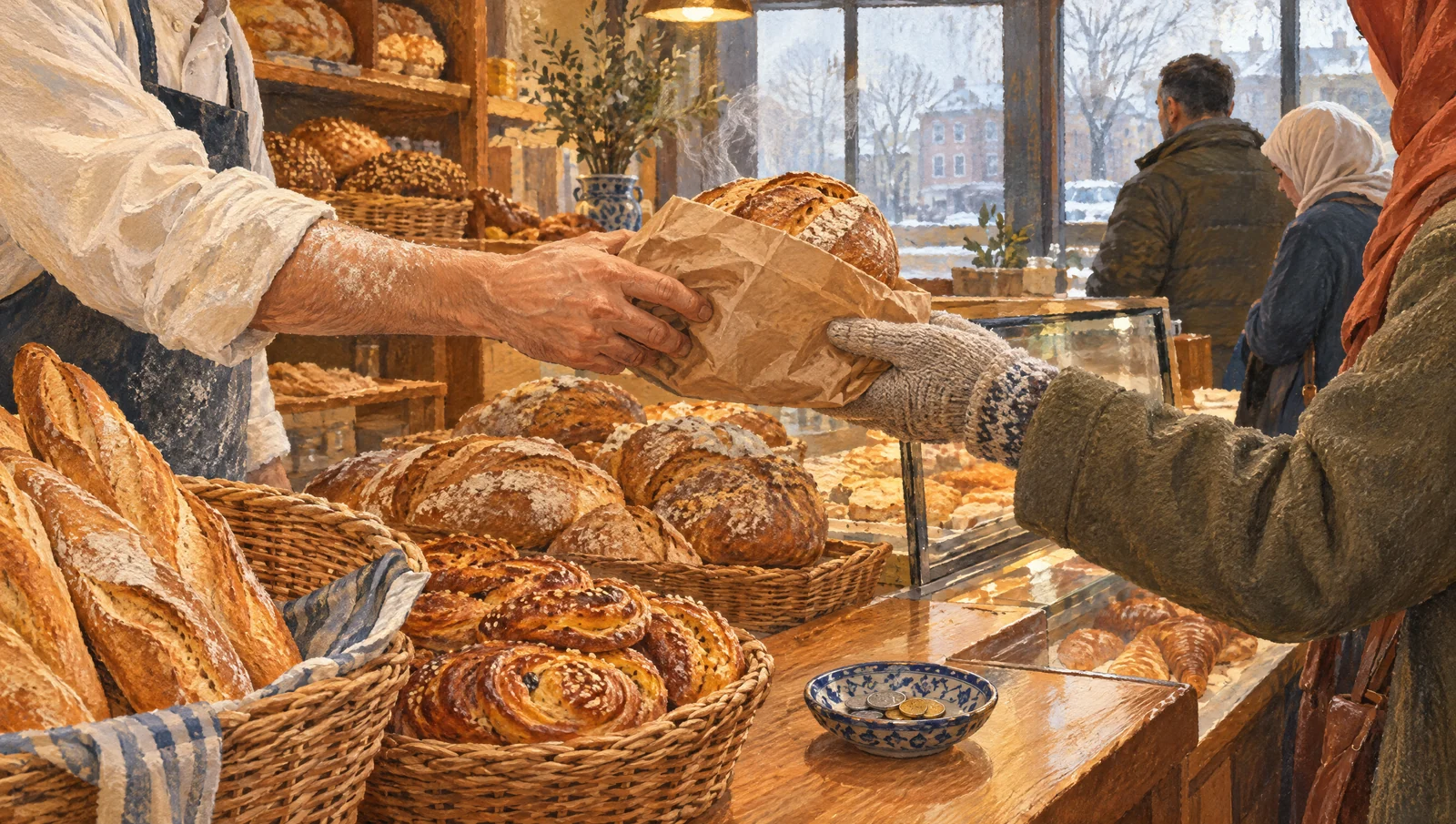
A scene from our life in Europe: Ma‘ruf is our common language. Our Belgian neighbour expects from us not a word of Arabic, but a clean doorstep and a smiling face; goodness is the only language that needs no translation.

Ihsan: living as if we see Allah
“Ihsan” means doing a good deed knowingly and in the best way, worshipping Allah with sincerity, and giving more than is due; in short, willingly going beyond the obligatory minimum. One who acts with ihsan is called a “muhsin”.
In the hadith of Gabriel, our Prophet (peace and blessings be upon him) described ihsan as follows:
أَنْ تَعْبُدَ اللَّهَ كَأَنَّكَ تَرَاهُ فَإِنْ لَمْ تَكُنْ تَرَاهُ فَإِنَّهُ يَرَاكَ
According to what ‘Umar b. al-Khattab (may Allah be pleased with him) narrated, Gabriel asked, “What is ihsan?” and our Prophet said: “Ihsan is worshipping Allah as if you see Him. Even though you do not see Him, He sees you.”
al-Bukhari, Iman, 37; Muslim, Iman, 1
Ihsan is beautiful conduct born of deep reverence and devotion to Allah; it is selfless love directed first to one’s parents and then to all people. “They spend in the way of Allah in ease and in hardship, they restrain their anger, and they forgive people. Allah loves those who do their work with excellence.” (Al ‘Imran, 3:134)
The Qur’an sums up this consciousness as follows: “Spend in the way of Allah; do not cast yourselves into danger with your own hands. Do good; Allah loves those who do good.” (al-Baqara, 2:195)
- 1IslamsubmissionOutward devotion.
- 2ImanaffirmationFaith settled in the heart.
- 3Ihsanas if seeingLiving as if we see Allah.
Even if you do not see Him, He sees you.
إِنَّ اللَّهَ كَتَبَ الْإِحْسَانَ عَلَى كُلِّ شَيْءٍ
According to what Shaddad b. Aws (may Allah be pleased with him) narrated, our Prophet said: “Almighty Allah has commanded ihsan (doing beautifully) in everything. When you kill, kill well! When you slaughter an animal, slaughter well! Let each of you sharpen his blade and spare his animal suffering!”
Muslim, Sayd, 57; al-Tirmidhi, Diyat, 14
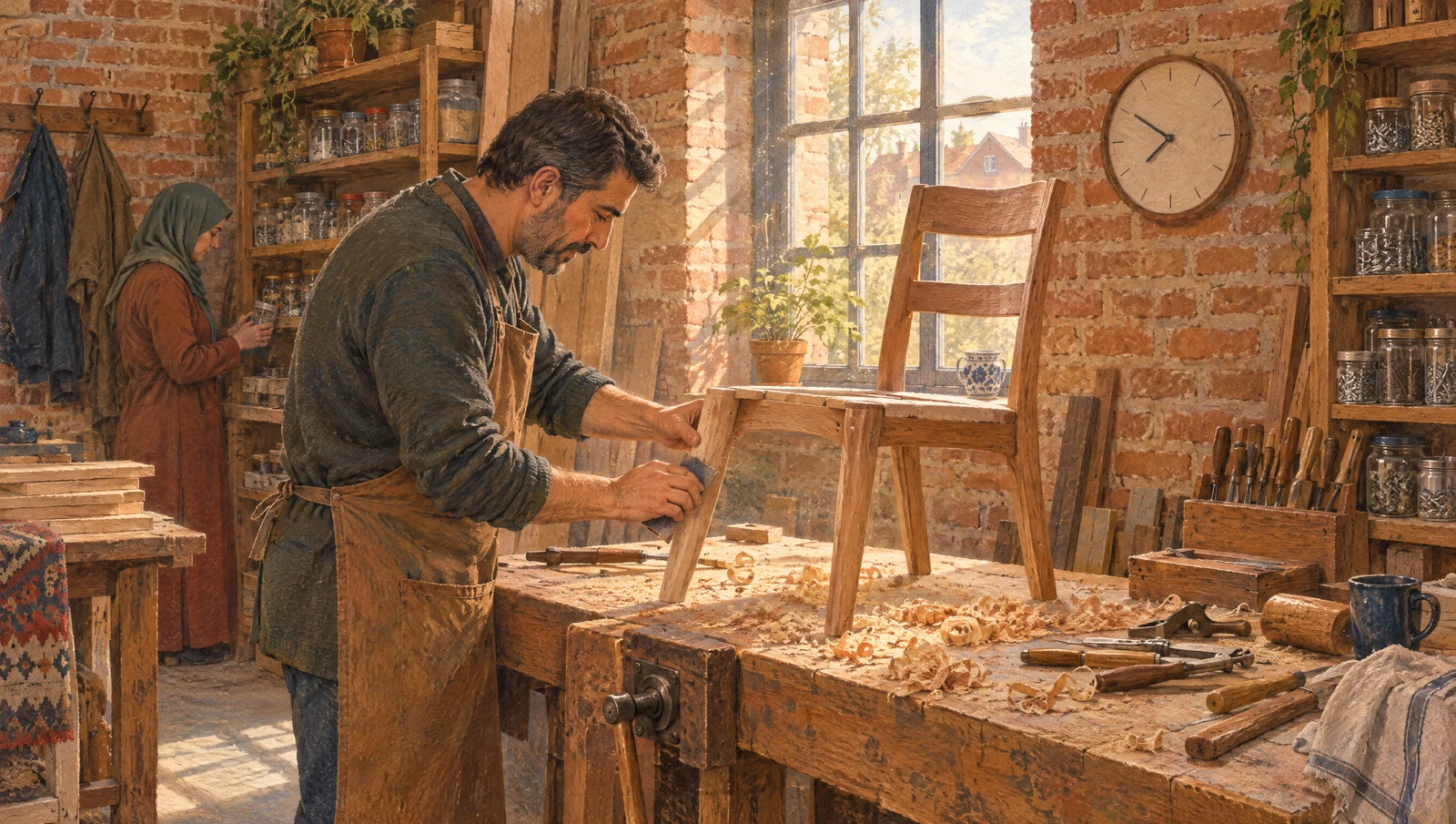
A scene from our life in Europe — ihsan in our work is itqan: It is narrated that our Prophet said: “Allah loves that when one of you does a piece of work, he does it solidly and carefully.” (al-Bayhaqi, Shu‘ab al-Iman; al-Tabarani, al-Mu‘jam al-Awsat) Its chain of narration contains weakness, but its meaning is supported by the authentic hadith above. The craftsman who finishes his work with care even when the boss does not see, the worker at his bench at 08:00, the shopkeeper who does not hide defects — they live by ihsan. As the saying attributed to ‘Ali has it, a person’s worth is measured by doing their work with ihsan. (DIA, “Ihsan”) A Belgian employer sees the itqan in his Muslim worker’s labour before he ever sees his prayer; loyalty to working hours, keeping appointments and giving each task its due are Islam’s silent message here.

II. To whom does goodness go? Rings from near to far
From parents to the traveller: the seven circles counted in the surah an-Nisa’.
وَاعْبُدُوا اللَّهَ وَلَا تُشْرِكُوا بِهِ شَيْئًا وَبِالْوَالِدَيْنِ إِحْسَانًا وَبِذِي الْقُرْبَىٰ وَالْيَتَامَىٰ وَالْمَسَاكِينِ وَالْجَارِ ذِي الْقُرْبَىٰ وَالْجَارِ الْجُنُبِ وَالصَّاحِبِ بِالْجَنبِ وَابْنِ السَّبِيلِ وَمَا مَلَكَتْ أَيْمَانُكُمْ إِنَّ اللَّهَ لَا يُحِبُّ مَن كَانَ مُخْتَالًا فَخُورًا
Worship Allah and associate nothing with Him. Do good to parents, relatives, orphans, the needy, the near neighbour, the distant neighbour, the companion at your side, the traveller, and those under your authority. Allah never loves the self-satisfied and boastful.
an-Nisa’, 4:36
The verse lists the circles: parents, relatives, orphans, the needy; the near neighbour (the same block of flats), the distant neighbour (the neighbourhood); the companion at your side (work, school, the tram); the traveller (guests, newcomers, refugees); those we are responsible for (employees, apprentices).
- ParentsThe same roof, the same table
- RelativesKinship without estrangement
- Orphans and the poorTrusts under our care
- Near neighbourThe same apartment block, the same row of houses
- Distant neighbourThe neighbourhood and the street
- The companion at your sideWorkmate, classmate, fellow traveller
- TravellerGuests, newcomers, refugees
The neighbour’s religion is not questioned; their right is what counts.
According to what our mother ‘A’isha (may Allah be pleased with her) narrated, our Prophet said: “Gabriel kept advising me about the neighbour so insistently that I thought he would make the neighbour an heir.” (al-Bukhari, Adab, 28; Muslim, Birr, 140) That is why the neighbour is watched over like an heir; their door is knocked on, they are asked how they are, and their plate is never sent back empty.
لَيْسَ الْمُؤْمِنُ الَّذِي يَشْبَعُ وَجَارُهُ جَائِعٌ
According to what Ibn ‘Abbas (may Allah be pleased with him) narrated, our Prophet said: “One who sleeps with a full stomach while their neighbour goes hungry is not (truly) a believer.”
al-Bukhari, al-Adab al-Mufrad, 112
No one asks the neighbour’s religion; they ask after the neighbour’s right. The hungry neighbour has a right over the well-fed neighbour, the elderly neighbour over the young neighbour, the lonely neighbour over the large family; this right comes before religion and language.

The face of Islam here in Europe: goodness to the non-Muslim neighbour
My dear brothers and sisters! Before our European neighbour ever opens the Qur’an and reads it, they read our scales, our words, our doorstep and our smile.
لَّا يَنْهَاكُمُ اللَّهُ عَنِ الَّذِينَ لَمْ يُقَاتِلُوكُمْ فِي الدِّينِ وَلَمْ يُخْرِجُوكُم مِّن دِيَارِكُمْ أَن تَبَرُّوهُمْ وَتُقْسِطُوا إِلَيْهِمْ إِنَّ اللَّهَ يُحِبُّ الْمُقْسِطِينَ
Allah does not forbid you from treating kindly and justly those who do not fight you over religion and do not expel you from your homes. Allah loves those who act justly.
al-Mumtahana, 60:8
Asma’, daughter of Abu Bakr (may Allah be pleased with her), reports: My mother came to me during the period of the Treaty of Hudaybiya, though she was a polytheist. I asked the Messenger of Allah, “Should I keep ties with her?” and he said, “Yes, keep ties with your mother.” (al-Bukhari, Hiba, 29; Muslim, Zakat, 50) It is narrated that the 8th verse of the surah al-Mumtahana was revealed on this occasion: kindness and justice towards those who do not fight are not forbidden.
The measure is this:

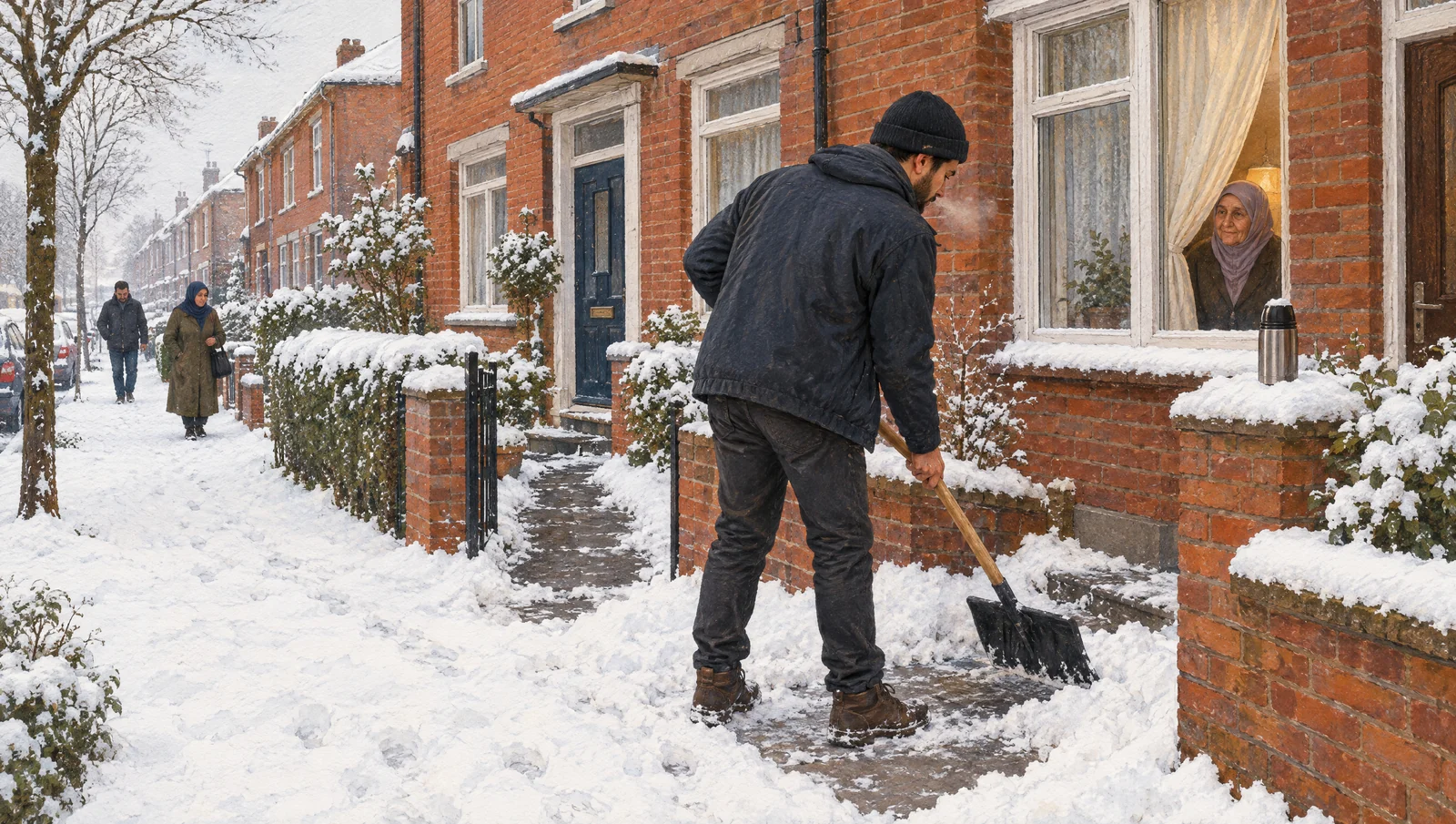
On Belgian streets this measure is lived as follows: clearing the snow from an elderly neighbour’s doorstep, putting the bin out on rubbish day, doing the shopping for an elderly neighbour, taking a plate of sweets to a neighbour on the feast, cooking soup in illness, giving an hour’s help with a move, being careful about noise at night. According to what Abu Dharr (may Allah be pleased with him) narrated, our Prophet said: “Smiling at your brother is charity” (al-Tirmidhi, Birr, 36); indeed, even greeting one’s brother with a cheerful face is a goodness not to be belittled. (Muslim, Birr, 144) According to what Jarir b. ‘Abdillah (may Allah be pleased with him) narrated: “Allah shows no mercy to one who shows no mercy to people.” (Muslim, Fada’il, 66; al-Bukhari, Adab, 18) And according to what ‘Adi b. Hatim (may Allah be pleased with him) narrated: “Protect yourselves from the Fire, even with half a date.” (al-Bukhari, Zakat, 10; Muslim, Zakat, 67) When the child of a Jewish family who served the Messenger of Allah fell ill, he visited the child at home and sat at his bedside (al-Bukhari, Jana’iz, 80); making things easy and not driving people away also belong to this religion. (al-Bukhari, ‘Ilm, 11)
Islam’s most powerful message in our life in Europe is being a trustworthy and good neighbour.
III. Repel evil with what is most beautiful
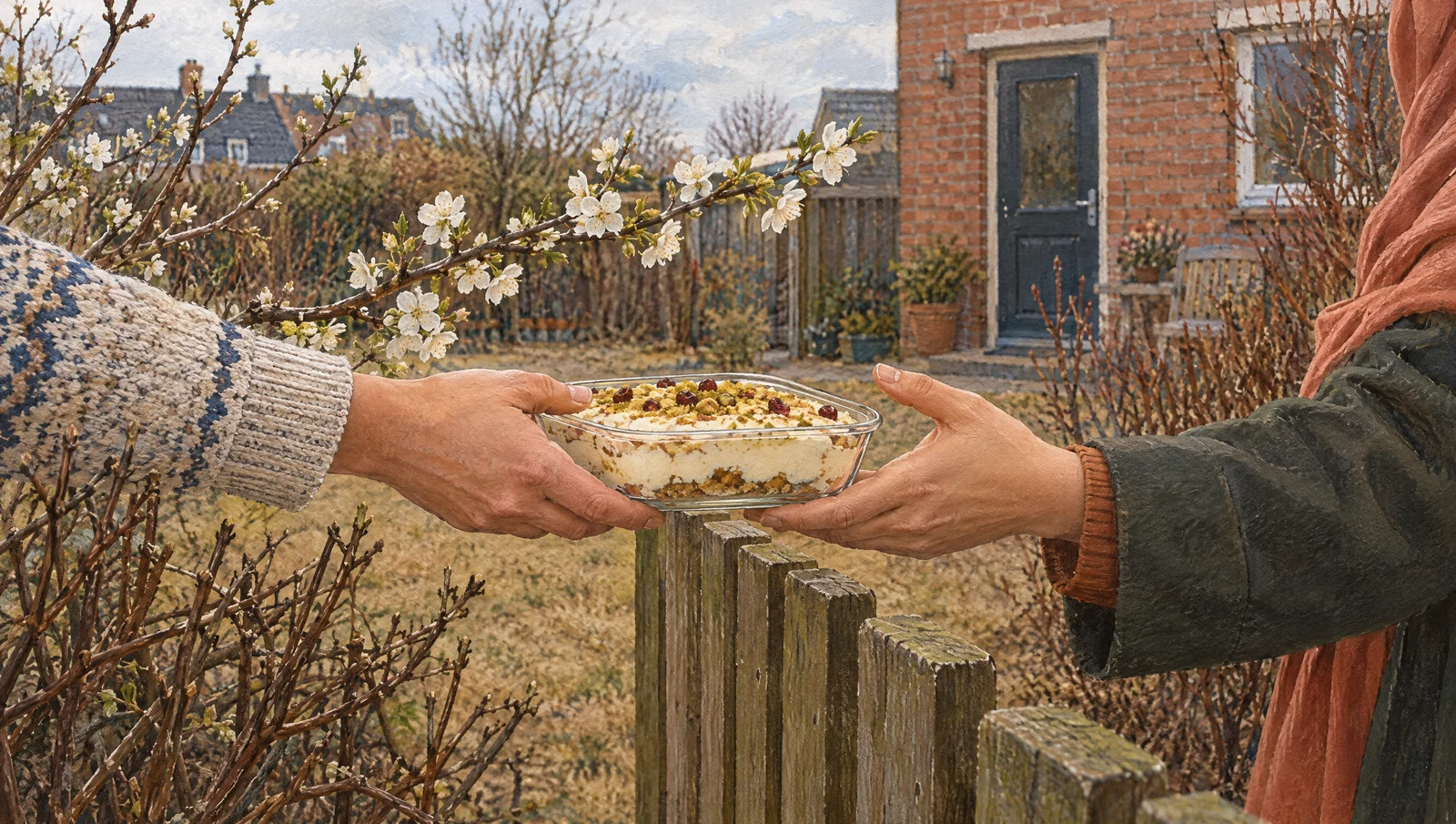
The path that turns enmity into friendship: greeting, a plate of food and patience.
وَلَا تَسْتَوِي الْحَسَنَةُ وَلَا السَّيِّئَةُ ادْفَعْ بِالَّتِي هِيَ أَحْسَنُ فَإِذَا الَّذِي بَيْنَكَ وَبَيْنَهُ عَدَاوَةٌ كَأَنَّهُ وَلِيٌّ حَمِيمٌ وَمَا يُلَقَّاهَا إِلَّا الَّذِينَ صَبَرُوا وَمَا يُلَقَّاهَا إِلَّا ذُو حَظٍّ عَظِيمٍ
Good and evil are not equal. Repel (evil) with what is most beautiful; then you will see that the one between whom and you there was enmity has become a warm friend!
None attains this outcome except those who are patient, and none attains it except those who possess great fortune.
Fussilat, 41:34–35
This is goodness in its hardest form: answering with good those who do evil to us. The believer who greets, who shares their plate, who is patient, turns enmity into friendship. This patience is not weakness; it is the work of those who hold a great share of virtue.
Greeting, plate and patience: this is our measure against racist words, unjust complaints, car-park quarrels and insults on the internet.
Evil
- Racist words and insults
- Unfounded complaints
- Parking and noise rows
- Insults on the internet
What is better
- Greeting and a smile
- A plate of food
- Patience and gentle words
- Silence in answer to hurtful words
Then the enemy becomes a warm friend.
اتَّقِ اللَّهَ حَيْثُمَا كُنْتَ وَأَتْبِعِ السَّيِّئَةَ الْحَسَنَةَ تَمْحُهَا وَخَالِقِ النَّاسَ بِخُلُقٍ حَسَنٍ
According to what Abu Dharr (may Allah be pleased with him) narrated, our Prophet said: “Fear Allah wherever you are; when you do wrong, follow it at once with a good deed so that it wipes the wrong away; and behave towards people with beautiful character.”
al-Tirmidhi, Birr, 55
Let no sinner despair; “Good deeds wipe away evil deeds.” (Hud, 11:114) Whoever repels evil with what is most beautiful saves both themselves and the other person.
Answering evil with evil is easy; anyone can do it. Repelling evil with good takes patience, but only it breaks the chain of enmity. A greeting, a smile, a plate melts the ice between us and our neighbour, our workmate, even the one who speaks harshly to us on the street.
Goodness despite everything: the estranged relative, the unfaithful kin
A Companion came to our Prophet and said: “O Messenger of Allah, I have relatives. I keep ties with them, but they cut ties with me. I do good to them, but they do evil to me. I treat them gently, but they treat me harshly.” Upon this, the Messenger of Allah said:
لَئِنْ كُنْتَ كَمَا قُلْتَ فَكَأَنَّمَا تُسِفُّهُمُ الْمَلَّ وَلاَ يَزَالُ مَعَكَ مِنَ اللَّهِ ظَهِيرٌ عَلَيْهِمْ مَا دُمْتَ عَلَى ذَلِكَ
According to what Abu Hurayra (may Allah be pleased with him) narrated, our Prophet said: “If you act as you say, your conduct is hard upon them — as if feeding them hot ashes. As long as you carry on, Allah’s help will be with you against them.” (Meaning)
Muslim, Birr, 22
وَلْيَعْفُوا وَلْيَصْفَحُوا أَلَا تُحِبُّونَ أَن يَغْفِرَ اللَّهُ لَكُمْ وَاللَّهُ غَفُورٌ رَّحِيمٌ
Let not those among you who are generous and well-off swear that they will no longer give to relatives, the needy and those who emigrated in the way of Allah. Let them forgive and overlook; do you not wish that Allah should forgive you? Allah is Most Forgiving, Most Merciful.
an-Nur, 24:22; excerpt from the verse
According to what Hudhayfa (may Allah be pleased with him) narrated, our Prophet said: “Do not be a spineless follower (imma‘a) who says, ‘If people do good, we do good, and if they do wrong, we do wrong.’ Make it a principle within yourselves to do good to people when they do good, and not to wrong them when they do wrong.” (al-Tirmidhi, Birr, 63) And true maintaining of family ties (silat al-rahim) is this: “One who merely returns the good they receive from relatives is not the true keeper of ties; it is the one who restores the bond when relatives break it.” (al-Bukhari, Adab, 15)
A scene from our life in Europe: Are there none among us who have not spoken to their sibling for ten years over an inheritance back home, who carry a hurt from the association for years, who cut off a relative for not coming to a wedding? Whoever takes the first step wins: not the one who waits to be called, but the one who calls; not the one who proves themselves right, but the one who reconciles. Let us also say this plainly: this patience is not consent to oppression; seeking one’s right through lawful means is legitimate, for our Lord commands justice (‘adl) together with ihsan. (an-Nahl, 16:90)

IV. Ihsan in the family: from parents to grandchildren
Not even saying ‘uff’, a visit every week, a supplication for the grandchild.
وَقَضَىٰ رَبُّكَ أَلَّا تَعْبُدُوا إِلَّا إِيَّاهُ وَبِالْوَالِدَيْنِ إِحْسَانًا إِمَّا يَبْلُغَنَّ عِندَكَ الْكِبَرَ أَحَدُهُمَا أَوْ كِلَاهُمَا فَلَا تَقُل لَّهُمَا أُفٍّ وَلَا تَنْهَرْهُمَا وَقُل لَّهُمَا قَوْلًا كَرِيمًا وَاخْفِضْ لَهُمَا جَنَاحَ الذُّلِّ مِنَ الرَّحْمَةِ وَقُل رَّبِّ ارْحَمْهُمَا كَمَا رَبَّيَانِي صَغِيرًا
Your Lord has decreed that you worship none but Him, and that you do good to your parents. If one or both of them reach old age with you, do not even say “uff” to them! Do not scold them! Speak to both of them kind words that win hearts.
Spread over them the wing of mercy and humility. Pray, saying: “My Lord! Show them mercy, just as they raised me with compassion when I was small.”
al-Isra’, 17:23–24
جَاءَ رَجُلٌ إِلَى رَسُولِ اللَّهِ ﷺ فَقَالَ يَا رَسُولَ اللَّهِ مَنْ أَحَقُّ بِحُسْنِ صَحَابَتِي قَالَ أُمُّكَ قَالَ ثُمَّ مَنْ قَالَ أُمُّكَ قَالَ ثُمَّ مَنْ قَالَ أُمُّكَ قَالَ ثُمَّ مَنْ قَالَ ثُمَّ أَبُوكَ
According to what Abu Hurayra (may Allah be pleased with him) narrated, a man came to the Messenger of Allah and asked: “O Messenger of Allah, who among people most deserves my good company?” He said, “Your mother.” “Then who?” he asked; he said, “Your mother.” “Then who?” he asked; he said, “Your mother.” When he asked, “Then who?” he said, “Your father.”
al-Bukhari, Adab, 2; Muslim, Birr, 1

Our Lord gives the glad tidings and the measure together: “If you do good, you do good for yourselves.” (al-Isra’, 17:7) Let our ihsan to them not remain mere words: a visit once a week, a plate of hot food. We blame no one. May our names never be missing from the visitors’ book, and their names never be missing from the book of supplication.
Ihsan flows not only upwards but also downwards. Our Prophet says: “The best of you are the best to their families.” (al-Tirmidhi, Manaqib, 63) A smiling face for one’s spouse and teaching a grandchild a supplication are also ihsan; our French- and Flemish-speaking grandchildren hear Turkish supplications from their grandparents.
- 1GrandfatherVisits and phone calls
- 2ParentsThe table and service
- 3UsGreeting and a smile
- 4ChildTime and listening
- 5GrandchildSupplication and stories
Ihsan flows not only upwards but also downwards.
Ihsan in the family begins as you step through the door: with a greeting, a smile, and never saying even “uff”.
V. Goodness is sown and reaped
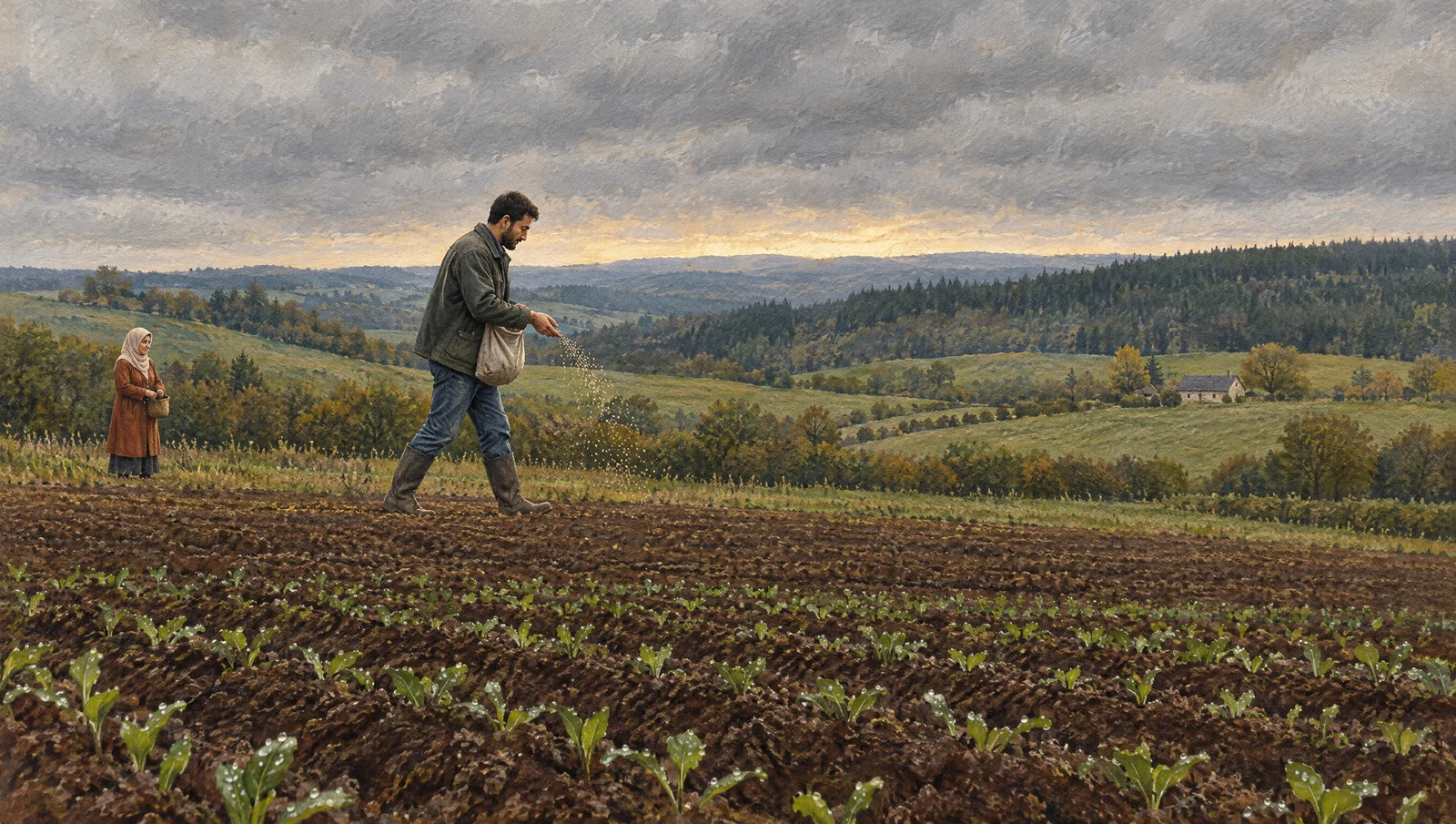
Not even an atom’s weight of good is lost; visiting the sick and sowing with patience.
فَمَن يَعْمَلْ مِثْقَالَ ذَرَّةٍ خَيْرًا يَرَهُ وَمَن يَعْمَلْ مِثْقَالَ ذَرَّةٍ شَرًّا يَرَهُ
هَلْ جَزَاءُ الْإِحْسَانِ إِلَّا الْإِحْسَانُ
Whoever does an atom’s weight of good shall see it. Whoever does an atom’s weight of evil shall see it. And the recompense of goodness is nothing but goodness itself.
az-Zalzala, 99:7–8; ar-Rahman, 55:60
Everyone reaps what they sow: “Those who do good in this world shall find good.” (az-Zumar, 39:10) “The Most Merciful will plant love (in hearts) for them.” (Maryam, 19:96) “The righteous shall dwell in the Blissful Garden.” (al-Infitar, 82:13)
إِنَّ اللَّهَ عَزَّ وَجَلَّ يَقُولُ يَوْمَ الْقِيَامَةِ يَا ابْنَ آدَمَ مَرِضْتُ فَلَمْ تَعُدْنِي قَالَ يَا رَبِّ كَيْفَ أَعُودُكَ وَأَنْتَ رَبُّ الْعَالَمِينَ قَالَ أَمَا عَلِمْتَ أَنَّ عَبْدِي فُلاَنًا مَرِضَ فَلَمْ تَعُدْهُ أَمَا عَلِمْتَ أَنَّكَ لَوْ عُدْتَهُ لَوَجَدْتَنِي عِنْدَهُ
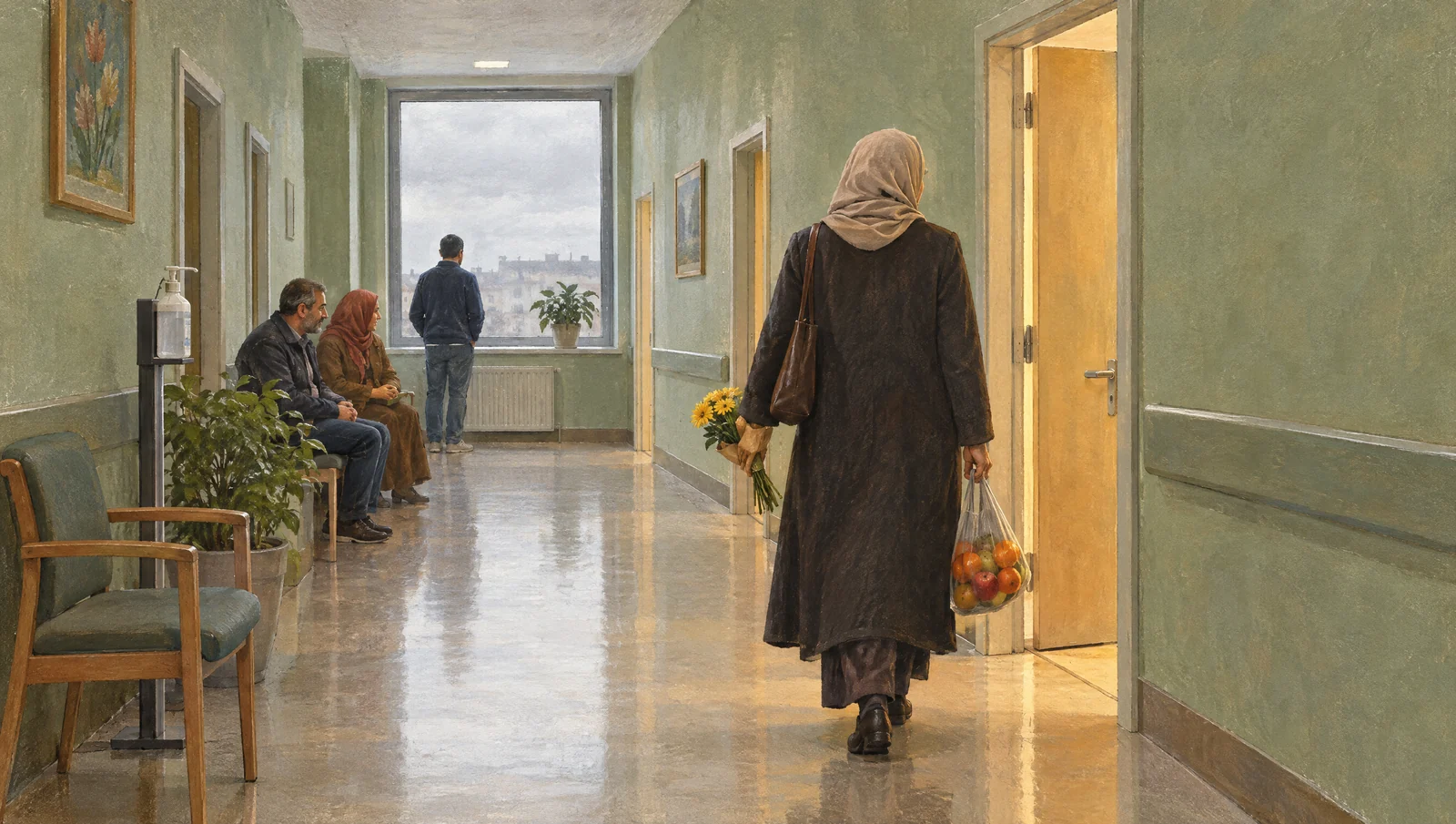
It is narrated from Abu Hurayra (may Allah be pleased with him) that the Messenger of Allah said: “Allah the Exalted will say on the Day of Resurrection: O son of Adam, I was ill and you did not visit Me. He will say: My Lord, how could I visit You, when You are the Lord of the worlds? Allah the Exalted will say: Do you not remember that such-and-such a servant of Mine was ill and you did not visit him? Had you visited him, you would have found Me with him…” (continuing with the sections on food and water)
Muslim, Birr, 43; hadith qudsi (sacred hadith) (excerpt of the narration)
In the words of Yunus Emre: “If you visit one who is ill, / If you give them a sip of water, / Tomorrow it will come to meet you there, / As if you had drunk the wine of God. // If you see one who is destitute, / If you give them a worn garment, / Tomorrow it will come to you there, / As if God had cut His robe for you.” According to the parable attributed to Mawlana, goodness is like the farmer who opens his granary to seed. (DIA, “Yunus Emre”)
A scene from our life in Europe: A “get well soon” to a fellow countryman in hospital, an hour of tea in the care home, the patience of the farmer sowing seed under the grey Ardennes sky… The farmer does not reap on the day he sows; but one who never sows never reaps. Today’s small kindness is tomorrow’s great friend.
- 1SowseedToday’s small good deed.
- 2WatercareVisiting the sick and the care home.
- 3WaitpatienceThe farmer does not reap on the day they sow.
- 4ReaprewardTomorrow’s great friend.
Whoever does not sow never reaps.
VI. Giving from what you love: Abu Bakr and Abu Talha
Whoever spends from what they love finds what they love: from Bayruha to Tabuk.
لَن تَنَالُوا الْبِرَّ حَتَّىٰ تُنفِقُوا مِمَّا تُحِبُّونَ وَمَا تُنفِقُوا مِن شَيْءٍ فَإِنَّ اللَّهَ بِهِ عَلِيمٌ
You shall never attain righteousness until you spend from what you love in the way of Allah. Whatever you spend, Allah knows it well.
Al ‘Imran, 3:92
The commentators list wealth, rank, knowledge and bodily strength among the loved things; charity should be given from what is precious. (Kur’an Yolu, vol. 1, pp. 629–631) When this verse was revealed, Abu Talha gave away Bayruha, his prized garden facing the Prophet’s Mosque; our Prophet said, “What a profitable treasure!” and asked him to distribute it among his relatives. (al-Bukhari, Zakat, 44; Muslim, Zakat, 42) ‘Umar likewise endowed the income of his share at Khaybar for good causes.
In preparation for Tabuk, ‘Umar brought half his wealth, while Abu Bakr brought all of it. To the question “What have you left for your family?” he answered: “I have left them Allah and His Messenger.” ‘Umar said: “After this I shall never compete with you in anything!” (Abu Dawud, Zakat, 40; al-Tirmidhi, Manaqib, 16) In Mecca he had also bought slaves such as Bilal al-Habashi and set them free. Praising seven Companions including Abu Bakr, our Prophet said: “What a fine man Abu Bakr is…” (al-Tirmidhi, Manaqib, 32)
مَنْ أَصْبَحَ مِنْكُمُ الْيَوْمَ صَائِمًا
فَمَنْ تَبِعَ مِنْكُمُ الْيَوْمَ جَنَازَةً
فَمَنْ أَطْعَمَ مِنْكُمُ الْيَوْمَ مِسْكِينًا
فَمَنْ عَادَ مِنْكُمُ الْيَوْمَ مَرِيضًا
مَا اجْتَمَعْنَ فِي امْرِئٍ إِلاَّ دَخَلَ الْجَنَّةَ
According to what Abu Hurayra (may Allah be pleased with him) narrated, our Prophet asked: “Who among you began today fasting?”… Abu Bakr said: “I did!”… “Who among you followed a funeral today?”… “Who among you fed a poor person today?”… “And who among you visited a sick person today?”… Upon this he said: “Whoever possesses these qualities shall surely enter Paradise.”
Muslim, Zakat (1028)
“Do good to others as Allah has done good to you.” (al-Qasas, 28:77) Whoever gives from what they love finds what they love.
VII. Shared goodness and a lasting trace: the mosque, the association, volunteering, the screen
From the soup table to giving blood, to courtesy on screen: a lasting trace.
وَتَعَاوَنُوا عَلَى الْبِرِّ وَالتَّقْوَىٰ وَلَا تَعَاوَنُوا عَلَى الْإِثْمِ وَالْعُدْوَانِ وَاتَّقُوا اللَّهَ إِنَّ اللَّهَ شَدِيدُ الْعِقَابِ
… Help one another in goodness and piety, and do not help one another in sin and wrongdoing. Fear Allah, for Allah’s punishment is severe.
al-Ma’ida, 5:2; excerpt from the verse
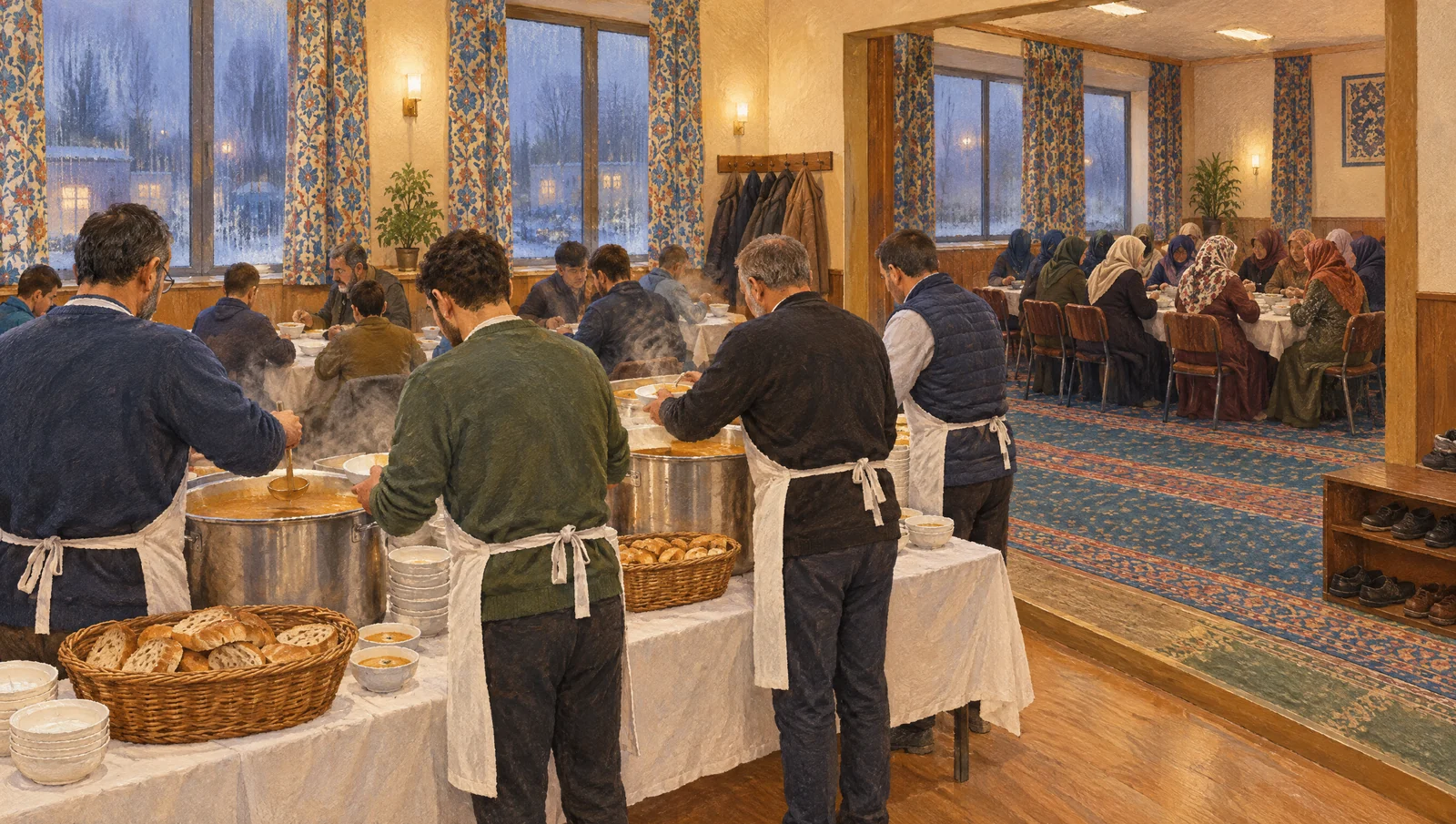
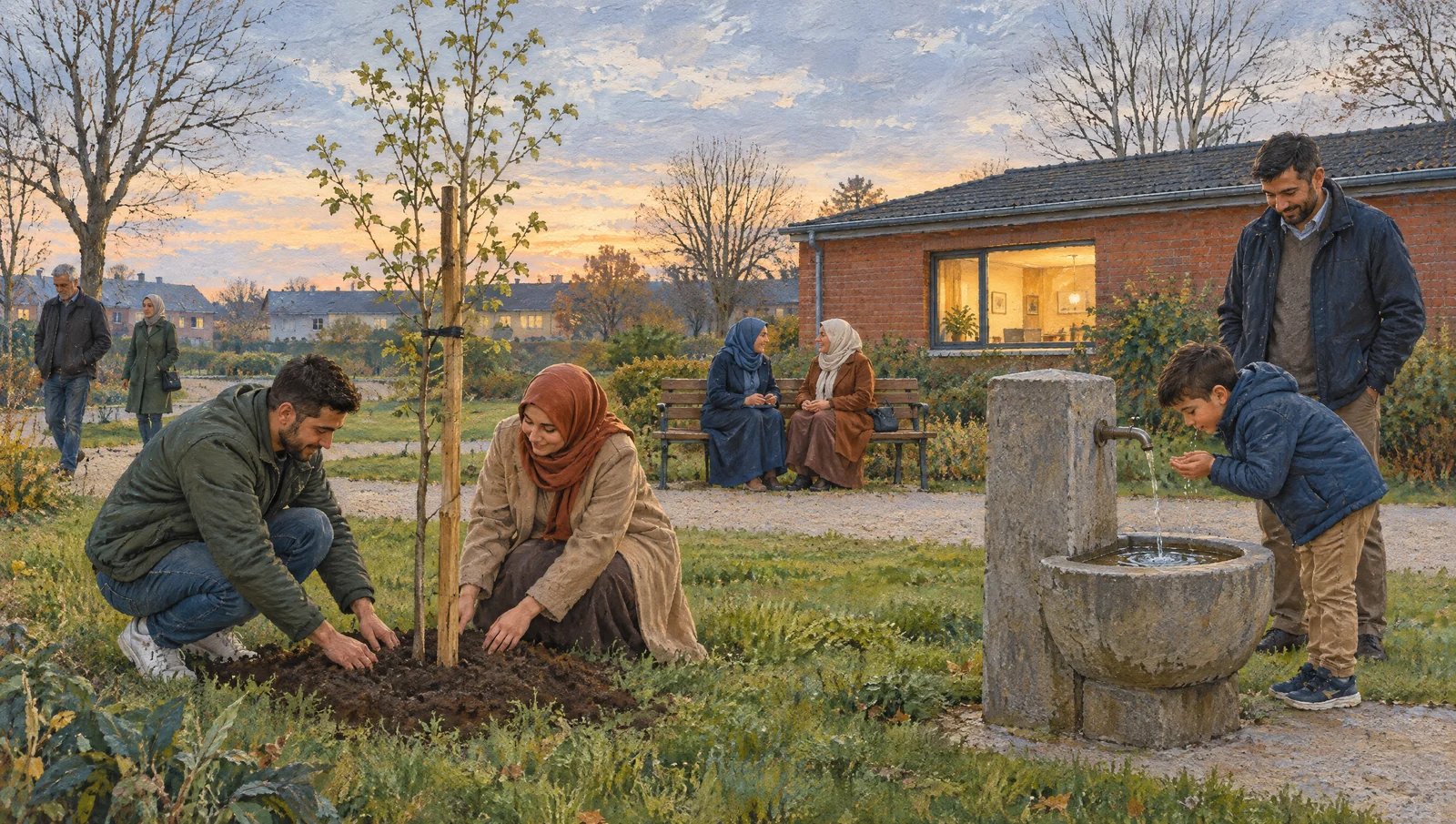
Our associations, our funeral funds, our soup days, our blood-donation appointments are all this verse’s answer in our life in Europe. Giving blood is permissible: “Whoever saves a life, it is as if they had saved all humankind.” (al-Ma’ida, 5:32) The volunteer — whom Belgium calls “vrijwilliger / bénévole” — is among us one of those who do good with excellence. It is narrated that: “The best of people are those most beneficial to people.” (al-Tabarani, al-Mu‘jam al-Awsat; good (hasan) according to al-Albani, weak (da‘if) according to the majority)
إِذَا مَاتَ الإِنْسَانُ انْقَطَعَ عَنْهُ عَمَلُهُ إِلاَّ مِنْ ثَلاَثَةٍ إِلاَّ مِنْ صَدَقَةٍ جَارِيَةٍ أَوْ عِلْمٍ يُنْتَفَعُ بِهِ أَوْ وَلَدٍ صَالِحٍ يَدْعُو لَهُ
According to what Abu Hurayra (may Allah be pleased with him) narrated, our Prophet said: “When a person dies, the reward for their deeds is cut off except for three: ongoing charity (good whose benefit continues), knowledge that benefits, and a righteous child who prays for them.”
Muslim, Wasiyya, 14
Leaves a trace
Ongoing charityMosque, course, fountain and scholarship.
Lives on
Beneficial knowledgeKnowledge taught and good counsel.
Prays
A righteous childA generation that prays for those who came before.
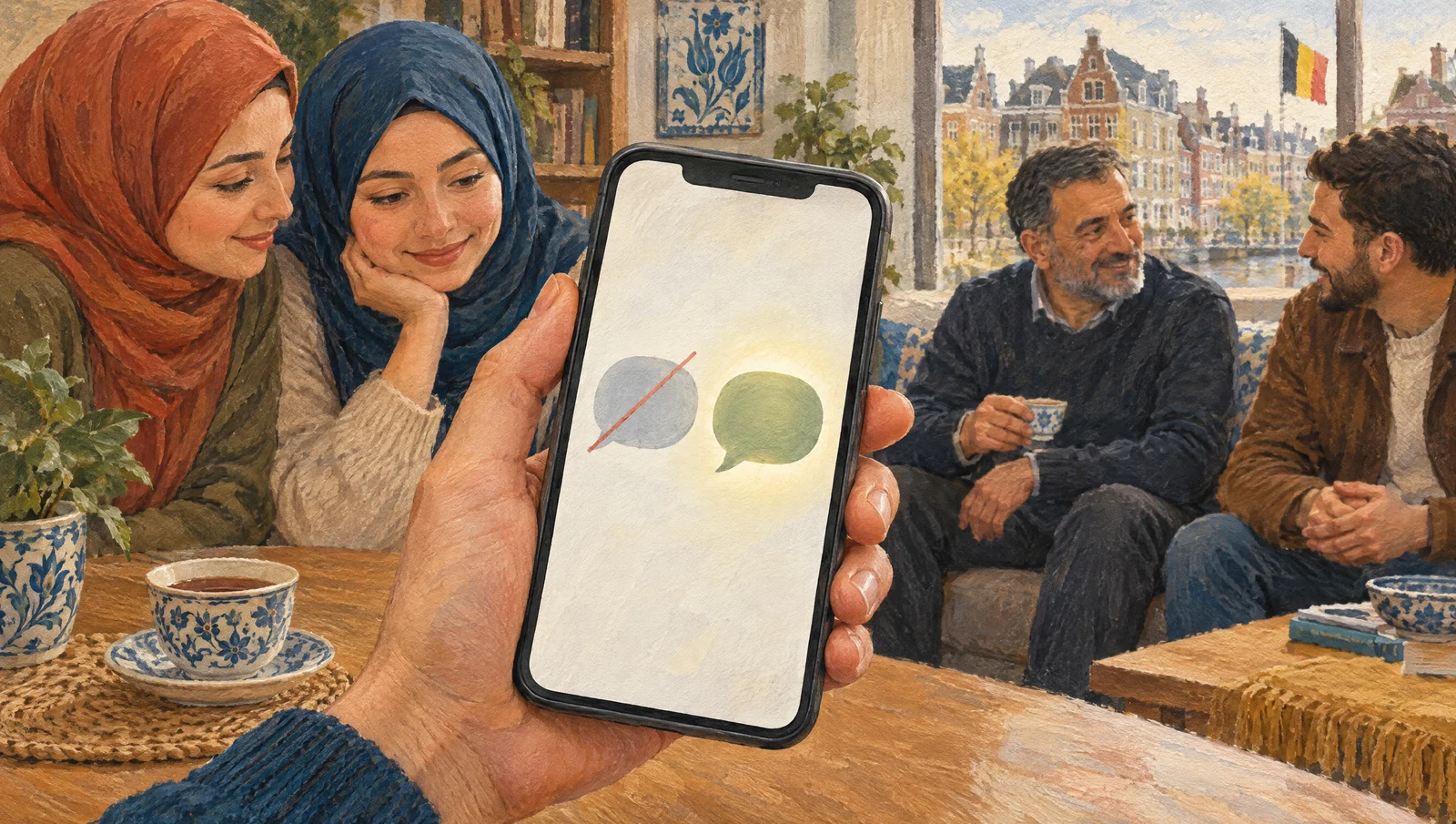
The screen has rights too: “O you who believe! Let no community ridicule another community… Do not belittle one another, and do not call one another by offensive nicknames.” (al-Hujurat, 49:11) According to what ‘Abdullah b. ‘Amr (may Allah be pleased with him) narrated: “A Muslim is one from whose hand and tongue other Muslims are safe.” (al-Bukhari, Iman, 4; Muslim, Iman, 68) Let us not write hurtful comments, and let us not share what we have not verified. Allah sees us behind the screen too.

VIII. Conclusion: being a key to good
Every day a good deed, every evening a reckoning; our pledge for goodness.
When a person departs this world, they leave their wealth and rank behind; the deep trace is the hand that strokes the orphan’s head, the word that wins a heart, and the step that mends a broken heart.
Goodness is not money alone: winning a heart, listening to a child, asking after a neighbour, doing one’s work properly — all of these are goodness.
إِنَّ مِنَ النَّاسِ مَفَاتِيحَ لِلْخَيْرِ مَغَالِيقَ لِلشَّرِّ وَإِنَّ مِنَ النَّاسِ مَفَاتِيحَ لِلشَّرِّ مَغَالِيقَ لِلْخَيْرِ فَطُوبَى لِمَنْ جَعَلَ اللَّهُ مَفَاتِيحَ الْخَيْرِ عَلَى يَدَيْهِ وَوَيْلٌ لِمَنْ جَعَلَ اللَّهُ مَفَاتِيحَ الشَّرِّ عَلَى يَدَيْهِ
According to what Anas (may Allah be pleased with him) narrated, our Prophet said: “There are people who are (as it were) keys to good and bolts against evil. And there are others who are keys to evil and bolts against good. Glad tidings to those into whose hands Almighty Allah has placed the keys to good! And woe to those into whose hands Almighty Allah has placed the keys to evil!”
Ibn Majah, Muqaddima, 19 (237); good (hasan) according to al-Albani
It is narrated that ‘Umar (may Allah be pleased with him) said: “Hold yourselves to account before you are held to account; prepare for the greatest muster.” (al-Tirmidhi, Qiyama, 25; attributed to ‘Umar) Every evening before sleep, let us ask: “What did I do for Allah today?”
- GreetingThe first word that knocks on the door.
- Kind wordsSpeech that wins hearts and never breaks them.
- TimeTime set aside for visiting and listening.
- WealthA share given from what one loves.
- EffortVolunteer hands and the sweat of one’s brow.
How happy are those who hold the keys to good!
- 1I will act as if Allah sees me.I will complete my work, my word and my appointments in full.
- 2I will knock on my neighbour’s door.Regardless of religion or language, I will give greeting and extend my hand.
- 3I will answer evil with good.First I will extend the greeting, then the plate.
- 4I will call and visit my elders.I will call my parents, my grandfather and my estranged relatives, and I will make time for my grandchild.
- 5I will be a muhsin even on screen.I will not write hurtful comments, and I will not share what I have not verified.
- 6Every month, I will join an ongoing good cause.I will set aside a share for the mosque, the association, a scholarship or volunteering.
- 7Every day a good deed, every evening a reckoning.“What have I done for Allah today?” I will ask.
- I will act as if Allah sees me. I will complete my work, my word and my appointments fully, even if the boss does not see.
- I will knock on my neighbour’s door. I will greet regardless of religion or language, and lend my hand in snow, in illness and in moving house.
- I will answer evil with good. I will extend first the greeting, then the plate, and I will not speak hurtful words to whoever breaks me.
- I will call and visit my elders. I will call or visit my parents, my grandfather, and my estranged relative this week, and I will set aside time for my grandchild.
- I will be a muhsin even on screen. I will not write hurtful comments, I will not share what I have not verified, and I will write a kind word to one person.
- Every month, I will join an ongoing good cause. I will set aside a regular share for one of the mosque, the association, bursaries, blood donation or volunteering.
- Every day a good deed, every evening a reckoning. Before sleeping I will ask, “What did I do for Allah today?” closing my faults with istighfar and my good deeds with gratitude.
The believer who lives as if they see Allah carries goodness to those they know and to those they do not; they answer evil with good and the trace they leave lives on after their death. As we leave this Friday gathering, let us ask three questions: Whose door will I knock on this week? To whom do I owe a kind word? Which estrangement will I end? Let us call the first name that comes to mind today.
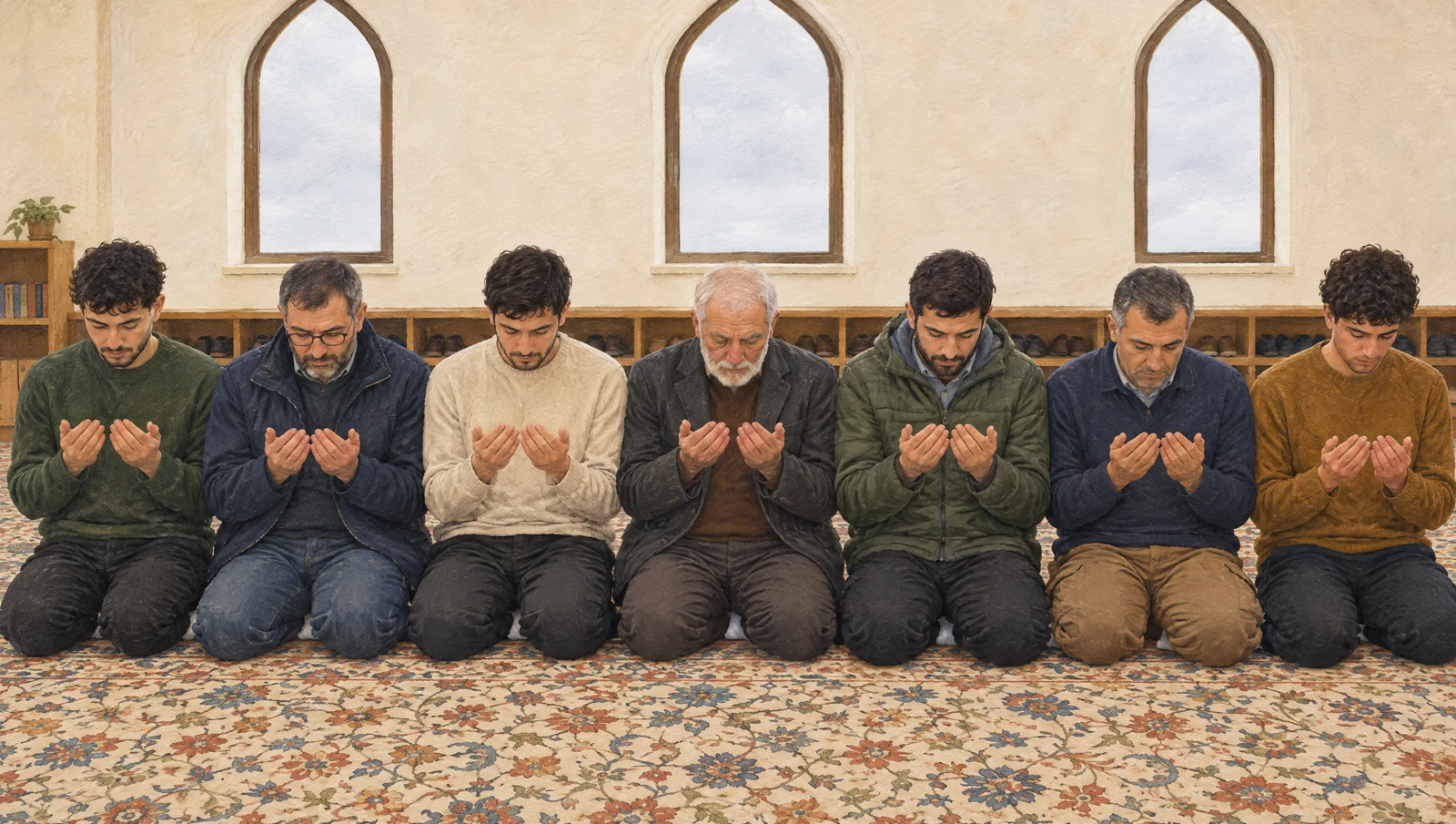
The pulpit khatm and the congregation’s supplication here in Europe
We open our hands and our hearts to our Lord.
My dear brothers and sisters! Let us open our hands and hearts to our Lord.
أَعُوذُ بِاللَّهِ مِنَ الشَّيْطَانِ الرَّجِيمِ
الْحَمْدُ لِلَّهِ رَبِّ الْعَالَمِينَ، وَالصَّلَاةُ وَالسَّلَامُ عَلَى رَسُولِنَا مُحَمَّدٍ وَعَلَى آلِهِ وَصَحْبِهِ أَجْمَعِينَ
I seek refuge in Allah from the evil of the accursed devil. Praise belongs to Allah, Lord of the worlds. May blessings and peace be upon our Prophet Muhammad, his family and all his Companions.
Praise: al-Fatiha, 1:2. Seeking refuge and blessings: free wording of supplication
O Allah! Grant us lawful sustenance, a good and blessed life, and beautiful character; make every morsel we earn in our life in Europe lawful, and every step we take draw us closer to You.
O Allah! Make our French- and Flemish-speaking children and grandchildren pioneers of goodness and resilient against evil; make them the smiling face of Islam in these lands.
O Allah! Grant healing, patience and peace to our parents, to our elders left alone in care homes, and to our brothers and sisters lying in hospital; grant us the blessing of visiting them.
O Allah! Remove hatred, resentment and estrangement from our hearts; forgive us and our brothers and sisters who believed before us, and leave no hatred in our hearts towards the believers. (al-Hashr, 59:10)
O Allah! Grant peace to our neighbours, safety to the country we live in, and help to the oppressed of the earth; make us among those who extend a hand to them.
O Allah! Have mercy on our benefactors of ongoing charity who built mosques, opened courses, made fountains flow, taught knowledge and left righteous offspring behind; do not separate us from their path.
O Allah! Make us among Your muhsin servants who rejoice when they do good, seek forgiveness when they err, and live as if they see You.
وَمِنْهُم مَّن يَقُولُ رَبَّنَا آتِنَا فِي الدُّنْيَا حَسَنَةً وَفِي الْآخِرَةِ حَسَنَةً وَقِنَا عَذَابَ النَّارِ
There are those among people who say: “Our Lord! Give us good in this world and good in the Hereafter, and protect us from the punishment of the Fire.”
al-Baqara, 2:201; Muslim, Dhikr, 26
Amen. Praise be to Allah, Lord of the worlds. Al-Fatiha.
Appendix: 40 good deeds in Europe, one good deed a day
This list is for putting into practice this week: let us tick off one good deed each day and adapt them to our own street. All forty can be done in Belgium, and most ask not for money but for time and a smiling face. Let us hang the list on the inside of our door, next to our pledge; each evening let us tick one item and take stock of ourselves.
Family (8)
- Calling one’s parents once a week and visiting them once a month.
- Taking tea to grandparents together with a grandchild.
- Saying a kind word to one’s spouse every day.
- Putting the tablet aside and listening to one’s child for ten minutes.
- Being the first to greet an estranged relative.
- Discussing inheritance with justice and gentle words.
- Teaching one’s grandchild a supplication in Turkish.
- Visiting a sick relative at home or in hospital.
Neighbours and neighbourhood (9)
- Clearing the snow from one’s doorstep and an elderly neighbour’s path.
- Putting the neighbour’s bin out too on rubbish day.
- Doing the shopping for an elderly neighbour once a week.
- Taking a plate of sweets to a neighbour on the feast.
- Cooking soup for a sick neighbour and taking it over.
- Giving an hour’s help to a neighbour who is moving.
- Being careful about noise at night and warning neighbours in advance.
- Giving up one’s seat to the elderly on the tram and the bus.
- Moving litter and broken glass on the street out of the way.
Mosque and association (8)
- Joining the mosque soup day with a pot of soup.
- Paying a regular share into the funeral fund.
- Helping a child who attends the course with homework once a week.
- Volunteering at the care-home tea hour.
- Booking a blood-donation appointment and becoming a regular donor.
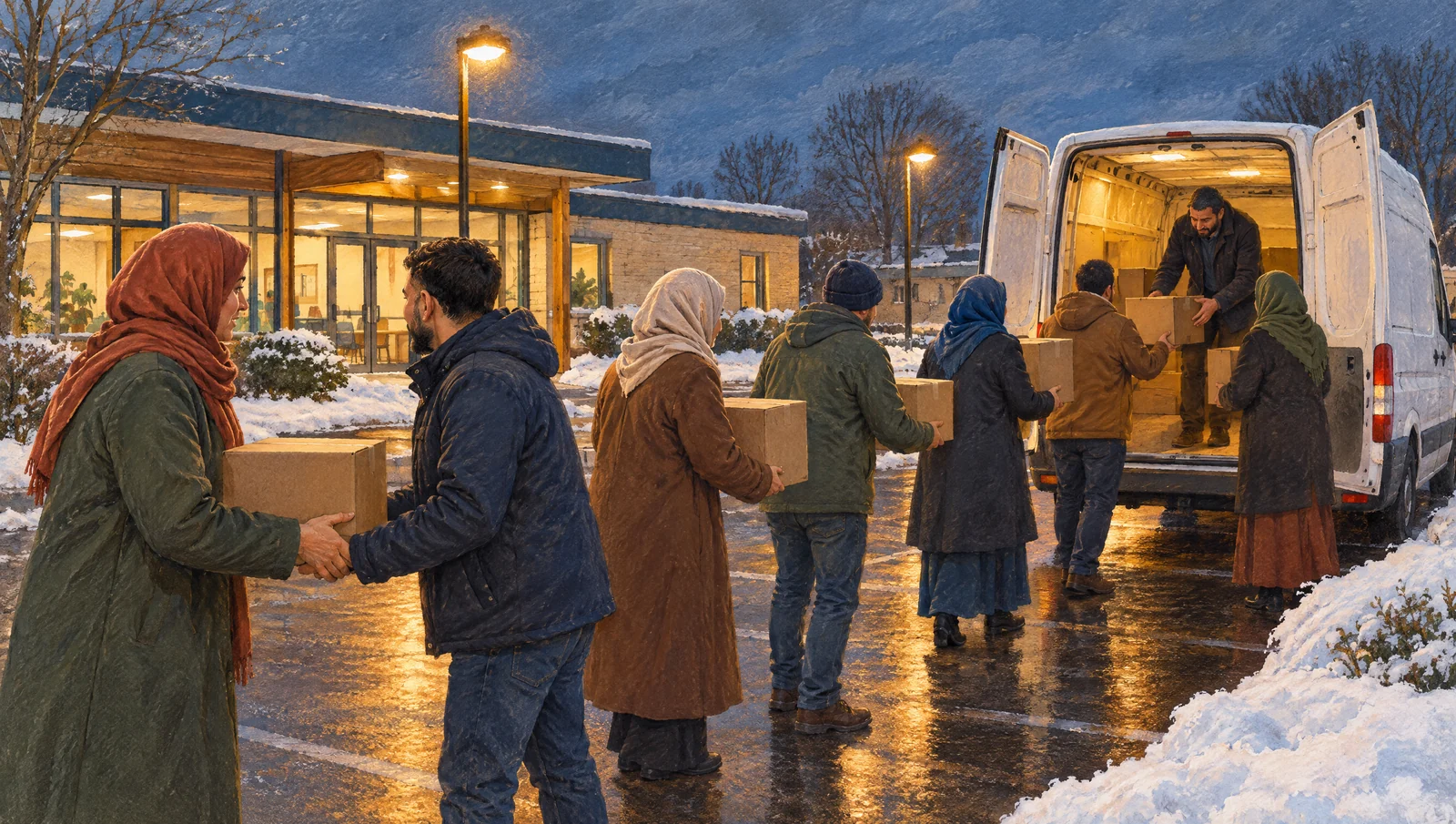
- Preparing an aid parcel and joining its distribution.
- Giving an hour a month to cleaning the association’s premises.
- Showing a newly arrived family the home, the school and the shops.
Work and trade (8)
- Arriving at work on time and keeping working hours faithfully.
- Completing work fully even if the boss does not see.
- Telling the customer openly about a product’s defect.
- Giving change back correctly to the last cent.
- Not talking behind a workmate’s back and defending their rights.
- Teaching apprentices and trainees with patience.
- Refusing offers of unlawful gain.
- Showing leniency in the credit ledger to those in difficulty.
Digital life (7)
- Writing a kind word to one person each day.
- Passing over hurtful comments without replying.
- Not sharing news one has not verified.
- Offending no one in the family group.
- Putting the phone down beside one’s child and setting an example.
- Not sharing photos or voice recordings without permission.
- Sending useful information to whoever needs it.
Giving blood is permissible, as it can be the means of saving a life, and visiting our elders in care homes and winning their hearts is also a goodness our religion asks of us; both are written into the record of ongoing charity.
- Khayr
- Good, beautiful and beneficial things; every good deed that will benefit in the Hereafter.
- Birr
- The most comprehensive concept, embracing every good from faith to worship.
- Ihsan
- Doing what you do in the most beautiful way; living as if you see.
- Ma‘ruf
- Fine words and conduct that everyone recognises as good; a common language.
- Hasana
- The fine deed; goodness that wipes away evil and is rewarded many times over.
- Itqan
- Doing work solidly and carefully; ihsan’s name in the workplace.
- Ongoing charity
- Good that continues after death: lasting works, knowledge, and children.
Verses, hadith and other sources
The renderings of the meanings are taken from the Kur’an Yolu commentary; verses and hadith quoted in shortened form are indicated in the text. The Arabic wording of the verses is taken from the Tanzil text, the wording of the hadith has been compared with sunnah.com, and the gradings of the narrations have been checked against the rulings of hadith scholars.
- Verses: Al-Fatiha 1:2; Al-Baqara 2:177; Al-Baqara 2:195; Al-Baqara 2:201; Al-Baqara 2:215; Al ‘Imran 3:92; Al ‘Imran 3:134; An-Nisa’ 4:36; Al-Ma’ida 5:2; Al-Ma’ida 5:32; Hud 11:114; An-Nahl 16:90; Al-Isra’ 17:23–24; Al-Isra’ 17:7; Ta-Ha 20:25–28; Al-Anbiya’ 21:105; An-Nur 24:22; Al-Qasas 28:77; Az-Zumar 39:10; Fussilat 41:34–35; Al-Hujurat 49:11; At-Tur 52:28; Ar-Rahman 55:60; Al-Hashr 59:10; Al-Mumtahana 60:8; Al-Infitar 82:13; Az-Zalzala 99:7–8.
- Hadith: al-Bukhari, Iman 4, 37; Muslim, Iman 1, 68; al-Bukhari, Adab 2, 15, 18, 28, 33; Muslim, Birr 1, 14–15, 22, 43, 140, 144; al-Bukhari, Zakat 10, 44; Muslim, Zakat 42, 52, 56, 67, 1028; al-Tirmidhi, Birr 36, 55, 63, Zuhd 52, Manaqib 16, 32, 63; Abu Dawud, Zakat 40; Ibn Majah, Muqaddima 19; Muslim, Sayd 57; al-Tirmidhi, Diyat 14; Muslim, Fada’il 66; Muslim, Wasiyya 14; al-Bukhari, Hiba 29; Muslim, Zakat 50; al-Bukhari, Jana’iz 80; al-Bukhari, ‘Ilm 11; al-Bukhari, Jihad 128; al-Bukhari, al-Adab al-Mufrad 112; al-Tirmidhi, Qiyama 25.
- Narrations with weakness in their chain: “Allah loves that when one of you does a deed, they do it solidly and carefully” (al-Bayhaqi, Shu‘ab al-Iman; al-Tabarani, al-Mu‘jam al-Awsat): its chain of narration contains weakness, but its meaning is supported by authentic hadith. “The best of people are those most beneficial to people” (al-Tabarani, al-Mu‘jam al-Awsat): weak according to the majority, hasan according to al-Albani.
- Stories and sayings: The oath of Mistah and Abu Bakr: Kur’an Yolu, vol. 4, p. 63; TDV İslâm Ansiklopedisi, “Mistah b. Uthatha”. The quatrains of Yunus Emre and the storehouse parable attributed to Mawlana: TDV İslâm Ansiklopedisi, “Yunus Emre”. The saying attributed to ‘Ali: TDV İslâm Ansiklopedisi, “Ihsan”. The evening reckoning saying attributed to ‘Umar: al-Tirmidhi, Qiyama, 25.
- Encyclopaedia and Ilmihal: TDV İslâm Ansiklopedisi, “Birr”, “Ihsan”, “Neighbour”, “Dhimmi”, “Mistah b. Uthatha”, “Yunus Emre”; Ilmihal; the Kur’an Yolu commentary.
- The appendix of 40 good deeds in Europe: The rulings in the list are general principles: Ilmihal; fatwa sources; Al-Ma’ida 5:2, 5:32. In personal matters, consult the imam of our community.
- Images: The scene images are illustrative illustrations; there is no depiction of prophets or companions.