
Sermon
Ikhlas and Sincerity — For Allah even when no one sees: purifying the intention, being the same within and without
The believer with ikhlas does their work for Allah alone; even when no one sees, they stay the same; praise does not puff them up and blame does not make them give up; inwardly and outwardly they are one: ikhlas, intention, sincerity, riya’ and sidq; the Ikhlas Pledge and, in the appendix, 40 intentions for everyday life.
Translated from the Turkish original. Read the Turkish original →

The believer with ikhlas does their work for Allah alone; even when no one sees, they stay the same; praise does not puff them up and blame does not make them give up; inwardly and outwardly they are one.
The images are illustrative scenes from the life of a congregation living in present-day Europe.Four main ideas
- Ikhlas is to mix nothing else into our worship.Intention purified like pure milk; if appreciation comes, we give thanks; if it does not, we do not turn from our path.
- Deeds are judged by intentions, and religion is sincerity.Intention turns an ordinary day into worship; sincerity is being able to say behind someone’s back what we say to their face.
- Fearing show, we do not abandon good; we mend our intention.Showing off is minor shirk; before sharing we put three questions to our intention.
- The believer is the same person when no one is looking.Hidden deeds and sidq are the capital that saves us on the day of distress.

Opening: Worship as pure as milk
The same donation, the same hand; what makes the difference is pure intention.
الْحَمْدُ لِلَّهِ رَبِّ الْعَالَمِينَ، وَالصَّلَاةُ وَالسَّلَامُ عَلَى رَسُولِنَا مُحَمَّدٍ وَعَلَى آلِهِ وَصَحْبِهِ أَجْمَعِينَ
قَالَ رَبِّ اشْرَحْ لِي صَدْرِي وَيَسِّرْ لِي أَمْرِي وَاحْلُلْ عُقْدَةً مِّن لِّسَانِي يَفْقَهُوا قَوْلِي
All praise belongs to Allah, Lord of the worlds. May blessings and peace be upon our Prophet Muhammad, his family and all his Companions.
Moses said, “My Lord! Open my heart for me, make my task easy for me, loosen the knot from my tongue, so that they may understand my words.”
Praise: al-Fatiha 1:2. Blessings on the Prophet: freely worded supplication. Supplication: Ta-Ha 20:25–28
Dear congregation! My brothers and sisters, who remember their Lord even where no one sees, and who put intention into the sweat of their brow!
Let us picture two people standing before the donation box at the mosque door. Both drop the same amount into the box at the same moment. Someone standing beside them would see no difference between the two: the money is the same, the box is the same, the outstretched hand is the same. Yet the lines the angels record may be entirely different. The difference cannot be seen with the eye or held in the hand; its name is intention. As the Qur’an explains this unseen difference, it serves us a glass of milk:
نُّسْقِيكُم مِّمَّا فِي بُطُونِهِ مِن بَيْنِ فَرْثٍ وَدَمٍ لَّبَنًا خَالِصًا سَائِغًا لِّلشَّارِبِينَ
… so We give you to drink, from within the animal’s belly, between the digested food and the blood, pure milk that is a delight to those who drink it.
an-Nahl 16:66; excerpt from the verse
Milk is formed in the animal’s belly between the digested food and the blood; it passes through both and takes nothing from either. It comes out as pure milk: clear, sweet, a pleasure to those who drink it. The word ikhlas (purity of intention) comes from the same root as this “pure”: to separate something from whatever has mixed into it, and so to purify it. Worship with ikhlas is worship into which not one drop of any other intention has been mixed. Our Lord also commands our Prophet to say: “My prayer, my worship (of every kind), my life and my death all belong to Allah, Lord of the worlds. He has no partner.” (al-An‘am 6:162-163)
A scene from our life in Europe: The alarm that rings at five in the morning, the shift at the factory in Aye, the road to school or to the shop… On a rainy winter morning the same question passes through everyone’s heart: “Why am I getting up?” To ask ourselves this question every morning and to renew our intention is to walk the same road and arrive somewhere else.
The main sentence of what we will speak about today is this: The believer with ikhlas does their work for Allah alone; even when no one sees, they stay the same; praise does not puff them up and blame does not make them give up; inwardly and outwardly they are one.
Ikhlas is to mix nothing else into our worship.

I. What is ikhlas? Purifying ourselves and turning to Him alone
Pure devotion: to do worship and good deeds for Allah alone, purified of showing off.
In the dictionary, “ikhlas” means to separate something from whatever has mixed into it and so to purify it; as a term, it means to do acts of worship and good deeds for Allah alone, purified of showing off and of concern for gain. (TDV İslâm Ansiklopedisi, “İhlâs”, XXI, 535–537) The Qur’an calls this “pure devotion”:
أَلَا لِلَّهِ الدِّينُ الْخَالِصُ
Let it be known that pure devotion belongs to Allah alone.
az-Zumar 39:3; excerpt from the verse
Foes of ikhlas
- Riya’: showing off to people
- Sum‘a: to be talked about
- ‘Ujb: self-admiration
- Nifaq: within unlike without
Allies of ikhlas
- Intention: the heart’s turning
- Sidq: within as without
- Taqwa: mindfulness of Allah
- Ihsan: as if seeing Allah
At the centre ikhlas; beside it its allies and its foes.
Abu Umama al-Bahili (may Allah be pleased with him) relates: A man asked our Prophet, “What do you say of one who fights for reward and for renown?” He was told, “There is nothing for him”; the man repeated the question three times, and the answer was always the same. Then the Messenger of Allah (peace and blessings be upon him) said:
إِنَّ اللَّهَ لاَ يَقْبَلُ مِنَ الْعَمَلِ إِلاَّ مَا كَانَ لَهُ خَالِصًا وَابْتُغِيَ بِهِ وَجْهُهُ
Allah accepts only the deed that is done sincerely, for Him alone, and with His pleasure in mind.
an-Nasa’i, Jihad 24; its chain is good (hasan)
The man is doing something great, yet reward and renown have both mixed into his intention: what decides is not the greatness of the deed but its purity. Even Iblis is compelled to make an exception when he vows to lead everyone astray: “except Your sincere servants among them”. (al-Hijr 15:39-40) Ikhlas is the servant’s refuge from Satan.
If people see our good deed and thank us, is our ikhlas spoiled? No:
أَرَأَيْتَ الرَّجُلَ يَعْمَلُ الْعَمَلَ مِنَ الْخَيْرِ وَيَحْمَدُهُ النَّاسُ عَلَيْهِ قَالَ تِلْكَ عَاجِلُ بُشْرَى الْمُؤْمِنِ
According to the narration of Abu Dharr (may Allah be pleased with him), the Messenger of Allah (peace and blessings be upon him) was asked, “What do you say of someone who does good and whom people praise for it?” He said, “That is the believer’s immediate glad tidings.”
Muslim, Birr 166
To receive appreciation does not spoil ikhlas; what spoils it is doing the deed for appreciation.
A scene from our life in Europe: Before Eid, the donor list is being written at the mosque association. Three people who have the same amount written down may have three different hearts: one so that others, seeing it, will give too; one quietly; and one so that they will see. We cannot tell from the outside; reading intentions is not for us. But each of us can ask ourselves: “Let them see, or let Allah see?”
If appreciation comes, we give thanks; if it does not, we do not turn from our path.

II. Deeds are judged by intentions
The same road, the same effort; intention decides where one arrives.
Our Prophet (peace and blessings be upon him) tied the worth of all deeds to a single measure:
إِنَّمَا الأَعْمَالُ بِالنِّيَّةِ وَإِنَّمَا لاِمْرِئٍ مَا نَوَى فَمَنْ كَانَتْ هِجْرَتُهُ إِلَى اللَّهِ وَرَسُولِهِ فَهِجْرَتُهُ إِلَى اللَّهِ وَرَسُولِهِ وَمَنْ كَانَتْ هِجْرَتُهُ لِدُنْيَا يُصِيبُهَا أَوِ امْرَأَةٍ يَتَزَوَّجُهَا فَهِجْرَتُهُ إِلَى مَا هَاجَرَ إِلَيْهِ
Deeds are judged by intentions, and everyone will have only what they intended. Whoever migrates for Allah and His Messenger, their migration is for Allah and His Messenger. And whoever migrates for some worldly gain they hope to reach, or for a woman they hope to marry, their migration is for whatever they migrated for.
Muslim, Imara 155; al-Bukhari, Bad’ al-wahy 1
This hadith holds both glad tidings and a warning: the same journey, the same effort; but if the intention differs, so does the place one arrives at.
The glad tidings of intention are so great that our Lord says in a hadith qudsi (sacred hadith): “If My servant intends to do a good deed and does not do it, I write one good deed (reward) for them. But if they do it, I write for them from ten up to seven hundred times the reward. If (My servant) intends to do an evil deed and does not do it, I do not write it down (as a sin). But if they do it, I write one evil deed (sin) against them.” (Muslim, Iman 204) Even the intention to do good is never wasted; only let the intention be pure.
So that they see
- Work
- Charity
- Prayer
- Lost in the void
For Allah
- Work
- Charity
- Prayer
- Allah’s pleasure
The same task parts in two directions; intention determines the worth of the deed.
Intention is decisive in ordinary matters too. Our Prophet said to Sa‘d ibn Abi Waqqas (may Allah be pleased with him): “There is no expenditure you make seeking the pleasure of Allah for which you will not be rewarded, even the morsel you put into your wife’s mouth.” (al-Bukhari, Iman 41) And on his return from Tabuk, speaking of those who had stayed behind in Medina because of a valid excuse, he said: “Whatever path you crossed and whatever valley you passed, they were with you all along.” (al-Bukhari, Maghazi 82)
Where Allah looks is also clear:
إِنَّ اللَّهَ لاَ يَنْظُرُ إِلَى صُوَرِكُمْ وَأَمْوَالِكُمْ وَلَكِنْ يَنْظُرُ إِلَى قُلُوبِكُمْ وَأَعْمَالِكُمْ
Allah does not look at your appearances or your wealth; He looks only at your hearts and your deeds.
Muslim, Birr 34
The Qur’an expresses the same truth through the rite of sacrifice: “Neither their flesh nor their blood reaches Allah; what reaches Him is only your piety.” (al-Hajj 22:37)

A scene from our life in Europe: Our coming to live here in Europe was also a hijra, a migration; our fathers set out for the sake of bread, and there is no shame in seeking one’s bread. At the supermarket till, on the building site, on the cleaning shift, raising children at home: if our intention is “lawful provision, bread for my household”, all of it is written in the ledger of worship.
Intention is the key that turns an ordinary day into worship.

III. Religion is sincerity
The name of ikhlas in our dealings with people: sincerity with five rings.
The name of ikhlas in our dealings with people is sincerity. In Arabic it is called nasiha (sincere goodwill); in the dictionary the word means being pure and sincerely wanting what is good for another. (TDV İslâm Ansiklopedisi, “Nasihat”) According to the narration of Tamim ad-Dari (may Allah be pleased with him), our Prophet said:
الدِّينُ النَّصِيحَةُ قُلْنَا لِمَنْ قَالَ لِلَّهِ وَلِكِتَابِهِ وَلِرَسُولِهِ وَلأَئِمَّةِ الْمُسْلِمِينَ وَعَامَّتِهِمْ
Religion is sincerity. We asked, “Towards whom?” He said, “Towards Allah, His Book, His Messenger, the leaders of the Muslims, and all Muslims.”
Muslim, Iman 95
There are five rings: sincerity towards Allah means worshipping Him alone; sincerity towards His Book means reading it and living by it; sincerity towards His Messenger means following his Sunnah; sincerity towards the leaders means telling the truth with courtesy; and sincerity towards the Muslims at large means wishing them well. Jarir ibn ‘Abdullah (may Allah be pleased with him) also relates: “I pledged allegiance to the Messenger of Allah to perform the prayer, to give zakat, and to be sincere towards every Muslim.” (al-Bukhari, Iman 42) Our duty of truthfulness and justice, however, is owed not only to Muslims but to every human being; we say this not as something drawn from this hadith but as required by the general moral measure of our religion.
Sincerity is not a feeling but an attitude. Whoever is sincere towards Allah avoids the forbidden even when no one is watching. Whoever is sincere towards His Book opens it not only at a funeral but within the life they live. Whoever is sincere towards His Messenger carries the Sunnah not only on the tongue but in their character. And whoever is sincere towards their brother or sister watches over them in their absence.
- To AllahWorshipping Him alone.
- To His BookReading and living it.
- To His MessengerFollowing his Sunnah.
- To the leadersTelling the truth.
- To all MuslimsWishing them well.
Knowing the weight of this test, our Prophet also prayed for ikhlas. In a supplication that is narrated, though its chain contains weakness, he is reported to have pleaded after his prayers: “O Allah! Our Lord and Lord of all things! Bind me and my family to You with ikhlas at every moment, in this world and the Hereafter. O Lord of majesty and honour!” (Abu Dawud, Witr 25) It is also reported that ‘Umar (may Allah be pleased with him) prayed: “O Allah! Make my deed righteous, make it purely for You, and leave no share in it for anyone.” (Ahmad ibn Hanbal, az-Zuhd)
A scene from our life in Europe: The board meeting of the mosque association after the evening prayer. Sincerity means putting oneself forward for a task not so that people will call us “chair” but as the congregation’s trust; it means giving an open account of every cent in the till; and if we have a criticism, it means saying it at the meeting, to the person’s face and with courtesy, rather than behind their back. The same sincerity is sought at home, at the kitchen table when we fill in the tax return, when we report our income to the employer, when we make a truthful declaration to the institutions of the country we live in.
Sincerity is being able to say behind someone’s back what we say to their face.
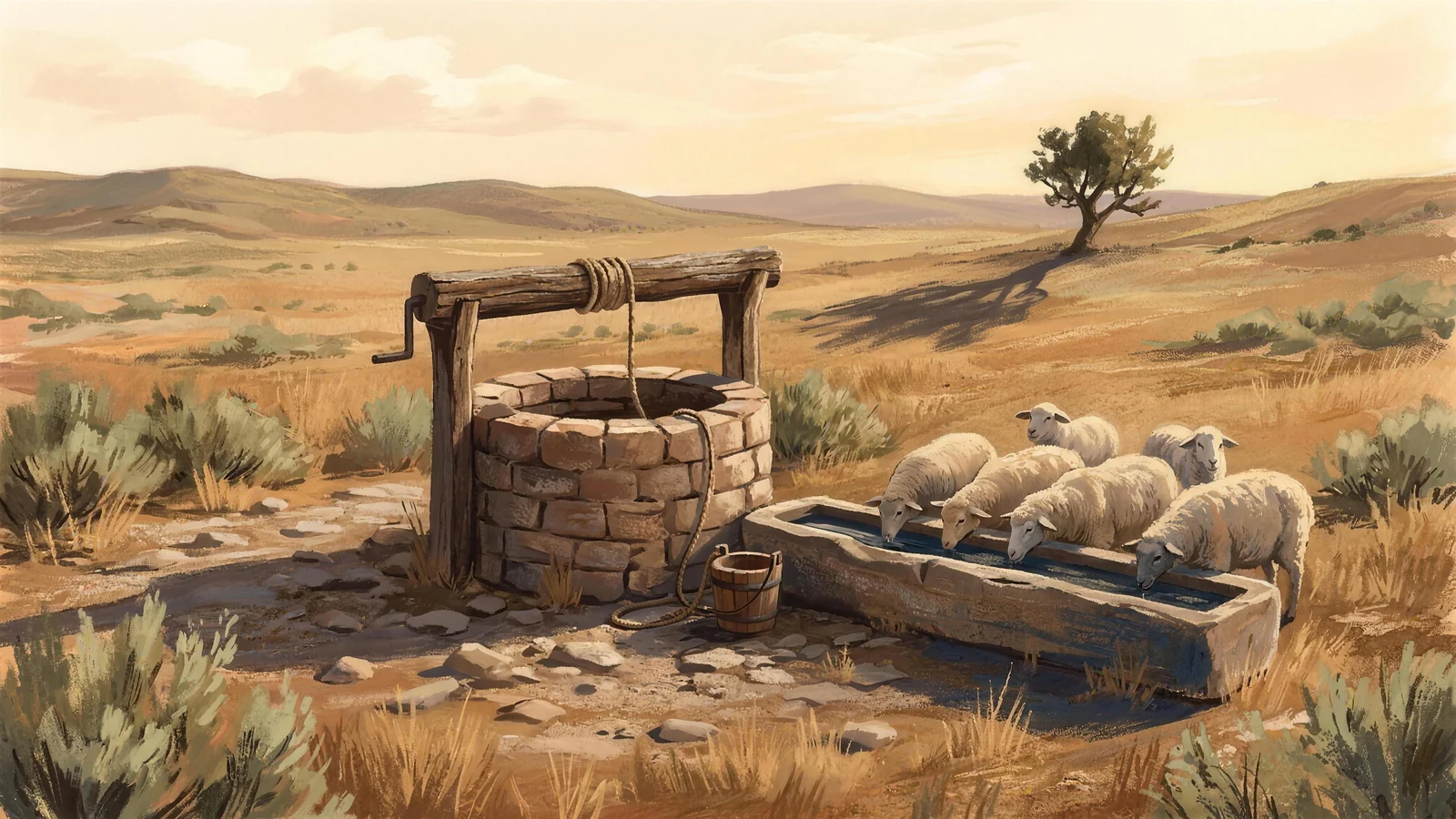
IV. A lesson at the well of Madyan: Without expecting anything in return
Moses’ silent help: to do the good, and to expect its return from his Lord.
Let us now go to a well that the Qur’an describes. Here ikhlas is taught through the silence that follows an act of help.
فَسَقَىٰ لَهُمَا ثُمَّ تَوَلَّىٰ إِلَى الظِّلِّ فَقَالَ رَبِّ إِنِّي لِمَا أَنزَلْتَ إِلَيَّ مِنْ خَيْرٍ فَقِيرٌ
So Moses watered their animals for them. Then he withdrew into the shade and prayed, “My Lord! I am in need of whatever good You send down to me!”
al-Qasas 28:24
To do good, not to expect its return from people, and to lay one’s need before one’s Lord alone: these are the three steps of ikhlas. Whoever says thank you does a beautiful thing, of course; but we do not act so that thanks will come. The Qur’an describes the same spirit in the words of the people of Paradise:
وَيُطْعِمُونَ الطَّعَامَ عَلَىٰ حُبِّهِ مِسْكِينًا وَيَتِيمًا وَأَسِيرًا إِنَّمَا نُطْعِمُكُمْ لِوَجْهِ اللَّهِ لَا نُرِيدُ مِنكُمْ جَزَاءً وَلَا شُكُورًا
They give food, though they themselves desire it, to the poor, the orphan and the captive. (And they say:) “We feed you only for Allah’s pleasure; we expect from you neither reward nor thanks.”
al-Insan 76:8–9

A scene from our life in Europe: Let us picture an aid parcel left at a door: a hand that walks away without ringing the bell, without taking a photograph, without looking back. In real life it is not so easy; years later we are hurt: “I did that for them, and they did not even thank me”, and we bring up the kindness we showed a relative at every gathering. Surah al-Layl describes the one who gives help in these words: “solely to win the pleasure of their Most High Lord, they give help. And in the end they will be well pleased.” (al-Layl 92:19-21)
A good deed done for Allah keeps no ledger of what is owed.
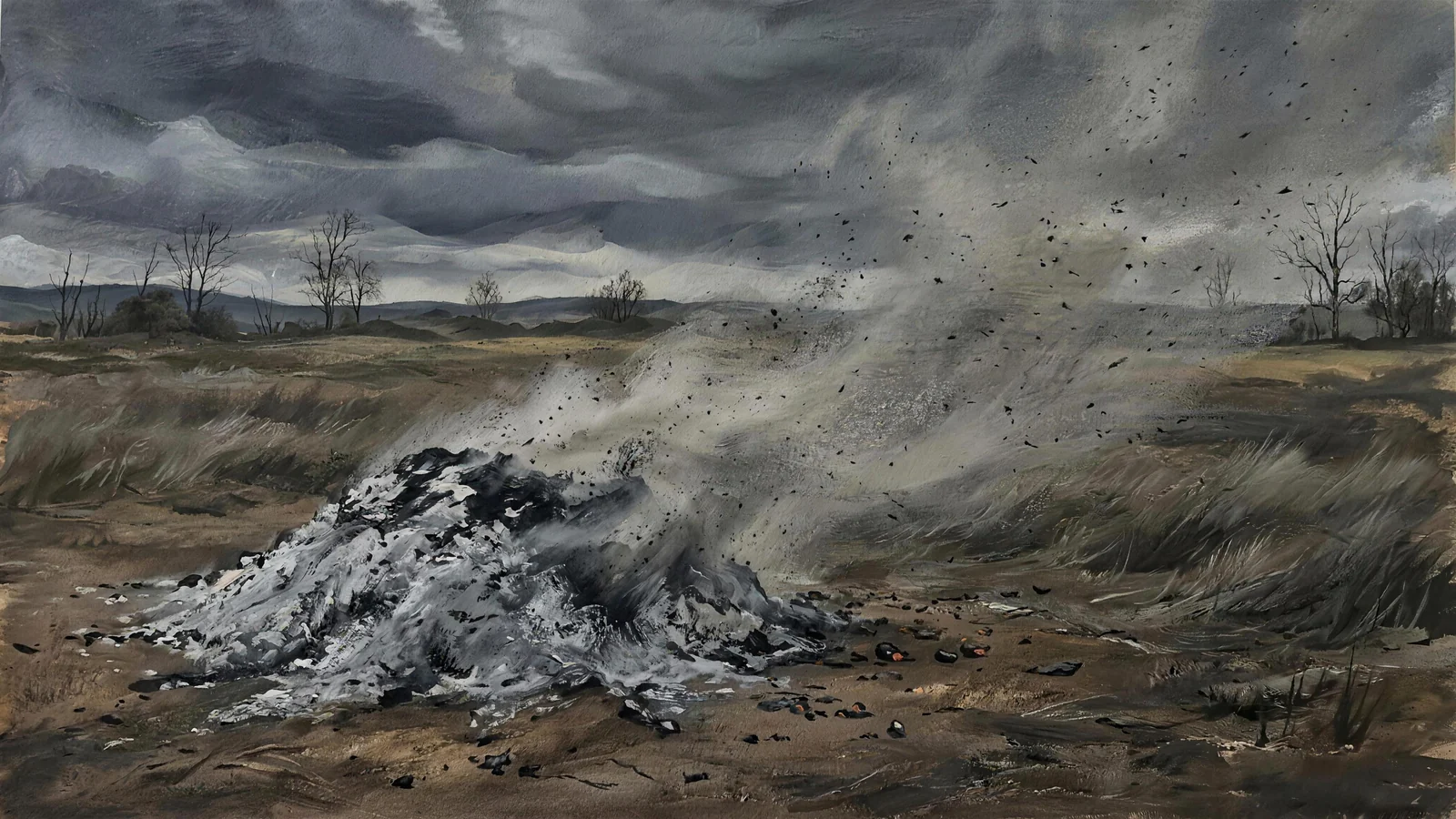
V. Faith is the root of deeds, ikhlas is their soul
Faith the root, ikhlas the trunk, the righteous deed the fruit.
Ikhlas is not a tree by itself; a tree has a root, a trunk and a fruit. The last verse of Surah al-Kahf gathers this into a single sentence:
فَمَن كَانَ يَرْجُو لِقَاءَ رَبِّهِ فَلْيَعْمَلْ عَمَلًا صَالِحًا وَلَا يُشْرِكْ بِعِبَادَةِ رَبِّهِ أَحَدًا
… So whoever hopes to meet their Lord, let them do deeds that benefit both this world and the Hereafter, and let them associate nothing in the worship of their Lord.
al-Kahf 18:110; excerpt from the verse
The verse sets two conditions: a righteous deed, and associating no one with the worship of one’s Lord. If one is missing, the other cannot stand. Faith is the root, ikhlas the trunk, the righteous deed the fruit; without a root no trunk can be planted, and if the trunk is rotten the fruit comes out rotten too.
Visible fruit
Righteous deedSupporting trunk
IkhlasUnseen root
Faith
Beside it, ash tossed about by the wind: Ibrahim 14:18.
Surah al-Mulk also asks of us not “many” deeds but “good” deeds: “It is He who created death and life to test which of you is better in conduct.” (al-Mulk 67:2) It is reported that al-Fudayl ibn ‘Iyad explained this “better” as “the purest and the most correct”: pure meaning done for Allah alone; correct meaning in accordance with the Sunnah. Let us look at one more verse:
مَّثَلُ الَّذِينَ كَفَرُوا بِرَبِّهِمْ أَعْمَالُهُمْ كَرَمَادٍ اشْتَدَّتْ بِهِ الرِّيحُ فِي يَوْمٍ عَاصِفٍ لَّا يَقْدِرُونَ مِمَّا كَسَبُوا عَلَىٰ شَيْءٍ ذَٰلِكَ هُوَ الضَّلَالُ الْبَعِيدُ
The deeds of those who reject their Lord are like ashes blown away by the wind on a stormy day. They gain no benefit from what they have earned. That is a deep error.
Ibrahim 14:18

This verse describes the state of those who reject their Lord; judgement belongs to Allah. It is not for us to pass judgement on anyone’s Hereafter; what falls to us is to examine the root of our own deeds. Saying “I am a Muslim” should lead not to complacency but to responsibility; for our Lord addresses the believers too: “do not nullify your charity by reminding people of it and by hurting them.” (al-Baqara 2:264)
A scene from our life in Europe: On a snowy morning we find the pavement in front of our door cleared; it was our Belgian neighbour who did it. We thank them sincerely. Then we turn back to ourselves: is my prayer, my charity, my donation the fruit of a deep-rooted tree, or ash that the wind will scatter?
A deed without faith is like a tree without roots, a deed without ikhlas like a body without a soul.
VI. Showing off (riya’): Hidden shirk
Showing off is minor shirk; but good is not abandoned out of fear of showing off.
Let us now look at the greatest enemy of ikhlas: riya’, that is, showing off — doing worship and good deeds so that people will see and admire them. Our Prophet worried about this above all:
إِنَّ أَخْوَفَ مَا أَخَافُ عَلَيْكُمُ الشِّرْكُ الْأَصْغَرُ ، قَالُوا : وَمَا الشِّرْكُ الْأَصْغَرُ يَا رَسُولَ اللهِ ؟ قَالَ : الرِّيَاءُ
“What I fear most for you is minor shirk.” They asked, “What is minor shirk, O Messenger of Allah?” He said, “It is riya’, showing off.” He then went on to say that on the Day of Resurrection Allah will say to them, “Go to those you showed off to in the world, and see whether you find any reward with them.”
Ahmad ibn Hanbal, al-Musnad, V, 428; good (hasan)
Showing off has two siblings: sum‘a, telling of the good one has done so that it will be talked about; and ‘ujb, being so pleased with one’s own deed that one takes credit for it. In a hadith qudsi, Allah says:
أَنَا أَغْنَى الشُّرَكَاءِ عَنِ الشِّرْكِ مَنْ عَمِلَ عَمَلاً أَشْرَكَ فِيهِ مَعِي غَيْرِي تَرَكْتُهُ وَشِرْكَهُ
Of all partners, I am the one who has least need of partnership. Whoever does a deed and associates someone else with Me in it, I leave both them and what they associated with Me to each other.
Muslim, Zuhd 46
Showing off
- Let them see
- Let them say
- Let them admire
- Proves light
Ikhlas
- Let Allah see
- Weighs heavy
Minor shirk: riya’ (Ahmad ibn Hanbal, V, 428).
A scene from our life in Europe: Renewing the car on credit so that people will see it, for the summer drive home; joining the rivalry over jewellery and halls at a wedding… We accuse no one; the seed of this is in the self of every one of us. Let us ask ourselves: “Am I doing this for Allah, or so that they will see?”
Fearing show, we do not abandon good; without abandoning it, we mend our intention.

VII. Ikhlas in the age of the screen: Three questions before sharing
The like count can become a new sum‘a: ask your intention before you share.
Our forebears used to hide their good deeds in the alms-stone (sadaka tashi: an Ottoman stone pillar with a hollow where the giver leaves a coin and the poor person takes it, neither seeing the other); we, however, live with a screen in our hands. The phone is like a pulpit that reaches hundreds of people with a single tap. Selfies taken on umrah and during tawaf, videos of the sacrifice, photographs of the iftar table, stories showing donation receipts… Behind all of them there may be a good intention, and also the sweet tickle of the like count. The like count can become a new sum‘a. When our Prophet announced that on the day when there is no shade but Allah’s shade, Allah will shade seven kinds of people, he also named this one:
وَرَجُلٌ تَصَدَّقَ أَخْفَى حَتَّى لاَ تَعْلَمَ شِمَالُهُ مَا تُنْفِقُ يَمِينُهُ
According to the narration of Abu Hurayra (may Allah be pleased with him), our Prophet described one of the seven kinds of people whom Allah will shade with His own shade, on the day when there is no shade but His, in these words: “…the one who gives charity and hides it so well that their left hand does not know what their right hand has given.”
al-Bukhari, Adhan 36; Zakat 16
Is sharing, then, forbidden? No. When a poor group came, the charity brought by a Companion from the Ansar became an example to the others, and our Prophet said, “Whoever starts a good practice in Islam will have their own reward and the reward of those who do it after them.” (Muslim, Zakat 69) To announce an aid campaign, to call others to good, to share useful knowledge is beautiful. The measure is intention and courtesy: let us not show the faces of those who receive help or of children, let us not touch anyone’s privacy, let us not write a caption saying “look what I have done”. Surah Luqman also reminds us: “remember that Allah loves no one who is carried away by pride and full of self-admiration.” (Luqman 31:18)
- 1For whom am I sharing this?For Allah, or for applause?
- 2Whom might it hurt, and whose privacy does it touch?Have I thought of the dignity of those who receive help, and of the children?
- 3Would I still have done it if I had not shared it?Can I say that I would have done it even if no likes had come?
If all three are clear, share; if one is doubtful, wait.
A scene from our life in Europe: In the family WhatsApp group, a photograph of our own good deed slips in among the pictures of the evening table; perhaps it goes to relatives waiting back home with an air of “look what we are doing here”. The test is even stronger for our young people: the worth of a good deed can begin to be measured by the number of followers. But our measure is not followers; it is the pleasure of the Truth, Allah.
The screen shows everyone; Allah sees even what never reaches the screen.

VIII. Where no one sees: The blessing of hidden deeds
The reward of a hidden deed is also hidden.
Allah’s finest gift to His servant is the one He gives to the deed that no one knows of. The Qur’an describes those who rise at night to plead with their Lord, and announces to them the reward kept hidden for them:
تَتَجَافَىٰ جُنُوبُهُمْ عَنِ الْمَضَاجِعِ يَدْعُونَ رَبَّهُمْ خَوْفًا وَطَمَعًا وَمِمَّا رَزَقْنَاهُمْ يُنفِقُونَ فَلَا تَعْلَمُ نَفْسٌ مَّا أُخْفِيَ لَهُم مِّن قُرَّةِ أَعْيُنٍ جَزَاءً بِمَا كَانُوا يَعْمَلُونَ
Their bodies forsake their beds to worship and call upon their Lord in fear and hope, and they spend for Allah’s sake from what We have provided for them. No one can know what joys are kept in store for them as a reward for what they have done.
as-Sajda 32:16–17
The reward of a hidden deed is also hidden: “no one can know.” Our Prophet said:

أَفْضَلُ الصَّلاَةِ بَعْدَ الْفَرِيضَةِ صَلاَةُ اللَّيْلِ
After the obligatory prayer, the most virtuous prayer is the night prayer.
Muslim, Siyam 202; excerpt from the hadith
إِنَّ اللَّهَ يُحِبُّ الْعَبْدَ التَّقِيَّ الْغَنِيَّ الْخَفِيَّ
Allah loves the servant who is pious, rich in heart and unassuming.
Muslim, Zuhd 11
Our forebears kept this subtlety alive with alms-stones: in the secluded corners of Ottoman mosques stood these stones, where benefactors left their charity and those in need took what they needed without being hurt. (TDV İslâm Ansiklopedisi, “Sadaka”, XXXV, 383–384; “Taş”, XL, 140–144)

A scene from our life in Europe: Paying the mosque’s bill without having one’s name written down, sending a student a scholarship without giving one’s name, praying two rak‘as at night and telling no one… These are our alms-stones. “Which good deed today is known only to my Lord?”
May everyone have one deed known only to their Lord.

IX. Sidq: Being the same within and without
Intention, word and deed looking in the same direction.
The face of ikhlas that shows in word and conduct is sidq: truthfulness, that is, being the same within and without. The Qur’an addresses the believers:
يَا أَيُّهَا الَّذِينَ آمَنُوا اتَّقُوا اللَّهَ وَكُونُوا مَعَ الصَّادِقِينَ
O you who believe! Be mindful of Allah and be with the truthful.
at-Tawba 9:119
Scholars of Islamic ethics describe sidq in six steps: truthfulness in speech, in intention, in resolve, in holding firm to one’s resolve, in deed, and in one’s religious states. (Kur’an Yolu, commentary on verse 119 of at-Tawba) That is, sidq is not only avoiding lies; it is intention, word and deed looking in the same direction. The Qur’an also warns us against saying what we will not do: “Why do you say what you do not do? Saying what you do not do is most hateful in Allah’s sight.” (as-Saff 61:2-3)
- WordTruthfulness in word.
- IntentionTruthfulness in intention.
- ResolveTruthfulness in resolve.
- FaithfulnessTruthfulness in holding to one’s resolve.
- DeedTruthfulness in deed.
- Inner stateTruthfulness in religious states.
Sidq: within as without.
The story of the Bedouin is among the finest examples of sidq:
إِنْ تَصْدُقِ اللَّهَ يَصْدُقْكَ
صَدَقَ اللَّهَ فَصَدَقَهُ
According to what Shaddad ibn al-Had (may Allah be pleased with him) related, a Bedouin man brought the share of spoils that had fallen to him in battle to our Prophet and said, “I did not follow you for this; I followed you so that I might be struck by an arrow right here, die, and enter Paradise.” Our Prophet said, “If you are true to Allah, Allah will be true to you.” Soon afterwards the man was brought in, struck exactly where he had pointed. Our Prophet said, “He was true to Allah, and Allah was true to him.”
an-Nasa’i, Jana’iz 61
Our Prophet also lists the marks of being one thing within and another without: “When they speak, they lie; when they promise, they break their word; when they are entrusted with something, they betray it.” (al-Bukhari, Iman 24) We read these traits not to accuse anyone but to examine our own selves. The Qur’an speaks of hypocrisy (nifaq) in grave terms (an-Nisa’ 4:145), but straight afterwards it leaves the door open: “Except for those who repent and set their conduct right, who hold fast to Allah and devote their religion to Him alone: they are the exception.” (an-Nisa’ 4:146) Ikhlas is to appear as one is, and to be as one appears; the saying that in our culture is attributed to Mawlana, “Either appear as you are, or be as you appear”, expresses this too.

A scene from our life in Europe: The lines we put on a CV, the figures on a tax return, the “halal” sign in the shop and the truth about the goods sold… Our children notice inconsistency at once: if a father who says on the phone “tell them Dad isn’t home” says on Friday “do not lie”, which will the child believe? We say this not to accuse but to look at ourselves.
The believer is the same person when no one is looking.

X. The blessing of ikhlas: The charity that fell to a thief, the prayer that opened the cave
The charity of a pure intention is not lost; a righteous deed saves us on the day of distress.
The blessing of ikhlas is seen both in this world and in the Hereafter. Our Prophet (peace and blessings be upon him) tells us two stories: one is the story of a charity, the other the story of a prayer.

Let us read these three deeds in today’s language: serving elderly parents; turning away from sin when no one is looking; handing over a worker’s due in full, even increased. Let us ask ourselves: If I were trapped in the cave, which of my deeds would I present to my Lord?
- Serving parentsWaited until dawn.
- ChastityTurned back, fearing Allah.
- The worker’s dueGrew it and paid in full.
In your hour of need, which deed will you offer your Lord?
A scene from our life in Europe: To serve our elderly parents often, as far as our circumstances allow, in our home or near it; to turn away from sin when no one sees us — alone in a hotel room, on a business trip, with only the phone in our hands; to hand over in full at the month’s end the due of a worker who works off the books… None of it is applauded, none of it is photographed.
The capital for a day of hardship is the deed done for Allah alone in days of ease.
XI. Conclusion: With a pure heart
Our ikhlas pledge: an intention for every task, staying the same even when no one sees.
Let us conclude with this glad tiding of our Prophet:
أَسْعَدُ النَّاسِ بِشَفَاعَتِي يَوْمَ الْقِيَامَةِ مَنْ قَالَ لاَ إِلَهَ إِلاَّ اللَّهُ، خَالِصًا مِنْ قَلْبِهِ أَوْ نَفْسِهِ
The person who will most deserve my intercession on the Day of Resurrection is the one who sincerely says from their heart, “La ilaha illa llah.”
al-Bukhari, ‘Ilm 33
The tongue says the word; but to say it “from the heart, purely” is ikhlas. According to Dhu n-Nun al-Misri, the marks of ikhlas are three: that praise and blame are the same to a person, that they forget to look at the deeds they have done, and that they do not think of themselves as having earned a reward for them. (TDV İslâm Ansiklopedisi, “İhlâs”, XXI, 535–537)
Let us gather what we have discussed today at a glance: let us see ikhlas, its allies and its foes once more in the diagram “Ikhlas and its relatives” in the first section.
Now let us turn all of this into a pledge that we will hang on the door of our heart:
- 1I will begin every task with an intention.
- 2I will stay the same even when no one sees.
- 3Every week I will do one good deed in secret.
- 4I will not throw my kindness in anyone’s face.
- 5Before I share, I will ask my intention.
- 6My inside and my outside will be one.
- 7I will not be puffed up by praise nor give up under blame.
- I will begin every task with an intention. When I go to work, to the table, to the mosque, I will say, “For Allah’s pleasure.”
- I will stay the same even when no one sees. With no boss, no customer, no camera present, I will do my work and my worship with the same care.
- Every week I will do one good deed in secret. Without having my name written down, without taking a photograph, without telling anyone.
- I will not throw my kindness in anyone’s face. I will not bring up what I have given, and I will not sulk if no thanks come.
- Before I share, I will ask my intention. I will not carry my worship and my good deeds onto the screen to show off, and I will not show the face of the one who receives help.
- My inside and my outside will be one. I will be the same at home and on the tax return as I am in the mosque; I will not say what I have not done.
- I will not be puffed up by praise nor give up under blame. Every evening I will ask, “For whom did I do it today?”, and close the day with a supplication for ikhlas.
The believer with ikhlas does their work for Allah alone; even when no one sees, they stay the same; praise does not puff them up and blame does not make them give up; inwardly and outwardly they are one. As we leave this Friday prayer, let us ask three questions: For whom did I do it? Would I have done it if no one had seen? Would I have given up if no thanks had come? This week let us do our first small hidden good deed: telling no one, taking no photograph, so that only our Lord knows.
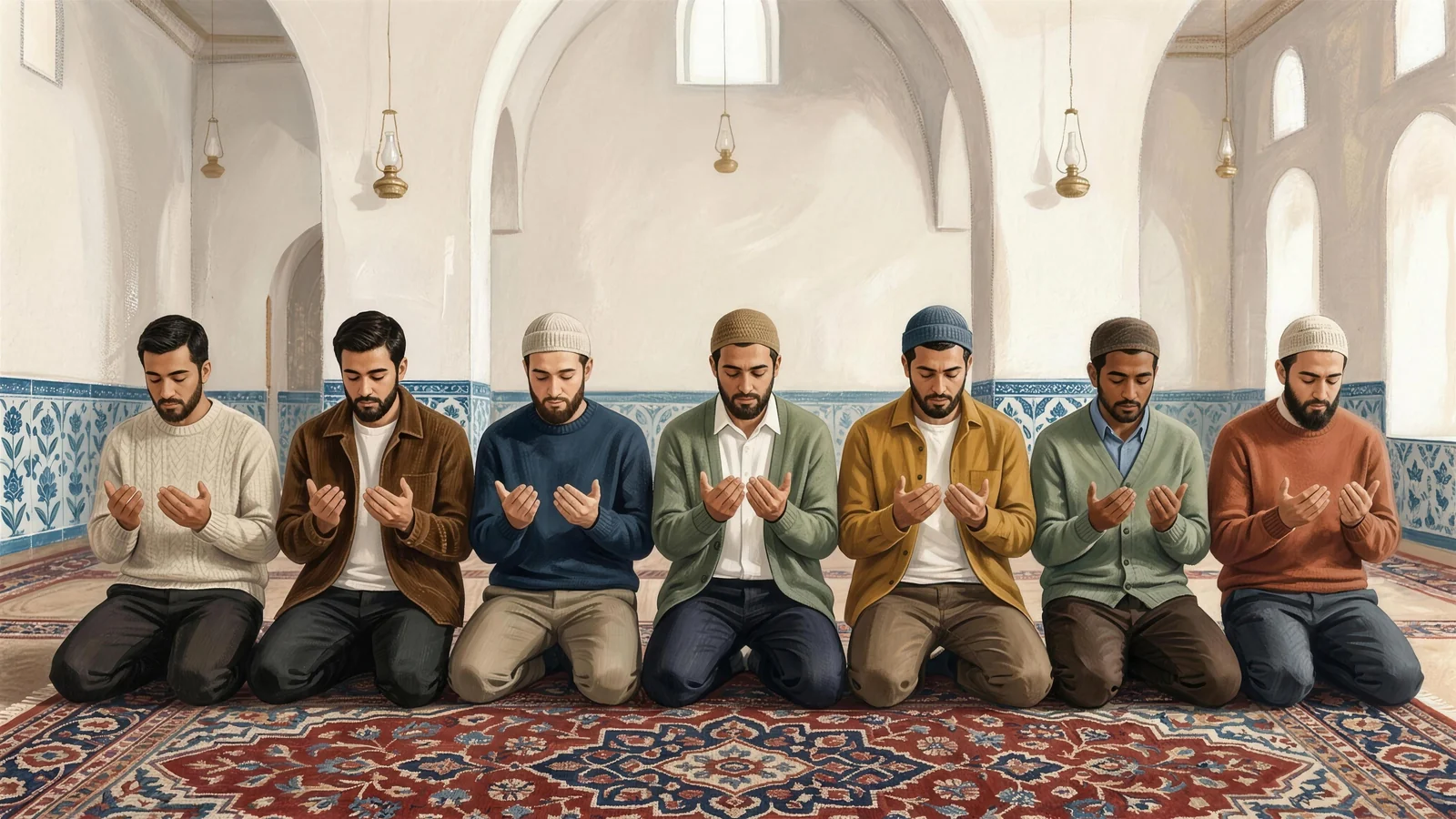
Closing the sermon here in Europe: the congregation’s supplication
We open our hands and our hearts to our Lord.
My dear brothers and sisters! Let us open our hands and our hearts to our Lord.
أَعُوذُ بِاللَّهِ مِنَ الشَّيْطَانِ الرَّجِيمِ
الْحَمْدُ لِلَّهِ رَبِّ الْعَالَمِينَ، وَالصَّلَاةُ وَالسَّلَامُ عَلَى رَسُولِنَا مُحَمَّدٍ وَعَلَى آلِهِ وَصَحْبِهِ أَجْمَعِينَ
I seek refuge with Allah from the evil of the accursed Satan. All praise belongs to Allah, Lord of the worlds. May blessings and peace be upon our Prophet Muhammad, his family and all his Companions.
Praise: al-Fatiha 1:2. Seeking refuge and blessings on the Prophet: freely worded supplication
O Allah! Purify our intentions, cleanse our hearts of showing off and of calculations of gain, and grant that we do even our smallest good deed for Your pleasure alone.
O Allah! Our Lord and Lord of all things! Bind us and our families to You with ikhlas at every moment, in this world and the Hereafter; make our deeds righteous and our intentions pure.
اللَّهُمَّ إِنِّي أَعُوذُ بِكَ أَنْ أُشْرِكَ بِكَ وَأَنَا أَعْلَمُ، وَأَسْتَغْفِرُكَ لِمَا لا أَعْلَمُ
It is reported that our Prophet (peace and blessings be upon him) taught Abu Bakr (may Allah be pleased with him) this supplication: “O Allah! I seek refuge in You from knowingly associating anything with You, and I ask Your forgiveness for what I do unknowingly.”
al-Bukhari, al-Adab al-Mufrad 716
Our Lord! Protect us from showing off, from self-admiration, and from throwing our kindness in people’s faces; and forgive whatever we have mixed, knowingly or unknowingly, into our deeds.
O Allah! Make our French- and Dutch-speaking children and grandchildren among Your servants whose words and hearts are true, the same within and without; make them love ikhlas, and make us a good example to them.
O Allah! Reward with Your mercy those who do good without making their names known, and our volunteers who serve our mosque in silence; grant healing to our sick, peace to our elderly, and forgiveness to our departed.
O Allah! Grant peace and security to the country we live in, help the oppressed of the earth, and make us among Your servants who are useful and trustworthy to our neighbours and to all humanity.
Our Lord! Do not let our hearts swerve after You have guided us to the right path; multiply our few deeds in Your presence and accept them.
رَبَّنَا لَا تُزِغْ قُلُوبَنَا بَعْدَ إِذْ هَدَيْتَنَا وَهَبْ لَنَا مِن لَّدُنكَ رَحْمَةً إِنَّكَ أَنتَ الْوَهَّابُ
رَبَّنَا تَقَبَّلْ مِنَّا إِنَّكَ أَنتَ السَّمِيعُ الْعَلِيمُ
Our Lord! Do not let our hearts swerve after You have guided us to the right path; grant us a mercy from You. There is no doubt that You alone are the Bestower of abundant favour.
Our Lord! Accept this from us; You are indeed the All-Hearing, the All-Knowing.
Al ‘Imran 3:8; al-Baqara 2:127; excerpt from the verse
Amin. Wa’l-hamdu li-llahi rabbi’l-‘alamin. Al-Fatiha.
Appendix: 40 intentions for everyday life, an intention for every task
Intention is the key that turns habit into worship. From the list below let us read one group each day; as we go to work, to the house, to the mosque, let us repeat it within ourselves in our own words. Let us not hesitate to adapt the sentences to our own street and our own work.
Work and earnings
- On the way to work: I am working to feed my family from what is lawful.
- As the shift begins: I do my work knowing it is a trust Allah has given me.
- When speaking with a customer: I state the defect of the goods and deceive no one.
- At the scales and with change: I give every cent in full, so as not to take what is not mine.
- On the tax return: I write the truth so as not to trespass on anyone’s rights.
- When the boss is absent: I finish the work completely, because Allah sees.
- Towards my colleague: I do not speak behind their back; I tell them the truth to their face, with courtesy.
- On payday: I gladly set aside a share of my earnings for good causes.
Family and home
- On entering the house: I give the greeting of peace and show a cheerful face to my household.
- When sitting at the table: I eat with thanks, knowing this provision is Allah’s blessing.
- When talking with my spouse: I win their heart with kind words and respect their rights.
- When listening to my child: I give them time because they are a trust from Allah.
- When calling my parents: I call to fulfil their rights and to receive their prayers.
- To a relative who has fallen out with us: I give the greeting of peace so that I may be the first to step forward.
- To my French- or Dutch-speaking child: I explain the prayer in the language they will understand.
- When going to bed at night: I call my day to account with the question “For whom did I do it?”
Mosque and association
- On the way to the mosque: I am going to the house of my Lord; my intention is worship, not show.
- When standing in the row: I aim not to get to the front but to fill a gap.
- When making a donation: I give so that Allah may accept it, not so that my name may be written down.
- In volunteer work: I am here to serve, at the tea corner, in the cleaning.
- In the meeting: I voice criticism not behind anyone’s back but to their face, with courtesy.
- In the accounts: I record the congregation’s trust openly, cent by cent.
- At the course: The time I set aside to teach the children is for Allah.
- At a funeral: Even if no one sees, I perform my last duty to the deceased.
Neighbours and society
- On seeing a neighbour: I give the greeting of peace without regard to their religion or language.
- On a snowy morning: I shovel the snow in front of my neighbour’s door for Allah’s sake.
- While shopping: I offer a hand to an elderly neighbour, expecting nothing in return.
- In traffic: I do not squeeze anyone, and I respect the right of way.
- In official matters: I keep the rules of the country I live in and do not betray a trust.
- When visiting the sick: I make time to say “get well soon”.
- To a neighbour who is moving house: I come to help for an hour, expecting nothing in return.
- On bin day and at night: I count not disturbing my neighbour as worship.
Screen and speech
- When opening the phone: I look so as not to waste my time and to choose what is useful.
- Before sharing: It is so that this may be a means of good for someone; if not, I will delete it.
- When sharing aid: I do not show the face of the one receiving it, and I do no harm to their privacy.
- When news arrives: I do not forward it without checking, and I guard against spreading falsehood.
- When writing a comment: I write a kind word instead of a hurtful one.
- In the family group: I do not hurt anyone; I remind gently.
- When likes come: I count the like not as a goal but as Allah’s bounty.
- In front of my child: I put the phone down to set an example in screen manners.
An intention does not have to be spoken aloud; it is the turning of the heart. (İlmihal, I, 238: it is not a condition that the intention be spoken aloud; according to the majority it is recommended (mustahabb).)
- Ikhlas
- Purifying a deed of showing off and of concern for gain, and doing it for Allah alone.
- Intention
- The heart’s turning to an act in pursuit of Allah’s pleasure; the key that turns habit into worship.
- Sidq
- Truthfulness: being honest in word, intention and deed; being the same within and without.
- Sincere goodwill
- Sincerity: sincerely wanting what is good for others.
- Riya’
- Showing off: doing worship and good deeds so that people will see and admire them.
- Sum‘a
- Wanting a deed to be talked about: telling others of the good one has done, for the sake of renown.
- ‘Ujb
- Admiring one’s own deed and taking credit for it; seeing in oneself a rank one has not earned.
Sources of verses, hadiths and others
The meanings are taken from the Kur’an Yolu rendering; verses and hadiths that are abridged are indicated in the text. The wording of the verses is taken from the Tanzil text, the wording of the hadiths has been compared with sunnah.com, and the grades of the narrations have been checked against the judgements of the hadith scholars.
- Verses: al-Fatiha 1:2; al-Baqara 2:127; al-Baqara 2:264; al-Baqara 2:271; Al ‘Imran 3:8; an-Nisa’ 4:145–146; al-An‘am 6:162–163; at-Tawba 9:119; Ibrahim 14:18; al-Hijr 15:39–40; an-Nahl 16:66; al-Kahf 18:110; Ta-Ha 20:25–28; al-Hajj 22:37; al-Qasas 28:23–25; Luqman 31:18; as-Sajda 32:16–17; az-Zumar 39:3; as-Saff 61:2–3; al-Mulk 67:2; al-Insan 76:8–9; al-Layl 92:19–21.
- Hadiths: al-Bukhari, Bad’ al-wahy 1; Iman 24, 41, 42; Zakat 14, 16; Maghazi 82; Adhan 36; Adab 5; ‘Ilm 33; al-Adab al-Mufrad 716; Muslim, Iman 95, 204; Imara 152, 155; Birr 34, 166; Zuhd 11, 46; Zakat 69, 78; Siyam 202; Dhikr 100; an-Nasa’i, Jihad 24; Jana’iz 61; Abu Dawud, Witr 25; Ahmad ibn Hanbal, al-Musnad V, 428; az-Zuhd.
- Narrations and reports with weakness in the chain: The prayer for ikhlas made after the prayers (Abu Dawud, Witr 25): its chain contains weakness. The prayer of ‘Umar (Ahmad ibn Hanbal, az-Zuhd) and the sayings of al-Fudayl ibn ‘Iyad (al-Qushayri, al-Risala) are given as reports.
- Stories and sayings: The explanation of the well of Madyan: Kur’an Yolu. The hidden help of Zayn al-‘Abidin: TDV İslâm Ansiklopedisi, “Zeynelâbidîn”, XLIV, 365–366; after adh-Dhahabi, Siyar, IV, 393. The saying attributed to Mawlana, “Either appear as you are, or be as you appear”, and the definition of ikhlas: Hadislerle İslâm.
- Encyclopaedia and catechism: TDV İslâm Ansiklopedisi, “İhlâs” (XXI, 535–537), “Niyet” (XXXIII, 169–172), “Riyâ” (XXXV, 137–138), “Sıdk” (XXXVII, 98–100), “Ucb” (XLII, 36–37), “Nasihat”, “Sadaka” (XXXV, 383–384), “Taş” (XL, 140–144); İlmihal; Hadislerle İslâm; Kur’an Yolu commentary.
- Appendix of 40 intentions for everyday life: The sentences are examples; everyone adapts them to their own work and street. It is not a condition that the intention be spoken aloud: İlmihal, I, 238.
- Images: The scene pictures are illustrative images; there is no depiction of prophets or Companions.