
Sermon
Supplication, the Essence of Worship — Hands Raised to the Lord Who Says “I Am Near”
Supplication is worship itself. Supplication can be made at every moment and in every place; supplication in hardship and in plenty, the supplications of a day in our Prophet’s life, the etiquette of supplication, the fact that no supplication goes without a response, the rule on seeking a lawful means (tawassul) and our household’s supplication pledge; in the appendix, a model supplication step by step and twenty-six daily supplications.
Translated from the Turkish original. Read the Turkish original →
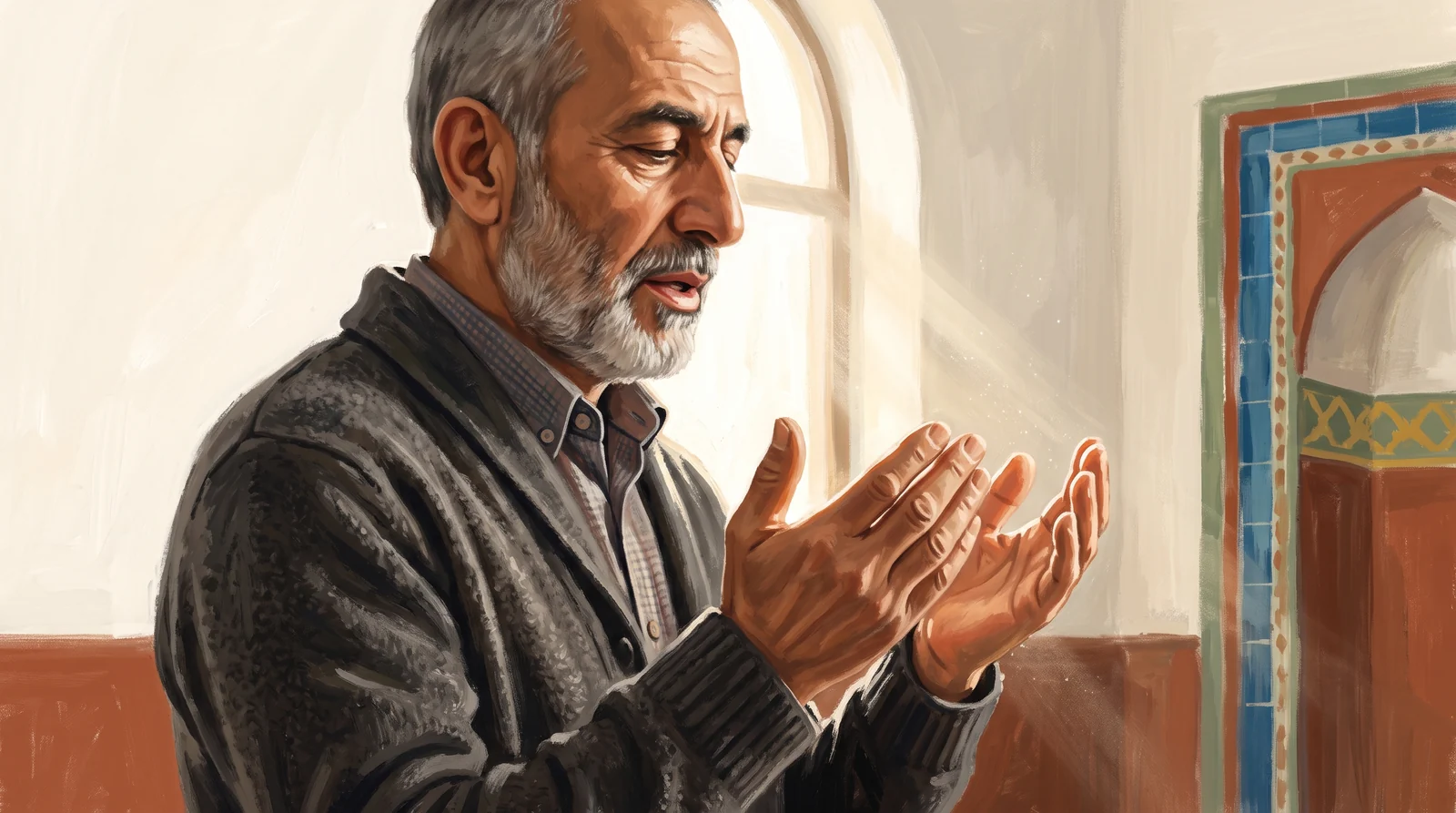
Supplication is the servant saying “I am in need” and the Lord answering “I am near.”
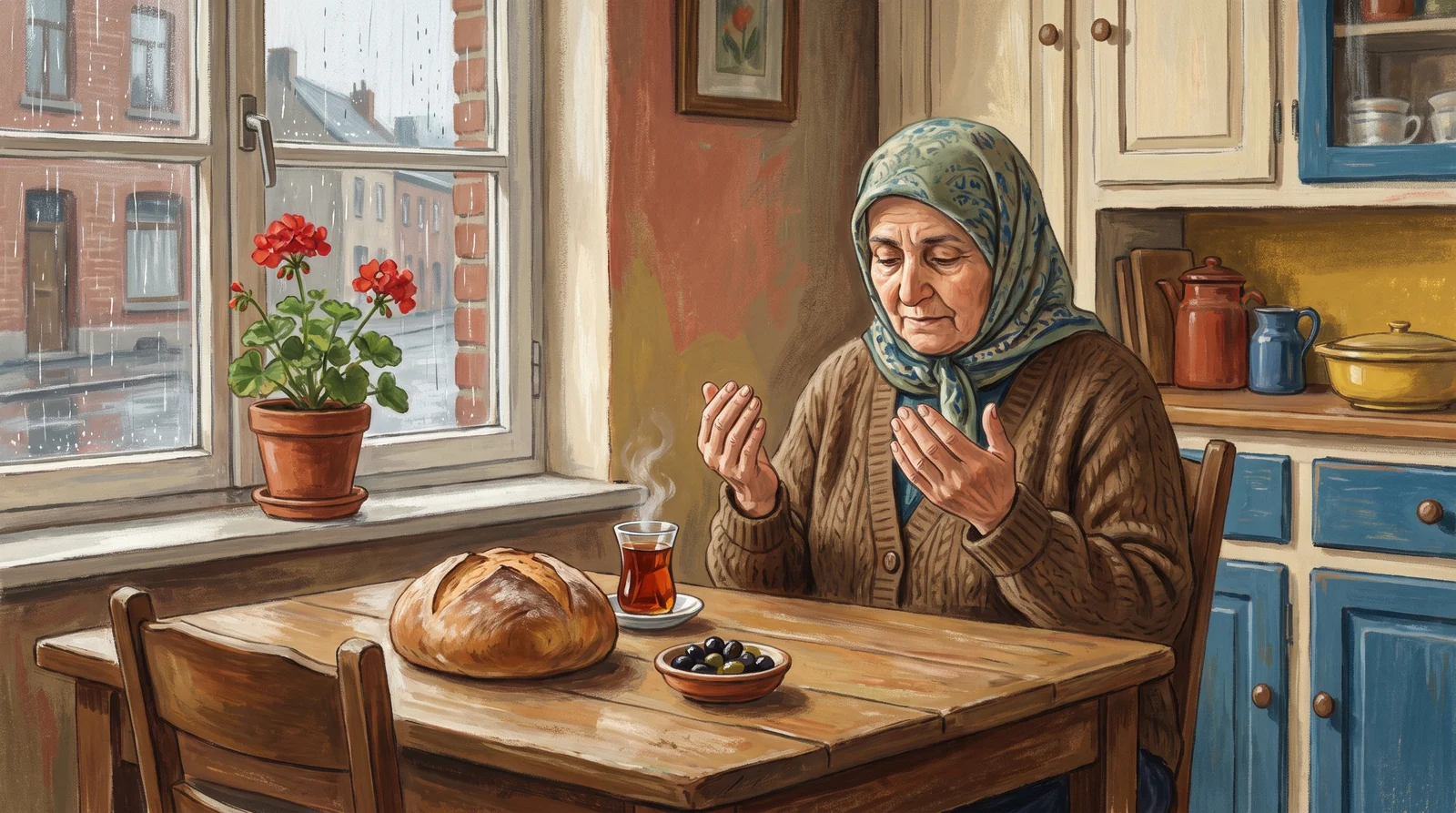
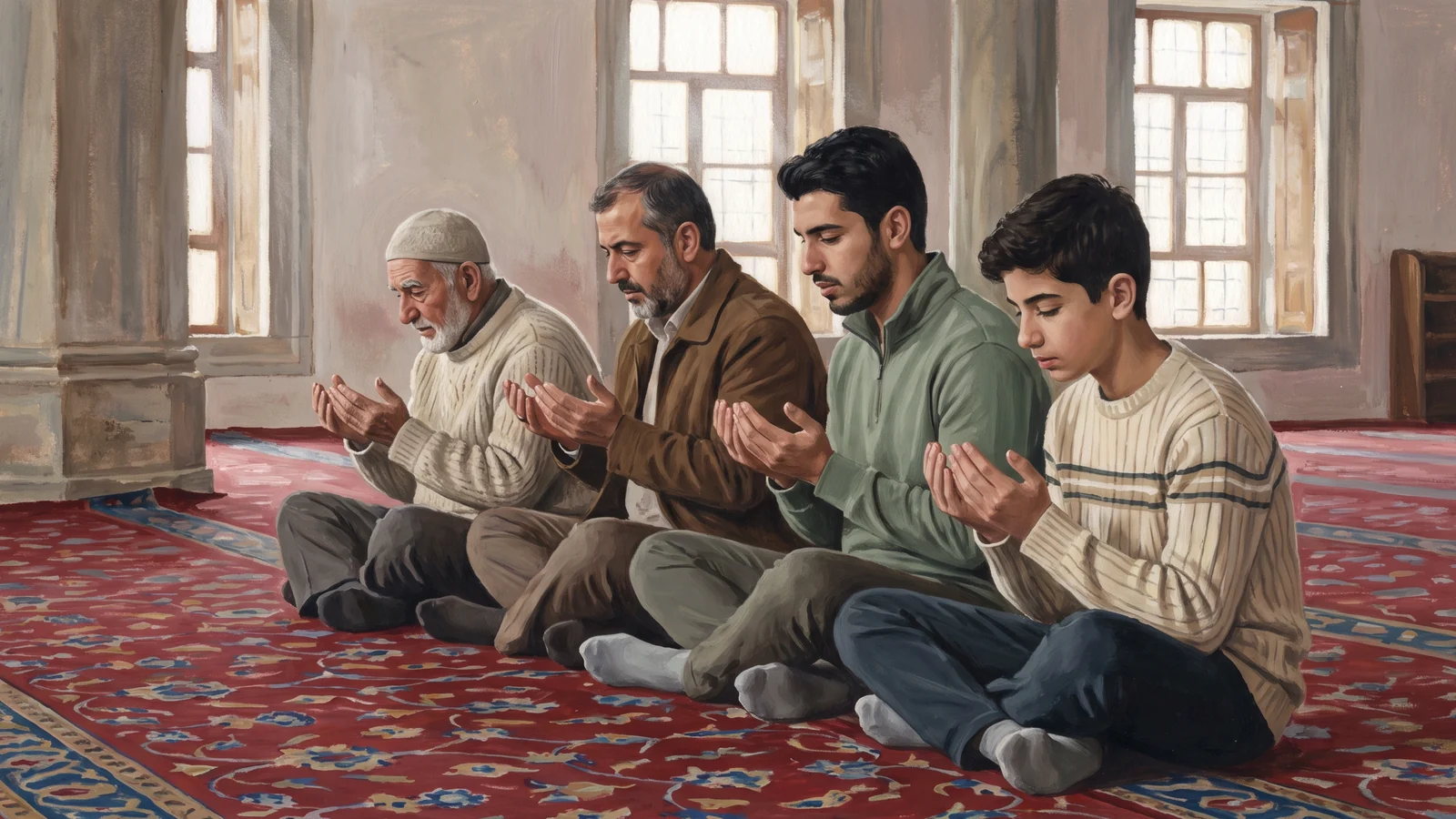
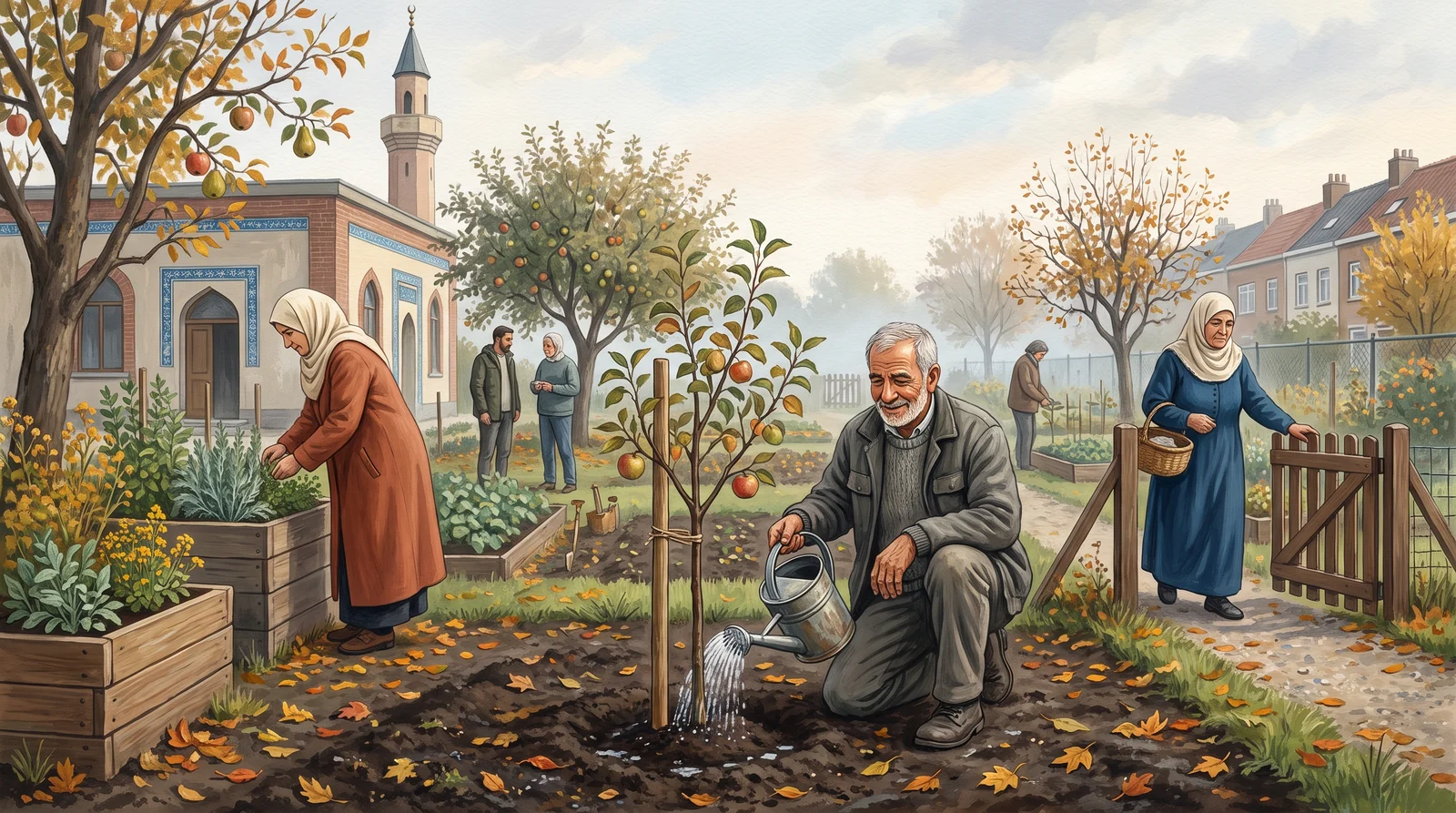
The images are illustrative scenes from the life of a community living in Europe today.Four key ideas
- Supplication is worship itself.The servant says “I am in need,” the Lord says “I am near”; there is no intermediary between them.
- The time of supplication is every moment, its place everywhere.In hardship and in plenty, in prostration and on the morning tram, the door is open.
- Supplication is made with proper etiquette.Beginning with praise and blessings on the Prophet, asking humbly, waiting with lawful sustenance and patience.
- No supplication goes without a response.It is either given, stored up for the hereafter, or some harm is averted; let us include our brothers and sisters in our supplication too.

Opening: the Lord who says “I am near”
الْحَمْدُ لِلَّهِ رَبِّ الْعَالَمِينَ، وَالصَّلَاةُ وَالسَّلَامُ عَلَى رَسُولِنَا مُحَمَّدٍ وَعَلَى آلِهِ وَصَحْبِهِ أَجْمَعِينَ
رَبَّنَا تَقَبَّلْ مِنَّا إِنَّكَ أَنتَ السَّمِيعُ الْعَلِيمُ
Praise belongs to Allah, the Lord of the worlds. May blessings and peace be upon our Prophet Muhammad, upon his family and upon all his Companions. Our Lord! Accept this from us; You are indeed the All-Hearing, the All-Knowing.
Praise: al-Fatiha, 1:2. Blessings on the Prophet: free wording of supplication. Supplication: al-Baqara, 2:127; excerpt from the verse
Dear congregation! My dear brothers and sisters, you who carry the burden of life here in Europe into prostration, and your troubles and your joys alike to your Lord!
Sixty-two years ago, under the 1964 labour agreement, our first generation came to these lands with a few belongings in a suitcase, a letter from home in a pocket and a supplication on the tongue. Many of them, in a country whose language they did not know, went down into the darkness of the coal mines saying “Bismillah”; after their shift, with weary bodies, they fell on the prayer mat in a rented room and said “Ya Rabbi.” On the nights when they had no one to talk to, they talked with their Lord. If we sit in this mosque today as their children and grandchildren, the supplications they never gave up here in Europe have a share in it.
وَإِذَا سَأَلَكَ عِبَادِي عَنِّي فَإِنِّي قَرِيبٌ أُجِيبُ دَعْوَةَ الدَّاعِ إِذَا دَعَانِ فَلْيَسْتَجِيبُوا لِي وَلْيُؤْمِنُوا بِي لَعَلَّهُمْ يَرْشُدُونَ
When My servants ask you about Me, let them know that I am indeed near: when one calls upon Me, I respond to the request of the one who calls. So let them answer My invitation and believe in Me, that they may find the right path.
al-Baqara, 2:186
My brothers and sisters! There are many questions in the Qur’an that were put to our Prophet: about the new moons, about spending, about the sacred months, about wine and gambling, about orphans… The answers to these questions mostly begin with “Say” and are given in the words of our Prophet. In this verse, however, the word “Say” does not appear. When servants ask about their Lord, our Lord Himself gives the answer, without any intermediary: “I am near.” Supplication is an encounter in which no one stands between the servant and the Lord; there is no guard at the door, no appointment and no interpreter. In another verse our Lord tells us that He is closer to a human being than the jugular vein. (Qaf, 50:16)
“They ask you…” → “Say…”
- The new moons al-Baqara, 2:189
- What they should spend al-Baqara, 2:215
- Fighting in the sacred month al-Baqara, 2:217
- Wine and gambling al-Baqara, 2:219
- Orphans al-Baqara, 2:220
“If My servants ask you about Me…”
- “I am near.” al-Baqara, 2:186
- There is no “Say” in between.
- Our Lord Himself gives the answer, without any intermediary.
Supplication is an encounter in which no one stands between the servant and the Lord.
Today we shall speak about supplication, that is, the essence of servanthood: the place of supplication in worship, the supplications that surrounded the day of our Prophet, the etiquette of supplication, and the seven promises that we can carry into our homes. Our key sentence is this: Supplication is the servant saying “I am in need” and the Lord answering “I am near.”

I. Supplication is worship itself
Supplication is not tied to a ceremony, a form or a place; it is the essence of all acts of worship.
الدُّعَاءُ هُوَ الْعِبَادَةُ
وَقَالَ رَبُّكُمُ ادْعُونِي أَسْتَجِبْ لَكُمْ إِنَّ الَّذِينَ يَسْتَكْبِرُونَ عَنْ عِبَادَتِي سَيَدْخُلُونَ جَهَنَّمَ دَاخِرِينَ
According to the narration of al-Nu‘man ibn Bashir (may Allah be pleased with him), our Prophet said, “Supplication is worship itself,” and then recited this verse: “Your Lord has said: Call upon Me in supplication, and I will accept your supplication. Those who are too proud to worship Me will enter Hell, humiliated!”
al-Tirmidhi, Da‘awat, 1 (3372); Abu Dawud, Witr, 23 (1479). Verse: Ghafir (al-Mu’min), 40:60
Supplication is turning to one’s Lord in awareness of one’s own weakness: extolling Him, offering Him praise and thanks, and asking Him for help, forgiveness and mercy. Supplication is not tied to any particular ceremony, form, time or place. The ritual prayer begins with al-Fatiha, that is, with a supplication, and ends with the tashahhud, the blessings on the Prophet and the Rabbana supplications. There is supplication in the pilgrimage, in fasting, in sacrifice and in zakat as well. In one respect all acts of worship are supplication, while supplication is the essence of all acts of worship.
- PrayerIt begins with al-Fatiha and ends with the tashahhud, the blessings on the Prophet and the “Rabbana” supplications.
- FastingIt is reported that the supplication of one who is fasting is not turned away until the fast is broken.
- PilgrimageIt begins with the talbiya; the standing at Arafat is, from beginning to end, supplication and entreaty.
- Zakat and charityA prayer is made for the believer who gives of their wealth; this prayer gives them peace (al-Tawba, 9:103).
لَيْسَ شَيْءٌ أَكْرَمَ عَلَى اللَّهِ تَعَالَى مِنَ الدُّعَاءِ
Nothing is more valuable in Allah’s sight than supplication.
al-Tirmidhi, Da‘awat, 1 (3370); Ibn Majah, Du‘a’, 1 (3829)
The chain of narration of the report meaning “Supplication is the essence of worship” contains weakness; the saying that expresses the same meaning authentically is the hadith we have just read, “Supplication is worship itself.” This is why we call supplication the essence of servanthood: worship means saying “I am a servant,” and supplication says this in its simplest form: “I am in need, and You are the Self-Sufficient; I am helpless, and You are the All-Powerful; I am at fault, and You are the Ever-Forgiving.”
- I am in needYou are the Self-SufficientThe One who needs nothing
- I am helplessYou are the All-PowerfulThe One who has power over everything
- I am at faultYou are the Ever-ForgivingThe One who covers and forgives sins
To say “Ya Rabbi” is a confession that one knows one’s Lord as He deserves to be known.
Let us also pay attention to the warning at the end of the verse: abandoning supplication is described as arrogance. A person who does not supplicate is saying, even if not with the tongue, “I need no one.” Those who supplicate, on the other hand, know their own limits; they regard knocking at their Lord’s door not as a humiliation but as an honour. The cry of “Ya Rabbi” is in truth a confession that the servant knows their Lord as He deserves to be known, and exalts Him.
II. We are the ones in need: supplication reminds us of our purpose in creation
The measure of our worth is not our wealth or our rank, but our turning to our Lord.
قُلْ مَا يَعْبَأُ بِكُمْ رَبِّي لَوْلَا دُعَاؤُكُمْ
Say: “Were it not for your servanthood and your entreaty, why would Allah value you?”
al-Furqan, 25:77; excerpt from the verse
In this verse our Lord gives the measure of our worth: not our wealth, our rank, our passport or our diploma, but our turning to our Lord. The Qur’an tells us that He created jinn and humankind only so that they might worship Him. (al-Dhariyat, 51:56) Since the essence of servanthood is supplication, a person who supplicates has remembered the purpose of their creation and returned to their origin. Allah has no need of our supplication; it is we who are in need: “O people! It is you who are in need of Allah. Allah is the One who needs nothing, and it is He who is forever worthy of praise in His absolute perfection.” (Fatir, 35:15)
يَا عِبَادِي كُلُّكُمْ ضَالٌّ إِلاَّ مَنْ هَدَيْتُهُ فَاسْتَهْدُونِي أَهْدِكُمْ يَا عِبَادِي كُلُّكُمْ جَائِعٌ إِلاَّ مَنْ أَطْعَمْتُهُ فَاسْتَطْعِمُونِي أُطْعِمْكُمْ
“O My servants! All of you are astray except those whom I guide; so ask Me for guidance and I shall guide you. O My servants! All of you are hungry except those whom I feed; so ask Me for food and I shall feed you.”
Muslim, Birr, 55 (2577); excerpt from a divine hadith (hadith qudsi)
The servant pleadsThe Lord says
“My Lord, I am in need.”
“I am near; I answer the request of the supplicant.”al-Baqara, 2:186
“I have lost my way.”
“Ask Me for guidance, and I shall guide you.”Muslim, Birr, 55 (hadith qudsi)
“My sins are many.”
“Do not despair of Allah’s mercy.”al-Zumar, 39:53
“I remember You, my Lord.”
“Remember Me, and I shall remember you.”al-Baqara, 2:152
In supplication the servant lays their condition before the Lord: they speak of their weakness, loneliness, fear and joy, and in return ask for help, bounty, forgiveness, mercy and strength. In this way they show their devotion, submission and sincerity towards Him. The servant speaks, and the Lord hears; the servant asks, and the Lord gives; even if the servant forgets, the Lord does not forget them.

III. The time of supplication is every moment, its place everywhere
Standing, sitting, lying on one’s side: if our heart is turned towards our Lord, that place is a place of supplication.
الَّذِينَ يَذْكُرُونَ اللَّهَ قِيَامًا وَقُعُودًا وَعَلَىٰ جُنُوبِهِمْ وَيَتَفَكَّرُونَ فِي خَلْقِ السَّمَاوَاتِ وَالْأَرْضِ رَبَّنَا مَا خَلَقْتَ هَٰذَا بَاطِلًا سُبْحَانَكَ فَقِنَا عَذَابَ النَّارِ
Standing, sitting and lying down, they remember Allah always; they reflect on the creation of the heavens and the earth (and they say): “Our Lord! You did not create this in vain; we glorify You and declare You holy. Protect us from the punishment of the Fire!”
Al ‘Imran, 3:191
The verse speaks of those who remember Allah while standing, sitting and lying on their sides. These three states are all the states of a human being. So there is no need to wait for special clothing, a particular place or an hour for supplication: on the morning tram, on the factory line, on the building site, behind the steering wheel, in a hospital corridor, while dropping our child at the school gate… If our heart is turned towards our Lord, that place is a place of supplication.
- StandingOn the tram, on the building site, on the factory line
- SittingAt the table, behind the wheel, in the hospital corridor
- Lying on one’s sideLying down in bed, in illness, before sleep
If our heart is turned towards our Lord, that place is a place of supplication.

Supplication can be made in any language. The ritual prayer is performed in Arabic, but in supplication outside the prayer our Lord hears every language. Our children who think in French, Dutch or German can turn to their Lord in their own words; and it is our duty to teach them the supplications of the Qur’an and the Sunnah in such a way that they come to love them.
- The last third of the nightOur Lord says, “Who supplicates to Me, that I may answer his supplication?”al-Bukhari, Tahajjud, 14
- ProstrationIt is the moment when the servant is closest to his Lord; so make supplication abundantly.Muslim, Salat, 215
- Between the adhan and the iqamaA supplication made in this interval is not turned away.Abu Dawud, Salat, 35
- FridayOn Friday there is an hour in which, when a Muslim makes supplication, what they ask for is given.al-Bukhari, Jumu‘a, 37
- The fasting person at the breaking of the fastIt is reported that the supplication of one who is fasting is not turned away until they break their fast.al-Tirmidhi, Da‘awat, 128
- The wronged, the traveller and the fatherThere is no doubt about the acceptance of these three supplications.al-Tirmidhi, Birr, 7
These are the times when the door is opened wider; otherwise our Lord’s door is never closed, not for a single moment. That hour is also hidden within today, that is, within Friday; after the prayer, let us set aside a few minutes for it.

IV. Supplication in hardship and in plenty
The refuge of the one in distress is the One who hears supplication; the Lord who is known in times of plenty knows His servant in times of hardship too.
أَمَّن يُجِيبُ الْمُضْطَرَّ إِذَا دَعَاهُ وَيَكْشِفُ السُّوءَ وَيَجْعَلُكُمْ خُلَفَاءَ الْأَرْضِ أَإِلَٰهٌ مَّعَ اللَّهِ
And who is it that comes to the aid of the one in distress when they call out to Him, removes their affliction and makes you the governors of the earth? Is there a god besides Allah?
al-Naml, 27:62; excerpt from the verse
Throughout life a person meets burdens that they cannot carry alone: illness, debt, the loss of a job, trouble from their children, the distance from parents back home, loneliness and despair. At such moments supplication is the firmest branch a person can hold on to; the hope that it will be accepted lightens the heart and gives strength to endure and patience. The saying commonly known among people, “Supplication is the weapon of the believer,” is not established as a hadith; but its meaning lies hidden in this verse: the refuge of the one in distress is the One who hears supplication.
لَا إِلَٰهَ إِلَّا أَنتَ سُبْحَانَكَ إِنِّي كُنتُ مِنَ الظَّالِمِينَ
There is no god but You. I declare You exalted above all imperfection. Truly, I have done evil deeds!
al-Anbiya’, 21:87; excerpt from the verse
Yunus (peace be upon him) made this supplication in the layered darkness of the night, the sea and the belly of the fish; our Lord saved him and said, “And thus do We save the believers.” (al-Anbiya’, 21:88) Our Prophet also told us that a Muslim who makes supplication with these words will not be left without a response. (al-Tirmidhi, Da‘awat, 81)
Yet our Lord does not wish to be remembered only when we are in distress. The Qur’an criticises the person who turns away and withdraws on receiving a blessing, and then prays at great length when some harm befalls them. (Fussilat, 41:51; Yunus, 10:12)
مَنْ سَرَّهُ أَنْ يَسْتَجِيبَ اللَّهُ لَهُ عِنْدَ الشَّدَائِدِ وَالْكُرَبِ فَلْيُكْثِرِ الدُّعَاءَ فِي الرَّخَاءِ
Whoever is pleased that Allah should answer their supplication in times of distress and difficulty, let them make supplication abundantly in times of plenty and ease.
al-Tirmidhi, Da‘awat, 9 (3382)

Our Prophet gave the young Ibn ‘Abbas this advice: “Know Allah in times of plenty, and He will know you in times of hardship.” (Ibn Hanbal, I, 307) Do we raise our hands when our work is going well, our home is peaceful, our residence permit has come through and our child has finished school? Let us not turn supplication into an emergency button pressed only when a fire breaks out; it is a door that we keep open every day.
In hardship
- The refuge of the one in distress is the One who hears supplication
- Supplication lightens the heart and gives patience
- The supplication of Yunus: “There is no god but You…”
In plenty
- Giving thanks to the One who gives the blessing
- Increasing supplication in times of ease
- Know Allah in times of plenty, and He will know you in times of hardship
Supplication is not an emergency button but a door that we keep open every day.

V. Supplication in our Prophet’s life: the supplications of a day
From waking to sleep, every task begins with the basmala and ends with praise.
When we look at the life of the noble Messenger, we see that supplication encompassed every moment of the day. On waking, on leaving the house, on sitting down to eat, on setting out on a journey and on lying down in bed, he spoke with his Lord; he would begin his tasks with supplication and end them with praise. His Companions memorised these supplications from him and taught them to their children.
الْحَمْدُ لِلَّهِ الَّذِي أَحْيَانَا بَعْدَ مَا أَمَاتَنَا، وَإِلَيْهِ النُّشُورُ
Praise be to Allah, who gave us life after having caused us to die. To Him is the return.
al-Bukhari, Da‘awat, 16 (6324); Muslim, Dhikr, 59 (2711)
Leaving home
بِسْمِ اللَّهِ تَوَكَّلْتُ عَلَى اللَّهِ لَا حَوْلَ وَلَا قُوَّةَ إِلَّا بِاللَّهِ
Bismillah, tawakkaltu ‘ala-llah, la hawla wa la quwwata illa billah.
In the name of Allah; I have put my trust in Allah. There is no might and no power except with Allah’s help.
al-Tirmidhi, Da‘awat, 34
On sitting down to eat
بِسْمِ اللَّهِ
Bismillah.
In the name of Allah.
al-Bukhari, At‘ima, 2
After the meal
الْحَمْدُ لِلَّهِ الَّذِي أَطْعَمَنِي هَذَا وَرَزَقَنِيهِ مِنْ غَيْرِ حَوْلٍ مِنِّي وَلَا قُوَّةٍ
Al-hamdu li-llahi lladhi at‘amani hadha wa razaqanihi min ghayri hawlin minni wa la quwwa.
Praise be to Allah, who fed me this and provided it for me as sustenance, without any strength or power on my part.
al-Tirmidhi, Da‘awat, 55
Setting out
سُبْحَانَ الَّذِي سَخَّرَ لَنَا هَٰذَا وَمَا كُنَّا لَهُ مُقْرِنِينَ وَإِنَّا إِلَىٰ رَبِّنَا لَمُنقَلِبُونَ
Subhana lladhi sakhkhara lana hadha wa ma kunna lahu muqrinin. Wa inna ila rabbina la-munqalibun.
Exalted is the One who has subjected this to us; we could never have managed it ourselves! And to our Lord we shall surely return.
al-Zukhruf, 43:13–14
At bedtime
بِاسْمِكَ اللَّهُمَّ أَمُوتُ وَأَحْيَا
Bismika llahumma amutu wa ahya.
O Allah! In Your name I die, and in Your name I come to life.
al-Bukhari, Da‘awat, 16
When he lay down on his bed at night, he would give thanks in these words: “Praise be to Allah, who has fed us, given us drink, met our needs and given us shelter. How many there are who have no one to meet their needs or give them shelter.” (Muslim, Dhikr, 64) When he wanted to do something, he would ask Allah for what was best; he used to teach his Companions the prayer for guidance (istikhara) as he would teach them a surah of the Qur’an. (al-Bukhari, Tahajjud, 25)
When making supplication he would sometimes face the qibla (Muslim, Jihad, 58); in the supplication for rain he would raise his hands so high that the whiteness of his armpits could be seen (al-Bukhari, Istisqa’, 22); and he advised his Companions to ask Allah with the palms of their hands (Abu Dawud, Witr, 23). The servant who opens the palms of their hands is, in effect, saying, “My hands are empty; I ask only of You.”
VI. The etiquette of supplication: beginning with praise, asking with propriety
First praise, then blessings on the Prophet, then the request; humbly, in secret and in short, sincere words.
عَجِلْتَ أَيُّهَا الْمُصَلِّي إِذَا صَلَّيْتَ فَقَعَدْتَ فَاحْمَدِ اللَّهَ بِمَا هُوَ أَهْلُهُ وَصَلِّ عَلَىَّ ثُمَّ ادْعُهُ
أَيُّهَا الْمُصَلِّي ادْعُ تُجَبْ
Fadala ibn ‘Ubayd (may Allah be pleased with him) relates: While our Prophet was sitting, a man came in, prayed, and said, “O Allah, forgive me and have mercy on me.” Our Prophet said, “You have been hasty, O worshipper! When you have prayed and sat down, praise Allah as is worthy of Him, invoke blessings upon me, and then call upon Him.” Then another man prayed; he praised Allah and invoked blessings upon our Prophet. Our Prophet said to him, “O worshipper, make your supplication; it will be accepted.”
al-Tirmidhi, Da‘awat, 64 (3476–3477); Abu Dawud, Witr, 23 (1481)
This order that our Prophet taught is the etiquette of supplication: first we praise our Lord, then we invoke blessings on the Prophet, then we present our need; and we complete the supplication with praise, blessings and “amin”.
- 1PraisePraising Allah as is worthy of Him
- 2BlessingsBlessings and peace upon the Prophet of mercy
- 3RequestPresenting our need humbly and in secret
- 4AminCompleting and sealing it with praise and blessings
ادْعُوا رَبَّكُمْ تَضَرُّعًا وَخُفْيَةً إِنَّهُ لَا يُحِبُّ الْمُعْتَدِينَ
وَادْعُوهُ خَوْفًا وَطَمَعًا إِنَّ رَحْمَتَ اللَّهِ قَرِيبٌ مِّنَ الْمُحْسِنِينَ
Call upon your Lord humbly and in secret. Know that He does not love those who transgress. … Call upon Allah in fear and in hope. Surely Allah’s mercy is very near to those who do good.
al-A‘raf, 7:55–56; excerpts from the verses
On a journey, the Companions were calling out the takbir loudly each time they climbed a hill. Our Prophet called out to them: “O people! Have pity on yourselves (lower your voices)! You are not calling on one who is deaf or far away; you are calling on the One who hears everything, sees everything and is very near to you.” (al-Bukhari, Tawhid, 9; Muslim, Dhikr, 44) This does not prevent the imam from leading the congregation in supplication aloud; the measure is not to shout, to avoid showing off, and to make supplication as a whisper of the heart.
Our Prophet loved short, comprehensive supplications rather than long and ornate sentences. When the Companion Sa‘d ibn Abi Waqqas heard his son supplicating by listing the blessings of Paradise one by one, he warned him and reminded him that our Prophet had said, “A people will come who transgress the limits in supplication.” (Abu Dawud, Witr, 23) What matters in supplication is not the ornament of words but the sincerity of the heart.
Saying “amin” at the end of a supplication is also a fine courtesy. Amin means “O Allah, accept”; it is reported that our Prophet said of a man who was praying insistently, “If he ends with amin, he has earned (Paradise).” (Abu Dawud, Salat, 167–168; its chain of narration contains weakness) Although the chains of the reports about wiping the face with the hands after supplication are weak, scholars have regarded the practice as good because the reports support one another.
Certainty, patience and lawful (halal) sustenance
ادْعُوا اللَّهَ وَأَنْتُمْ مُوقِنُونَ بِالإِجَابَةِ وَاعْلَمُوا أَنَّ اللَّهَ لاَ يَسْتَجِيبُ دُعَاءً مِنْ قَلْبٍ غَافِلٍ لاَهٍ
Call upon Allah in supplication, believing wholeheartedly that it will be accepted. Know that Allah does not accept a supplication that comes from a heedless and careless heart.
al-Tirmidhi, Da‘awat, 65 (3479); its chain of narration contains weakness
Our Prophet also forbade saying in supplication, “O Allah, forgive me if You wish; have mercy on me if You wish,” and said, “Let one ask for one’s wish firmly and resolutely, for there is no one who can compel Allah.” (al-Bukhari, Da‘awat, 21; Muslim, Dhikr, 9) The believer asks not with hesitancy before their Lord but trusting in His generosity.
لاَ يَزَالُ يُسْتَجَابُ لِلْعَبْدِ مَا لَمْ يَدْعُ بِإِثْمٍ أَوْ قَطِيعَةِ رَحِمٍ مَا لَمْ يَسْتَعْجِلْ قِيلَ يَا رَسُولَ اللَّهِ مَا الاِسْتِعْجَالُ قَالَ يَقُولُ قَدْ دَعَوْتُ وَقَدْ دَعَوْتُ فَلَمْ أَرَ يَسْتَجِيبُ لِي فَيَسْتَحْسِرُ عِنْدَ ذَلِكَ وَيَدَعُ الدُّعَاءَ
A servant’s supplication continues to be accepted as long as they do not ask for something sinful or for the severing of family ties, and do not become hasty. He was asked, “O Messenger of Allah, what is haste?” He said, “It is to say, ‘I have supplicated and supplicated, and I have not seen it accepted,’ and then to grow weary and give up supplication.”
Muslim, Dhikr, 92 (2735); al-Bukhari, Da‘awat, 22 (6340)
A farmer sows the seed in the soil; the next morning he does not dig the soil up to look and ask, “Why hasn’t it sprouted?” Supplication is like that: sometimes it finds its response at once, sometimes years later, and sometimes in the hereafter. The servant who supplicates keeps knocking at the door and leaves it to the Owner of the door to decide when it will open.
ثُمَّ ذَكَرَ الرَّجُلَ يُطِيلُ السَّفَرَ أَشْعَثَ أَغْبَرَ يَمُدُّ يَدَيْهِ إِلَى السَّمَاءِ يَا رَبِّ يَا رَبِّ وَمَطْعَمُهُ حَرَامٌ وَمَشْرَبُهُ حَرَامٌ وَمَلْبَسُهُ حَرَامٌ وَغُذِيَ بِالْحَرَامِ فَأَنَّى يُسْتَجَابُ لِذَلِكَ
…Then our Prophet spoke of a man who, having travelled a long way, dishevelled and covered in dust, stretches his hands to the sky and pleads, “Ya Rabbi, ya Rabbi!” Yet what he eats is unlawful, what he drinks is unlawful, what he wears is unlawful; he has been nourished on the unlawful. “How can such a person’s supplication be accepted!” he said.
Muslim, Zakat, 65 (1015); excerpt of the narration
This hadith holds up a mirror to our life here in Europe: the acceptance of our supplication is closely tied to the lawfulness of the morsel that reaches the table and of the earnings that reach the pocket. Hands raised with earnings that are open to doubt — over taxes, over a worker’s due, over honest weights and measures or over a declaration for social benefits — will block their own way, however much they plead.
What blocks it
- Being hasty and giving up supplication
- Asking for something sinful or for the severing of family ties
- Unlawful sustenance, unlawful earnings
- A heedless and careless heart
What opens the door
- Believing that it will be accepted (yaqin)
- Patiently continuing to knock at the door
- Lawful sustenance, lawful earnings
- Praise, blessings on the Prophet and sincerity
The servant who supplicates keeps knocking at the door.

VII. No supplication goes without a response
Either it is given at once, or it is stored up for the hereafter, or a comparable harm is averted.
إِنَّ اللَّهَ حَيِيٌّ كَرِيمٌ يَسْتَحِي إِذَا رَفَعَ الرَّجُلُ إِلَيْهِ يَدَيْهِ أَنْ يَرُدَّهُمَا صِفْرًا خَائِبَتَيْنِ
According to the narration of Salman al-Farisi (may Allah be pleased with him), our Prophet said, “Truly Allah is Modest and Generous. When a servant raises their hands to Him, He is too modest to return them empty, with nothing in them.”
al-Tirmidhi, Da‘awat, 104 (3556); Abu Dawud, Witr, 23 (1488)
مَا مِنْ مُسْلِمٍ يَدْعُو، لَيْسَ بِإِثْمٍ وَلاَ بِقَطِيعَةِ رَحِمٍ، إِلاَّ أَعْطَاهُ إِحْدَى ثَلاَثٍ: إِمَّا أَنْ يُعَجِّلَ لَهُ دَعْوَتَهُ، وَإِمَّا أَنْ يَدَّخِرَهَا لَهُ فِي الْآخِرَةِ، وَإِمَّا أَنْ يَدْفَعَ عَنْهُ مِنَ السُّوءِ مِثْلَهَا، قَالَ: إِذًا نُكْثِرُ، قَالَ: اللَّهُ أَكْثَرُ
To every Muslim who turns to Allah with a supplication that contains neither sin nor the severing of family ties, Allah gives one of three things without fail: either He accepts the supplication at once, or He stores it up for them in the hereafter, or He averts from them an evil equal to their supplication. They said, “Then we shall supplicate abundantly.” He said, “What Allah gives is greater still.”
al-Bukhari, al-Adab al-mufrad, 710; Ibn Hanbal, III, 18
- Given in this worldWhat was asked is granted to the servant at the right time.
- Kept for the hereafterIts return is kept for the day we need it most.
- Harm is avertedA calamity equal to the supplication is averted from the servant.
“Then we shall supplicate abundantly.” — “What Allah gives is greater still.”
This means that no supplication goes to waste. Sometimes what we ask for is given at once; sometimes our Lord keeps it for the day when we shall need it most; and sometimes an evil that was going to befall us, without our knowing it, is averted thanks to our supplication. Our Lord says, “You may dislike something although it is good for you… Only Allah knows; you do not know.” (al-Baqara, 2:216; excerpt from the verse) Zakariyya (Zechariah; peace be upon him) also said, “My Lord! In my supplications to You I have never returned empty-handed.” (Maryam, 19:4)

VIII. Turning to Allah by His most beautiful names, and seeking a lawful means (tawassul)
Calling on Him by the name that suits our need; regarding the means as a courtesy that carries the supplication to Allah.
وَلِلَّهِ الْأَسْمَاءُ الْحُسْنَىٰ فَادْعُوهُ بِهَا
The most beautiful names belong to Allah; call upon Him by these beautiful names.
al-A‘raf, 7:180; excerpt from the verse
Our Lord wants us to call upon Him by His most beautiful names. The sick person calls out “Ya Shafi”, the one seeking sustenance “Ya Razzaq”, the one ashamed of their sin “Ya Ghafur, ya Tawwab”, the one who has lost their way “Ya Hadi”. Choosing the name that suits our need is a sign that we know our Lord. Anas ibn Malik (may Allah be pleased with him) relates: After the prayer a man made this supplication: “O Allah! Praise belongs to You; there is no god but You. O One of abundant grace, Originator of the heavens and the earth, O Lord of majesty and generosity, O Hayy, O Qayyum! I ask You.” Our Prophet said, “He has called upon Allah by His Greatest Name, the one by which, when He is called upon, He answers, and when He is asked, He gives.” (Abu Dawud, Witr, 23; al-Nasa’i, Sahw, 58)
- Ya ShafiIn illness: the Healer
- Ya RazzaqWhen seeking sustenance: the Provider
- Ya Ghafur, ya TawwabWhen ashamed of sin: the Forgiving, the Accepter of repentance
- Ya HadiWhen one has lost one’s way: the Guide to the right path
Seeking a lawful means (tawassul) is resorting to a means in supplication, in order to draw closer to Allah or for the acceptance of a request. Our Lord says, “Seek a means of drawing near to Allah.” (al-Ma’ida, 5:35) There are three forms of tawassul that the scholars have unanimously regarded as lawful: making Allah’s beautiful names and exalted attributes a means; making a righteous deed that one has done for His good pleasure a means; and asking a righteous person who is alive to supplicate. In a year of drought, ‘Umar asked for rain through the supplication of al-‘Abbas, the uncle of our Prophet. (al-Bukhari, Istisqa’, 3 (1010))
- First wayNames and attributesTurning to Allah by His beautiful names and exalted attributes (al-A‘raf, 7:180).
- Second wayRighteous deedAsking by mentioning a good deed done for His good pleasure: the three men in the cave.
- Third wayThe supplication of a righteous person who is alive‘Umar’s asking for rain through the supplication of al-‘Abbas (al-Bukhari, Istisqa’, 3).
A means carries the supplication to Allah; it is never put in Allah’s place.

IX. Whom shall we include in our supplication? Brothers and sisters, the first generation, our children
The angel says to the one who prays for his brother in his absence, “Amin, and the same for you.”
دَعْوَةُ الْمَرْءِ الْمُسْلِمِ لأَخِيهِ بِظَهْرِ الْغَيْبِ مُسْتَجَابَةٌ عِنْدَ رَأْسِهِ مَلَكٌ مُوَكَّلٌ كُلَّمَا دَعَا لأَخِيهِ بِخَيْرٍ قَالَ الْمَلَكُ الْمُوَكَّلُ بِهِ آمِينَ وَلَكَ بِمِثْلٍ
A Muslim’s supplication for his brother in his absence is accepted. An angel is appointed at his head; each time he prays for good for his brother, that angel says, “Amin, and the same for you.”
Muslim, Dhikr, 88 (2733)
Our Lord commands our Prophet to ask forgiveness both for himself and for believing men and believing women. (Muhammad, 47:19) Let us not confine our supplication to ourselves: our brother lying in hospital, our neighbour who has lost his job, the oppressed caught in the midst of war and tyranny, our elders back in the homeland… Whoever prays for their brother earns the angel’s supplication for themselves.
- MyselfForgiveness, guidance, lawful provision
- My familyMy parents, my spouse, my children
- My congregation and my neighboursThe sick, those who have lost their jobs, those who are alone
- The first generationThose who passed away before us in faith
- The whole Muslim communityThe oppressed caught in the midst of war and tyranny
Whoever prays for their brother earns the angel’s supplication for themselves.
رَبَّنَا اغْفِرْ لَنَا وَلِإِخْوَانِنَا الَّذِينَ سَبَقُونَا بِالْإِيمَانِ وَلَا تَجْعَلْ فِي قُلُوبِنَا غِلًّا لِّلَّذِينَ آمَنُوا رَبَّنَا إِنَّكَ رَءُوفٌ رَّحِيمٌ
Our Lord! Forgive us and our brothers who believed before us; leave no ill thought or ill feeling in our hearts towards those who believe. Our Lord! You are indeed full of compassion, most merciful.
al-Hashr, 59:10; excerpt from the verse

This verse reminds us of the first generation of our mosques: the elders who laid the first stone of this mosque, who set aside from their wages to pay the first rent, who taught the first lessons of the Arabic alphabet at the Qur’an course, and some of whom have today passed on to the hereafter. They prayed for us; now it is our turn.
A father’s supplication for his child is also among the supplications whose acceptance is beyond doubt. (al-Tirmidhi, Birr, 7) For this reason, as parents, let us refrain from cursing our children in moments of anger; our Prophet forbade us to curse ourselves, our children and our possessions. (Muslim, Zuhd, 74) The Qur’an teaches us to pray for our parents, “My Lord! Have mercy on them, as they raised me with tenderness when I was small” (al-Isra’, 17:24), and for our spouses and descendants, “Our Lord! Grant us spouses and children who will bring us joy, and make us leaders of those who guard against sin!” (al-Furqan, 25:74)

X. From the pulpit to the heart: the supplications of the prophets and the seven promises
The supplications the Qur’an has entrusted to us, and our household’s supplication pledge.
Dear congregation! The Qur’an entrusts the supplications of the prophets to us like a treasure.
Adam and Eveafter the mistake
Our Lord! We have wronged ourselves. If You do not forgive us and have mercy on us, we shall surely be among the losers!
al-A‘raf, 7:23
Ibrahim (Abraham)for his descendants
Our Lord! Make us among those who submit to You, and bring forth from our descendants a community that will submit to You.
al-Baqara, 2:128
Zakariyya (Zechariah)longing for a child
My Lord! Grant me, from Yourself, pure offspring! You are indeed the Hearer of supplication.
Al ‘Imran, 3:38
Musa (Moses)in a foreign land, weary and alone
My Lord! I am in need of every kind of good that You bestow on me!
al-Qasas, 28:24
Ayyub (Job)in illness
This affliction has befallen me. But You are the most merciful of the merciful.
al-Anbiya’, 21:83
Let us pay attention to the supplication of Musa (peace be upon him): he has left Egypt and reached Midian; he is weary, alone and a stranger. Withdrawing into the shade of a tree, he makes this supplication. This is the supplication of life far from home, and ours as well here in Europe: “My Lord! I am in need of every kind of good that You bestow on me!”
- I will begin the day with praise and close the night with praise. I will recite our Prophet’s supplications on waking and on going to bed.
- I will begin every task with the basmala. I will mention Allah’s name when leaving the house, sitting down to eat and setting out on a journey.
- I will begin my supplication with praise and blessings on the Prophet and end it with amin. I will ask with short, sincere words that come from the heart, humbly and quietly.
- I will ask believing that it will be accepted. I will not give up, saying, “I supplicated, but it was not accepted”; I will leave the outcome to my Lord.
- I will support my supplication with lawful sustenance. I will keep my earnings, my table and everything that comes into my home on the side of what is lawful.
- I will include my brothers and sisters in my supplication. I will remember my parents, my children, the first generation, the sick and the oppressed in my supplications in their absence.
- One evening a week I will raise my hands together with my family. I will help my children come to love supplication in their own languages, and we will memorise the Qur’anic supplications together.
Supplication is the servant saying “I am in need” and the Lord answering “I am near.” As we leave this Friday prayer, let us ask ourselves: When did I last speak with my Lord alone? When did I last pray for a brother in his absence? Let us begin that conversation again this evening.
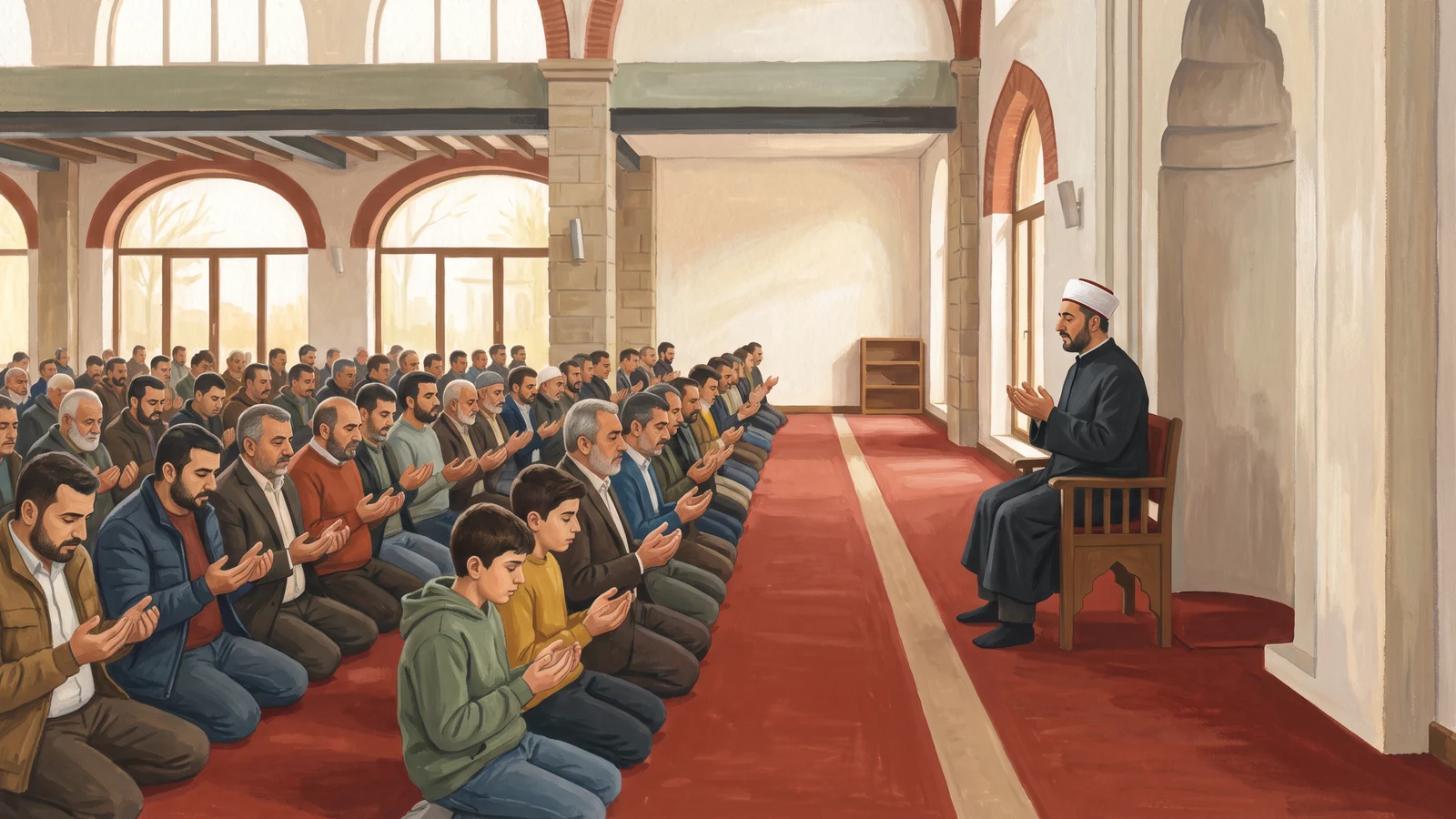
The pulpit closing here in Europe and the congregation’s entreaty
We open our hands and our hearts to our Lord.
My dear brothers and sisters! Let us open our hands and our hearts to our Lord.
أَعُوذُ بِاللَّهِ مِنَ الشَّيْطَانِ الرَّجِيمِ
الْحَمْدُ لِلَّهِ رَبِّ الْعَالَمِينَ، وَالصَّلَاةُ وَالسَّلَامُ عَلَى رَسُولِنَا مُحَمَّدٍ وَعَلَى آلِهِ وَصَحْبِهِ أَجْمَعِينَ
I seek refuge in Allah from the evil of the accursed Satan. Praise belongs to Allah, the Lord of the worlds. May blessings and peace be upon our Prophet Muhammad, upon his family and upon all his Companions.
Praise: al-Fatiha, 1:2. Seeking refuge and blessings on the Prophet: free wording of supplication
رَبِّ اجْعَلْنِي مُقِيمَ الصَّلَاةِ وَمِن ذُرِّيَّتِي رَبَّنَا وَتَقَبَّلْ دُعَاءِ رَبَّنَا اغْفِرْ لِي وَلِوَالِدَيَّ وَلِلْمُؤْمِنِينَ يَوْمَ يَقُومُ الْحِسَابُ
My Lord! Make me and my descendants among those who establish the prayer; our Lord, accept my supplication. Our Lord! Forgive me, my mother, my father and the believers on the day when the reckoning is set up.
Ibrahim, 14:40–41
O Allah! Make us among Your servants who call upon You as You deserve, who persist in their supplication and who never lose hope at Your door. Make us love supplication; fill our tongues with Your remembrance, our hearts with certainty, our tables with what is lawful, and our homes with the sound of praise and thanksgiving. Make us among Your servants who do not forget You in hardship and do not turn away from You in plenty.
O Allah! Have mercy on those of our first generation who have passed on to the hereafter, who took the first step into life here in Europe, who founded this mosque and who entrusted faith and supplication to us; grant health and peace to those who are still alive. Grant healing to our sick, relief to our debtors, companionship to those of us who are alone, and help to the oppressed. Make our children among the generations who love the prayer and supplication and who remember You in their own languages too.
O Allah! Forgive all our sins, whether committed knowingly or unknowingly, in earnest or in jest, in secret or in the open. Protect us from bad character, bad deeds and bad desires. Grant us to love You, to love those who love You, and to love the deeds that will bring us to Your love.
Rabbana atina fi’d-dunya hasanatan wa fi’l-akhirati hasanatan wa qina ‘adhaba’n-nar: “Our Lord! Give us good in this world and good in the world to come, and protect us from the punishment of the Fire!” (al-Baqara, 2:201) Amin. Wa-l-hamdu li-llahi Rabbi’l-‘alamin. Al-Fatiha.
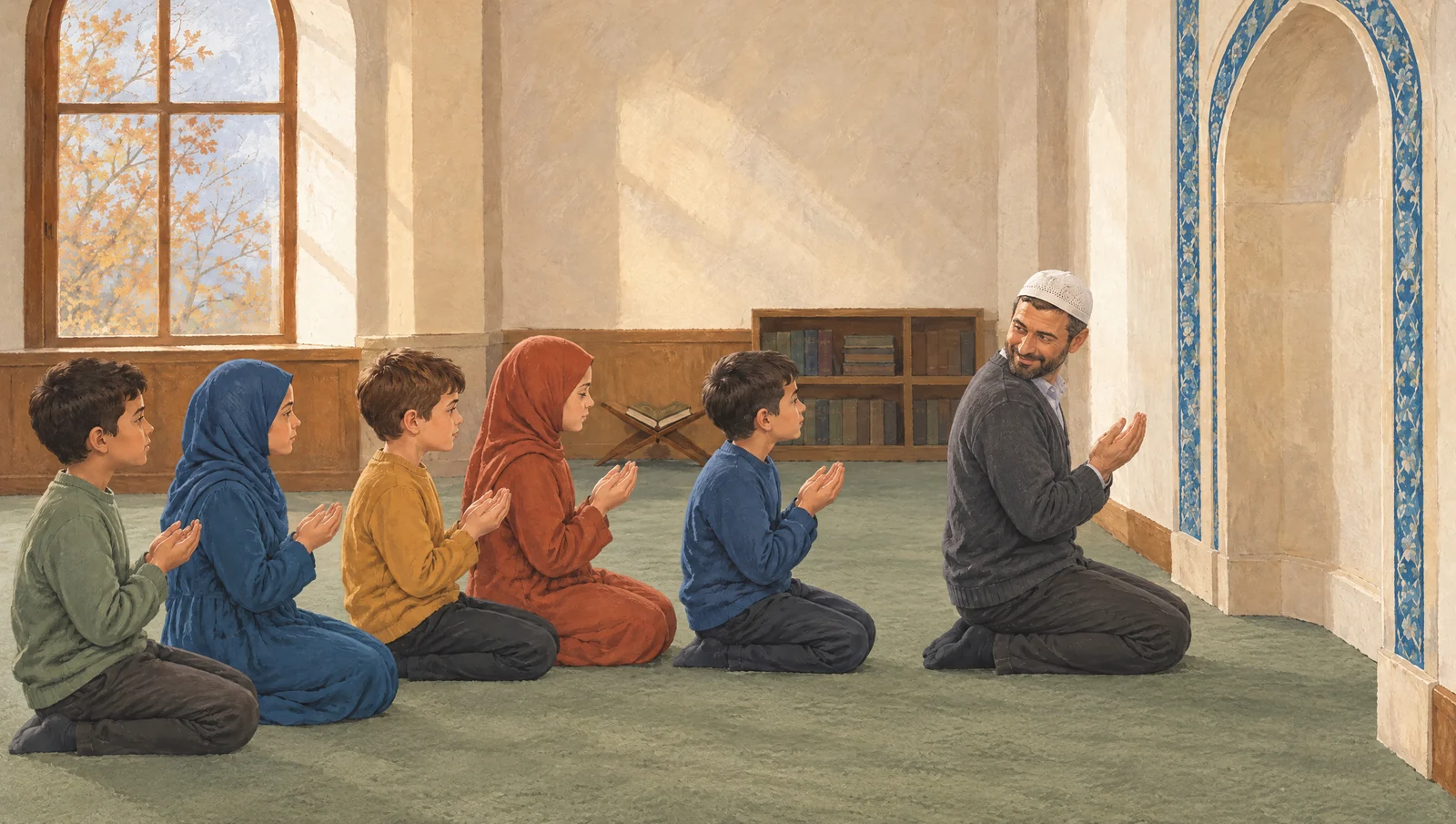
Appendix: How should we supplicate? A model supplication, step by step
First praise, then blessings on the Prophet, then forgiveness and request: a model supplication in the order our Prophet taught.
Our Prophet taught us to begin a supplication with praise and glorification of Allah, then to invoke blessings upon him, and then to make our request. (al-Tirmidhi, Da‘awat, 64) The table below shows this order step by step with the supplications of our Prophet and of the Qur’an. Preparation: If possible, we make ablution, face the qibla and open our palms; we gather our hearts and ask believing that our supplication will be accepted.
1. Praise
الْحَمْدُ لِلَّهِ رَبِّ الْعَالَمِينَ
Al-hamdu li-llahi rabbi’l-‘alamin.
Praise belongs to Allah, the Lord of the worlds.
al-Fatiha, 1:2
2. Blessings
اللَّهُمَّ صَلِّ عَلَى مُحَمَّدٍ، وَعَلَى آلِ مُحَمَّدٍ، كَمَا صَلَّيْتَ عَلَى إِبْرَاهِيمَ وَعَلَى آلِ إِبْرَاهِيمَ، إِنَّكَ حَمِيدٌ مَجِيدٌ
Allahumma salli ‘ala Muhammadin wa ‘ala ali Muhammad, kama sallayta ‘ala Ibrahima wa ‘ala ali Ibrahim, innaka hamidun majid.
O Allah! As You sent blessings on Ibrahim and on the family of Ibrahim, send blessings on Muhammad and on the family of Muhammad too. Truly, You are the Praiseworthy, the Glorious.
al-Bukhari, Anbiya’, 10 (3370); Muslim, Salat, 66 (406)
3. Forgiveness
رَبِّ اغْفِرْ لِي وَتُبْ عَلَىَّ إِنَّكَ أَنْتَ التَّوَّابُ الرَّحِيمُ
Rabbi’ghfir li wa tub ‘alayya, innaka anta’t-tawwabu’r-rahim.
My Lord! Forgive me and accept my repentance. Truly, You are the One who accepts repentance again and again, the Most Merciful.
Abu Dawud, Witr, 26 (1516); al-Tirmidhi, Da‘awat, 38 (3434)
4. Request
اللَّهُمَّ إِنِّي أَسْأَلُكَ الْهُدَى وَالتُّقَى وَالْعَفَافَ وَالْغِنَى
Allahumma inni as’aluka’l-huda wa’t-tuqa wa’l-‘afafa wa’l-ghina.
O Allah! I ask You for guidance, piety, chastity and contentment of heart.
Muslim, Dhikr, 72 (2721)
5. This world and the next
اللَّهُمَّ رَبَّنَا آتِنَا فِي الدُّنْيَا حَسَنَةً وَفِي الْآخِرَةِ حَسَنَةً وَقِنَا عَذَابَ النَّارِ
Allahumma rabbana atina fi’d-dunya hasanatan wa fi’l-akhirati hasanatan wa qina ‘adhaba’n-nar.
O Allah! Our Lord! Give us good in this world and good in the world to come, and protect us from the punishment of the Fire.
al-Bukhari, Da‘awat, 55 (6389); Muslim, Dhikr, 26 (2690)
6. Parents and acceptance
رَبَّنَا وَتَقَبَّلْ دُعَاءِ رَبَّنَا اغْفِرْ لِي وَلِوَالِدَيَّ وَلِلْمُؤْمِنِينَ يَوْمَ يَقُومُ الْحِسَابُ
Rabbana wa taqabbal du‘a’. Rabbana’ghfir li wa li-walidayya wa li’l-mu’minina yawma yaqumu’l-hisab.
Our Lord, accept my supplication. Our Lord! Forgive me, my mother, my father and the believers on the day when the reckoning is set up.
Ibrahim, 14:40–41; excerpts from the verses
A supplication is completed with “amin” and the face is wiped with the hands; then blessings are invoked on our Prophet and al-Fatiha is recited. The congregation’s entreaty at the end of the sermon follows this same order.

Appendix: Daily supplications
Twenty-six supplications, from waking to sleep, that our Prophet recited at different moments of the day and taught to his Companions.
This appendix is the expanded version of the section “The supplications of a day” at Stop V of the sermon: twenty-six supplications that our Prophet recited at different moments of the day, from waking to sleep, and taught to his Companions. All have been selected from authentic (sahih) and good (hasan) narrations; their Arabic is based on the wording found in the hadith sources, and the verses on the text of the Mushaf. The printable version is on pages 16–19 of the PDF; it can be copied and shared in homes, in courses and on the mosque noticeboard.
On waking
الْحَمْدُ لِلَّهِ الَّذِي أَحْيَانَا بَعْدَ مَا أَمَاتَنَا، وَإِلَيْهِ النُّشُورُ
Al-hamdu li-llahi lladhi ahyana ba‘da ma amatana wa ilayhi’n-nushur.
Praise be to Allah, who gave us life after having caused us to die. To Him is the return.
al-Bukhari, Da‘awat, 16 (6324); Muslim, Dhikr, 59 (2711)
Entering the toilet
اللَّهُمَّ إِنِّي أَعُوذُ بِكَ مِنَ الْخُبُثِ وَالْخَبَائِثِ
Allahumma inni a‘udhu bika mina’l-khubuthi wa’l-khaba’ith.
O Allah! I seek refuge in You from every kind of filth and impurity.
al-Bukhari, Da‘awat, 15 (6322); Muslim, Hayd, 122 (375)
Leaving the toilet
غُفْرَانَكَ
Ghufranaka.
O Allah, I ask for Your forgiveness.
Abu Dawud, Tahara, 17 (30); al-Tirmidhi, Tahara, 5 (7)
After ablution
أَشْهَدُ أَنْ لاَ إِلَهَ إِلاَّ اللَّهُ وَحْدَهُ لاَ شَرِيكَ لَهُ وَأَشْهَدُ أَنَّ مُحَمَّدًا عَبْدُهُ وَرَسُولُهُ
Ashhadu an la ilaha illa llahu wahdahu la sharika lah, wa ashhadu anna Muhammadan ‘abduhu wa rasuluh.
I bear witness that there is no god but Allah; He is One and has no partner. And I bear witness that Muhammad is His servant and messenger.
Muslim, Tahara, 17 (234)
On reaching the morning
اللَّهُمَّ بِكَ أَصْبَحْنَا وَبِكَ أَمْسَيْنَا وَبِكَ نَحْيَا وَبِكَ نَمُوتُ وَإِلَيْكَ النُّشُورُ
Allahumma bika asbahna wa bika amsayna wa bika nahya wa bika namutu wa ilayka’n-nushur.
O Allah! With Your help we have reached the morning; with Your help we have reached the evening. It is You who give life and You who cause death. To You is the return.
Abu Dawud, Adab, 101 (5068); al-Tirmidhi, Da‘awat, 13 (3391)
Morning and evening: master of seeking forgiveness
اللَّهُمَّ أَنْتَ رَبِّي، لاَ إِلَهَ إِلاَّ أَنْتَ، خَلَقْتَنِي وَأَنَا عَبْدُكَ، وَأَنَا عَلَى عَهْدِكَ وَوَعْدِكَ مَا اسْتَطَعْتُ، أَعُوذُ بِكَ مِنْ شَرِّ مَا صَنَعْتُ، أَبُوءُ لَكَ بِنِعْمَتِكَ عَلَىَّ وَأَبُوءُ لَكَ بِذَنْبِي، فَاغْفِرْ لِي، فَإِنَّهُ لاَ يَغْفِرُ الذُّنُوبَ إِلاَّ أَنْتَ
Allahumma anta rabbi, la ilaha illa anta, khalaqtani wa ana ‘abduka, wa ana ‘ala ‘ahdika wa wa‘dika ma stata‘tu. A‘udhu bika min sharri ma sana‘tu, abu’u laka bi-ni‘matika ‘alayya wa abu’u laka bi-dhanbi, faghfir li, fa-innahu la yaghfiru dh-dhunuba illa anta.
O Allah! You are my Lord; there is no god but You. You created me, and I am Your servant. As far as I am able, I stand by my covenant and my promise to You. I seek refuge in You from the evil of what I have done. I acknowledge the blessing You have given me, and I acknowledge my sin. Forgive me; for it is You alone who forgive sins.
al-Bukhari, Da‘awat, 2 (6306)
Whoever recites with conviction, by day, the last supplication — known as the master of seeking forgiveness (sayyid al-istighfar) — and dies before evening, and whoever recites it by night and dies before morning, is among the people of Paradise. (al-Bukhari, Da‘awat, 2)
Leaving home
بِسْمِ اللَّهِ تَوَكَّلْتُ عَلَى اللَّهِ لَا حَوْلَ وَلَا قُوَّةَ إِلَّا بِاللَّهِ
Bismillah, tawakkaltu ‘ala-llah, la hawla wa la quwwata illa billah.
In the name of Allah; I have put my trust in Allah. There is no might and no power except with Allah’s help.
al-Tirmidhi, Da‘awat, 34 (3426); Abu Dawud, Adab, 103 (5095)
Setting out
سُبْحَانَ الَّذِي سَخَّرَ لَنَا هَٰذَا وَمَا كُنَّا لَهُ مُقْرِنِينَ وَإِنَّا إِلَىٰ رَبِّنَا لَمُنقَلِبُونَ
Subhana lladhi sakhkhara lana hadha wa ma kunna lahu muqrinin. Wa inna ila rabbina la-munqalibun.
Exalted is the One who has subjected this to us; we could never have managed it ourselves! And to our Lord we shall surely return.
al-Zukhruf, 43:13–14; Muslim, Hajj, 425 (1342)
After hearing the adhan
اللَّهُمَّ رَبَّ هَذِهِ الدَّعْوَةِ التَّامَّةِ وَالصَّلاَةِ الْقَائِمَةِ آتِ مُحَمَّدًا الْوَسِيلَةَ وَالْفَضِيلَةَ وَابْعَثْهُ مَقَامًا مَحْمُودًا الَّذِي وَعَدْتَهُ
Allahumma rabba hadhihi’d-da‘wati’t-tammah, wa’s-salati’l-qa’imah, ati Muhammadani’l-wasilata wa’l-fadilah, wa’b‘athhu maqaman mahmudani’lladhi wa‘adtah.
O Allah, Lord of this perfect call and of the prayer that is to be performed! Grant Muhammad the wasila and the excellence; raise him to the Praiseworthy Station that You have promised him.
al-Bukhari, Adhan, 8 (614)
Entering and leaving the mosque
اللَّهُمَّ افْتَحْ لِي أَبْوَابَ رَحْمَتِكَ — اللَّهُمَّ إِنِّي أَسْأَلُكَ مِنْ فَضْلِكَ
Entering: Allahumma’ftah li abwaba rahmatik. Leaving: Allahumma inni as’aluka min fadlik.
O Allah, open for me the doors of Your mercy. — O Allah, I ask You for Your bounty.
Muslim, Salat al-musafirin, 68 (713)
On sitting down to eat
بِسْمِ اللَّهِ
Bismillah.
In the name of Allah.
al-Bukhari, At‘ima, 2 (5376); Muslim, Ashriba, 108 (2022)
When one forgets the basmala
بِسْمِ اللَّهِ أَوَّلَهُ وَآخِرَهُ
Bismillahi awwalahu wa akhirahu.
In the name of Allah, at its beginning and at its end.
Abu Dawud, At‘ima, 15 (3767); al-Tirmidhi, At‘ima, 47 (1858)
After the meal
الْحَمْدُ لِلَّهِ الَّذِي أَطْعَمَنِي هَذَا وَرَزَقَنِيهِ مِنْ غَيْرِ حَوْلٍ مِنِّي وَلَا قُوَّةٍ
Al-hamdu li-llahi lladhi at‘amani hadha wa razaqanihi min ghayri hawlin minni wa la quwwa.
Praise be to Allah, who fed me this and provided it for me as sustenance, without any strength or power on my part.
al-Tirmidhi, Da‘awat, 55 (3458); Abu Dawud, Libas, 1 (4023)
While the adhan is being recited, the words of the muezzin are repeated; when he says “Hayya ‘ala’s-salah” and “Hayya ‘ala’l-falah”, one says “La hawla wa la quwwata illa billah”, and then, after invoking blessings on the Prophet, the supplication above is recited. (Muslim, 384–385)
In a time of distress
لاَ إِلَهَ إِلاَّ اللَّهُ الْعَظِيمُ الْحَلِيمُ، لاَ إِلَهَ إِلاَّ اللَّهُ رَبُّ الْعَرْشِ الْعَظِيمِ، لاَ إِلَهَ إِلاَّ اللَّهُ رَبُّ السَّمَوَاتِ، وَرَبُّ الأَرْضِ، وَرَبُّ الْعَرْشِ الْكَرِيمِ
La ilaha illa llahu’l-‘azimu’l-halim. La ilaha illa llahu rabbu’l-‘arshi’l-‘azim. La ilaha illa llahu rabbu’s-samawati wa rabbu’l-ardi wa rabbu’l-‘arshi’l-karim.
There is no god but Allah, the Sublime, the Forbearing. There is no god but Allah, Lord of the Great Throne. There is no god but Allah, Lord of the heavens, of the earth and of the Noble Throne.
al-Bukhari, Da‘awat, 27 (6346); Muslim, Dhikr, 83 (2730)
When calamity strikes
إِنَّا لِلَّهِ وَإِنَّا إِلَيْهِ رَاجِعُونَ اللَّهُمَّ أْجُرْنِي فِي مُصِيبَتِي وَأَخْلِفْ لِي خَيْرًا مِنْهَا
Inna li-llahi wa inna ilayhi raji‘un. Allahumma’jurni fi musibati wa akhlif li khayran minha.
We belong to Allah, and to Him we shall return. O Allah! Grant me the reward for this calamity and bestow on me something better than it.
Muslim, Jana’iz, 3–4 (918)
Visiting the sick
أَذْهِبِ الْبَاسَ رَبَّ النَّاسِ، اشْفِ وَأَنْتَ الشَّافِي لاَ شِفَاءَ إِلاَّ شِفَاؤُكَ، شِفَاءً لاَ يُغَادِرُ سَقَمًا
Adhhibi’l-ba’sa rabba’n-nas, ishfi wa anta’sh-shafi, la shifa’a illa shifa’uk, shifa’an la yughadiru saqama.
O Lord of humankind! Take away the distress and grant healing; You are the Healer. There is no healing except Your healing. Grant a healing that leaves no illness behind.
al-Bukhari, Marda, 20 (5675); Muslim, Salam (2191)
When it rains
اللَّهُمَّ اجْعَلْهُ صَيِّبًا نَافِعًا
Allahumma’j‘alhu sayyiban nafi‘a.
O Allah! Make it a beneficial rain.
al-Nasa’i, Istisqa’, 15 (1523); al-Bukhari, Istisqa’, 23 (1032)
When angry
أَعُوذُ بِاللَّهِ مِنَ الشَّيْطَانِ الرَّجِيمِ
A‘udhu billahi mina’sh-shaytani’r-rajim.
I seek refuge in Allah from the accursed Satan.
al-Bukhari, Adab, 76 (6115); Muslim, Birr, 109 (2610)
Sneezing
الْحَمْدُ لِلَّهِ — يَرْحَمُكَ اللَّهُ — يَهْدِيكُمُ اللَّهُ وَيُصْلِحُ بَالَكُمْ
One who sneezes: Al-hamdu li-llah. One who hears: Yarhamuka llah. One who sneezes: Yahdikumu llahu wa yuslihu balakum.
Praise be to Allah. — May Allah have mercy on you. — May Allah guide you and put your condition right.
al-Bukhari, Adab, 126 (6224)
On receiving a kindness
جَزَاكَ اللَّهُ خَيْرًا
Jazaka llahu khayran.
May Allah reward you with goodness!
al-Tirmidhi, Birr, 88 (2035)
Leaving a gathering
سُبْحَانَكَ اللَّهُمَّ وَبِحَمْدِكَ أَشْهَدُ أَنْ لاَ إِلَهَ إِلاَّ أَنْتَ أَسْتَغْفِرُكَ وَأَتُوبُ إِلَيْكَ
Subhanaka llahumma wa bi-hamdik, ashhadu an la ilaha illa anta, astaghfiruka wa atubu ilayk.
O Allah! I declare You free of every imperfection, and I praise You. I bear witness that there is no god but You. I ask Your forgiveness and I repent to You.
al-Tirmidhi, Da‘awat, 38 (3433); Abu Dawud, Adab, 27 (4859)
The supplication recited on rising from a gathering is an atonement for the idle words spoken in that gathering. (al-Tirmidhi, Da‘awat, 38) In the narration of Muslim (2191), beside a sick person one says “ishfihi”, that is, “grant him healing”.
Evening and morning, three times each
بِسْمِ اللَّهِ الَّذِي لاَ يَضُرُّ مَعَ اسْمِهِ شَيْءٌ فِي الأَرْضِ وَلاَ فِي السَّمَاءِ وَهُوَ السَّمِيعُ الْعَلِيمُ
Bismillahi lladhi la yadurru ma‘a smihi shay’un fi’l-ardi wa la fi’s-sama’i wa huwa’s-sami‘u’l-‘alim.
In the name of Allah, with whose name nothing on earth or in heaven can cause harm when it is invoked. He is the All-Hearing, the All-Knowing.
al-Tirmidhi, Da‘awat, 13 (3388); Abu Dawud, Adab, 101 (5088)
At bedtime: Ayat al-Kursi
اللَّهُ لَا إِلَٰهَ إِلَّا هُوَ الْحَيُّ الْقَيُّومُ لَا تَأْخُذُهُ سِنَةٌ وَلَا نَوْمٌ لَّهُ مَا فِي السَّمَاوَاتِ وَمَا فِي الْأَرْضِ مَن ذَا الَّذِي يَشْفَعُ عِندَهُ إِلَّا بِإِذْنِهِ يَعْلَمُ مَا بَيْنَ أَيْدِيهِمْ وَمَا خَلْفَهُمْ وَلَا يُحِيطُونَ بِشَيْءٍ مِّنْ عِلْمِهِ إِلَّا بِمَا شَاءَ وَسِعَ كُرْسِيُّهُ السَّمَاوَاتِ وَالْأَرْضَ وَلَا يَئُودُهُ حِفْظُهُمَا وَهُوَ الْعَلِيُّ الْعَظِيمُ
Allahu la ilaha illa huwa’l-hayyu’l-qayyum. La ta’khudhuhu sinatun wa la nawm. Lahu ma fi’s-samawati wa ma fi’l-ard. Man dha lladhi yashfa‘u ‘indahu illa bi-idhnih. Ya‘lamu ma bayna aydihim wa ma khalfahum. Wa la yuhituna bi-shay’in min ‘ilmihi illa bima sha’. Wasi‘a kursiyyuhu’s-samawati wa’l-ard, wa la ya’uduhu hifzuhuma wa huwa’l-‘aliyyu’l-‘azim.
Allah — there is no god but Him. He is the Ever-Living, on whom the existence of everything depends and rests. Drowsiness never comes upon Him, nor does He sleep. Everything in the heavens and on the earth belongs to Him. Without His permission, no one can intercede in His presence. He knows what lies before them and what lies behind them. No one can bring any part of His knowledge within the scope of their own — except what He wills. His Kursi encompasses the heavens and the earth, and guarding them does not burden Him. He is the Exalted, the Absolutely Great.
al-Baqara, 2:255; al-Bukhari, Wakala, 10 (2311)
At bedtime: al-Ikhlas, al-Falaq and al-Nas
قُلْ هُوَ اللَّهُ أَحَدٌ … — قُلْ أَعُوذُ بِرَبِّ الْفَلَقِ … — قُلْ أَعُوذُ بِرَبِّ النَّاسِ …
Qul huwa llahu ahad… — Qul a‘udhu bi-rabbi’l-falaq… — Qul a‘udhu bi-rabbi’n-nas…
The three surahs are recited and blown lightly into the palms; the hands are then passed over the head and face, then over as much of the body as they can reach. This is done three times.
al-Bukhari, Fada’il al-Qur’an, 14 (5017)
Thanks on lying down in bed
الْحَمْدُ لِلَّهِ الَّذِي أَطْعَمَنَا وَسَقَانَا وَكَفَانَا وَآوَانَا فَكَمْ مِمَّنْ لاَ كَافِيَ لَهُ وَلاَ مُئْوِيَ
Al-hamdu li-llahi lladhi at‘amana wa saqana wa kafana wa awana, fa-kam mimman la kafiya lahu wa la mu’wiya.
Praise be to Allah, who has fed us, given us drink, met our needs and given us shelter. How many there are who have no one to meet their needs or give them shelter.
Muslim, Dhikr, 64 (2715)
At bedtime
بِاسْمِكَ اللَّهُمَّ أَمُوتُ وَأَحْيَا
Bismika llahumma amutu wa ahya.
O Allah! In Your name I die, and in Your name I come to life.
al-Bukhari, Da‘awat, 16 (6324)
For anyone who recites Ayat al-Kursi on going to bed, a guardian from Allah remains by their side until morning, and Satan cannot come near them. (al-Bukhari, Wakala, 10)
A supplication a week: Let us put the printable pages up on our fridge door; each week let us memorise one supplication together as a family. After twenty-six weeks, every moment of our day will be encompassed by supplication.
- Supplicationالدعاء
- Turning to Allah in awareness of one’s own weakness; praising Him and asking Him for help, forgiveness and mercy.
- Humbly and in secret (tadarru‘ and khufya)التضرع والخفية
- Supplicating with humble pleading and in secret, with a heart free of show.
- The answering of a supplication (ijaba)الإجابة
- Allah’s response to a supplication: granting what was asked, storing it up for the hereafter, or averting some harm.
- Certainty (yaqin)اليقين
- Believing from the heart that the supplication will be answered; asking without hesitation and with resolve.
- Seeking a lawful means (tawassul)التوسل
- Asking Allah by using as a means His names, a righteous deed done for His good pleasure, or the supplication of a righteous person who is alive.
- Aminآمين
- The entreaty that seals a supplication, meaning “O Allah, accept.”
Verses, hadiths and other sources
The translations of the verses are taken from the Kur’an Yolu translation; abridged verses and hadiths are indicated in the text. The wording of the verses is taken from the Tanzil text, the wording of the hadiths has been compared with sunnah.com, and the grades of the narrations have been checked against the rulings of the hadith scholars.
- Verses: al-Fatiha 1:2; al-Fatiha 1:5; al-Baqara 2:255; al-Baqara 2:127–128; al-Baqara 2:152; al-Baqara 2:186; al-Baqara 2:189, 215, 217, 219, 220; al-Baqara 2:201; al-Baqara 2:216; Al ‘Imran 3:38; Al ‘Imran 3:191; al-Ma’ida 5:35; al-A‘raf 7:23; al-A‘raf 7:55–56; al-A‘raf 7:180; al-Tawba 9:103; Yunus 10:12; Ibrahim 14:40–41; al-Isra’ 17:24; Maryam 19:4; al-Anbiya’ 21:83; al-Anbiya’ 21:87–88; al-Furqan 25:74; al-Furqan 25:77; al-Naml 27:62; al-Qasas 28:24; Fatir 35:15; al-Zumar 39:53; Ghafir (al-Mu’min) 40:60; Fussilat 41:51; al-Zukhruf 43:13–14; Muhammad 47:19; Qaf 50:16; al-Dhariyat 51:56; al-Hashr 59:10; al-Ikhlas 112; al-Falaq 113; al-Nas 114.
- Hadiths: al-Tirmidhi, Da‘awat 1 (3370, 3372) and Abu Dawud, Witr 23 (1479); Ibn Majah, Du‘a’ 1 (3829); Muslim, Birr 55 (2577); al-Bukhari, Tahajjud 14 (1145); Muslim, Salat 215 (482); Abu Dawud, Salat 35 (521); al-Bukhari, Jumu‘a 37 (935); al-Tirmidhi, Birr 7 (1905); al-Tirmidhi, Da‘awat 81 (3505); al-Tirmidhi, Da‘awat 9 (3382); Ibn Hanbal I, 307; al-Bukhari, Da‘awat 16 (6324) and Muslim, Dhikr 59 (2711); al-Tirmidhi, Da‘awat 34 (3426); al-Bukhari, At‘ima 2 (5376); al-Tirmidhi, Da‘awat 55 (3458); Muslim, Dhikr 64 (2715); al-Bukhari, Tahajjud 25 (1162); Muslim, Jihad 58; al-Bukhari, Istisqa’ 22; Abu Dawud, Witr 23 (1480, 1482, 1486); al-Tirmidhi, Da‘awat 64 (3476–3477) and Abu Dawud, Witr 23 (1481); al-Bukhari, Tawhid 9 (7386) and Muslim, Dhikr 44 (2704); al-Bukhari, Da‘awat 21 (6339) and Muslim, Dhikr 9; Muslim, Dhikr 92 (2735) and al-Bukhari, Da‘awat 22 (6340); Muslim, Zakat 65 (1015); al-Tirmidhi, Da‘awat 104 (3556) and Abu Dawud, Witr 23 (1488); al-Bukhari, al-Adab al-mufrad 710 and Ibn Hanbal III, 18; Abu Dawud, Witr 23 (1495) and al-Nasa’i, Sahw 58; al-Bukhari, Istisqa’ 3 (1010); al-Bukhari, Ijara 12 and Muslim, Dhikr 100 (2743); al-Tirmidhi, Sifat al-qiyama 59 (2516); Muslim, Dhikr 88 (2733); Muslim, Zuhd 74.
- Model supplication appendix: al-Tirmidhi, Da‘awat 64 (3477); al-Bukhari, Anbiya’ 10 (3370); Muslim, Salat 66 (406); Abu Dawud, Witr 26 (1516); al-Tirmidhi, Da‘awat 38 (3434); Muslim, Dhikr 72 (2721); al-Bukhari, Da‘awat 55 (6389); Muslim, Dhikr 26 (2690). Order of the steps: Din Görevlisi Rehberi (guide for religious officials), “The method and etiquette of supplication”.
- Daily supplications appendix: al-Bukhari, Da‘awat 2 (6306), 15 (6322), 16 (6324); al-Bukhari, Adhan 8 (614); al-Bukhari, Wakala 10 (2311); al-Bukhari, Fada’il al-Qur’an 14 (5017); al-Bukhari, Adab 76 (6115), 126 (6224); al-Bukhari, Marda 20 (5675); al-Bukhari, Istisqa’ 23 (1032); al-Bukhari, Da‘awat 27 (6346); Muslim, Tahara 17 (234); Muslim, Hayd 122 (375); Muslim, Salat al-musafirin 68 (713); Muslim, Salat 384–385; Muslim, Jana’iz 3–4 (918); Muslim, Salam (2191); Muslim, Dhikr 64 (2715), 83 (2730); Muslim, Hajj 425 (1342); Abu Dawud, Tahara 17 (30); Abu Dawud, At‘ima 15 (3767); Abu Dawud, Adab 101 (5068, 5088); al-Tirmidhi, Da‘awat 13 (3388, 3391), 34 (3426), 38 (3433), 55 (3458); al-Tirmidhi, Birr 88 (2035); al-Nasa’i, Istisqa’ 15 (1523). All are sahih or hasan.
- Narrations whose chain of narration contains weakness: “Supplication is the essence of worship” (al-Tirmidhi, Da‘awat 1, 3371); “Make supplication believing that it will be accepted” (al-Tirmidhi, Da‘awat 65, 3479); the supplication of the one who fasts (al-Tirmidhi, Da‘awat 128, 3598); the narration “If he ends with amin” (Abu Dawud, Salat 167–168, 938); the narrations about wiping the face with the hands after supplication (al-Tirmidhi, 3386; Abu Dawud, Witr 23, 1485): each of them is weak, and together they are regarded as hasan. The popular saying “Supplication is the weapon of the believer” is not established as a hadith.
- Wisdom story: Rumi, Masnavi, Book III, couplets 189–197, the story of the man who called out “Allah”; it is a wisdom story, not a hadith.
- Encyclopedia: TDV İslâm Ansiklopedisi, “Dua”, “Tevessül” and “İsm-i Âzam”.
- Images: The scene pictures are illustrative artworks; there is no depiction of prophets or Companions. The “French supplication” scene is also illustrative.